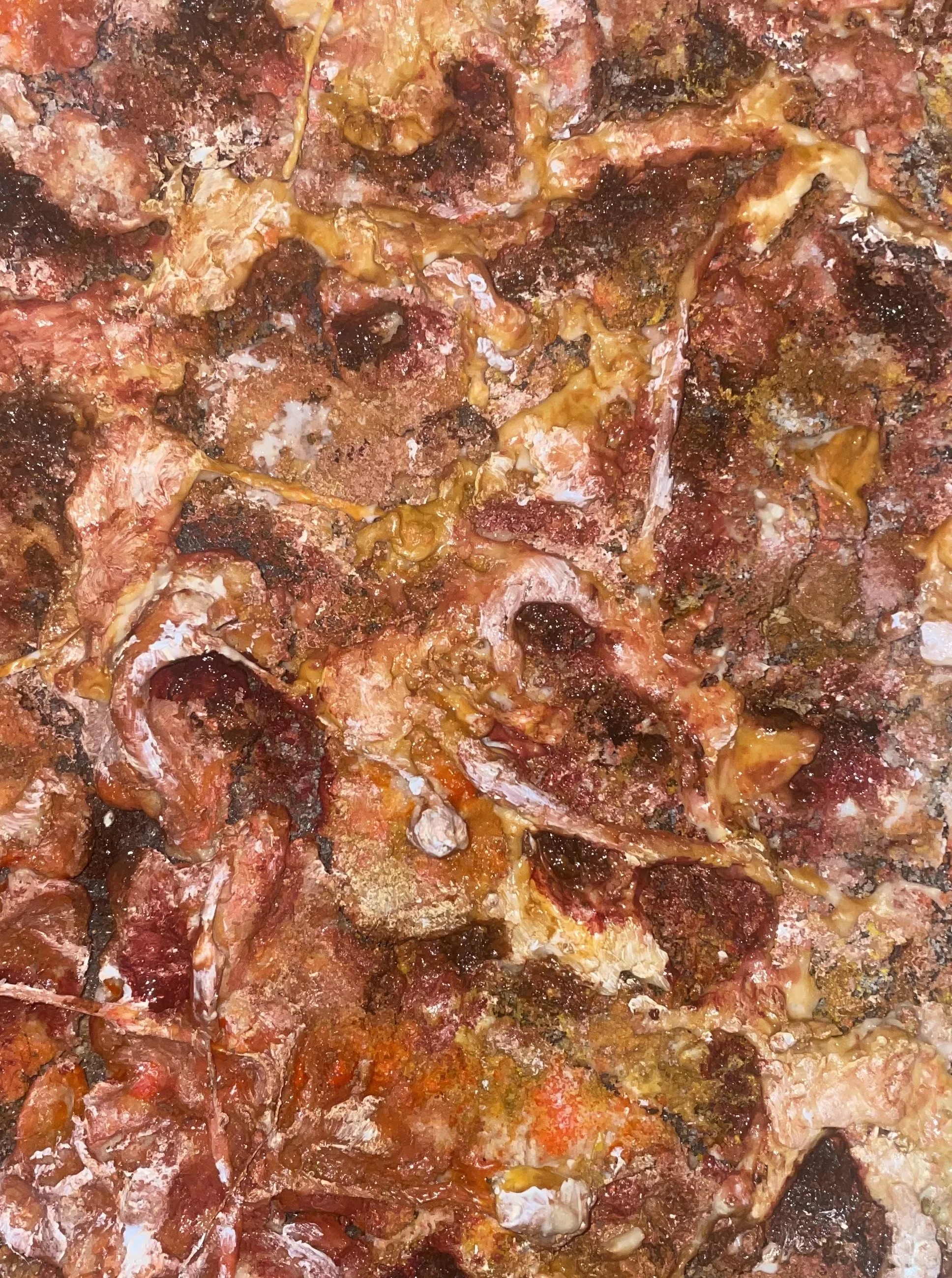
Memories on tape, rusting away in salt-lakes
First Slideshow= Before Rusting
Before Rusting:
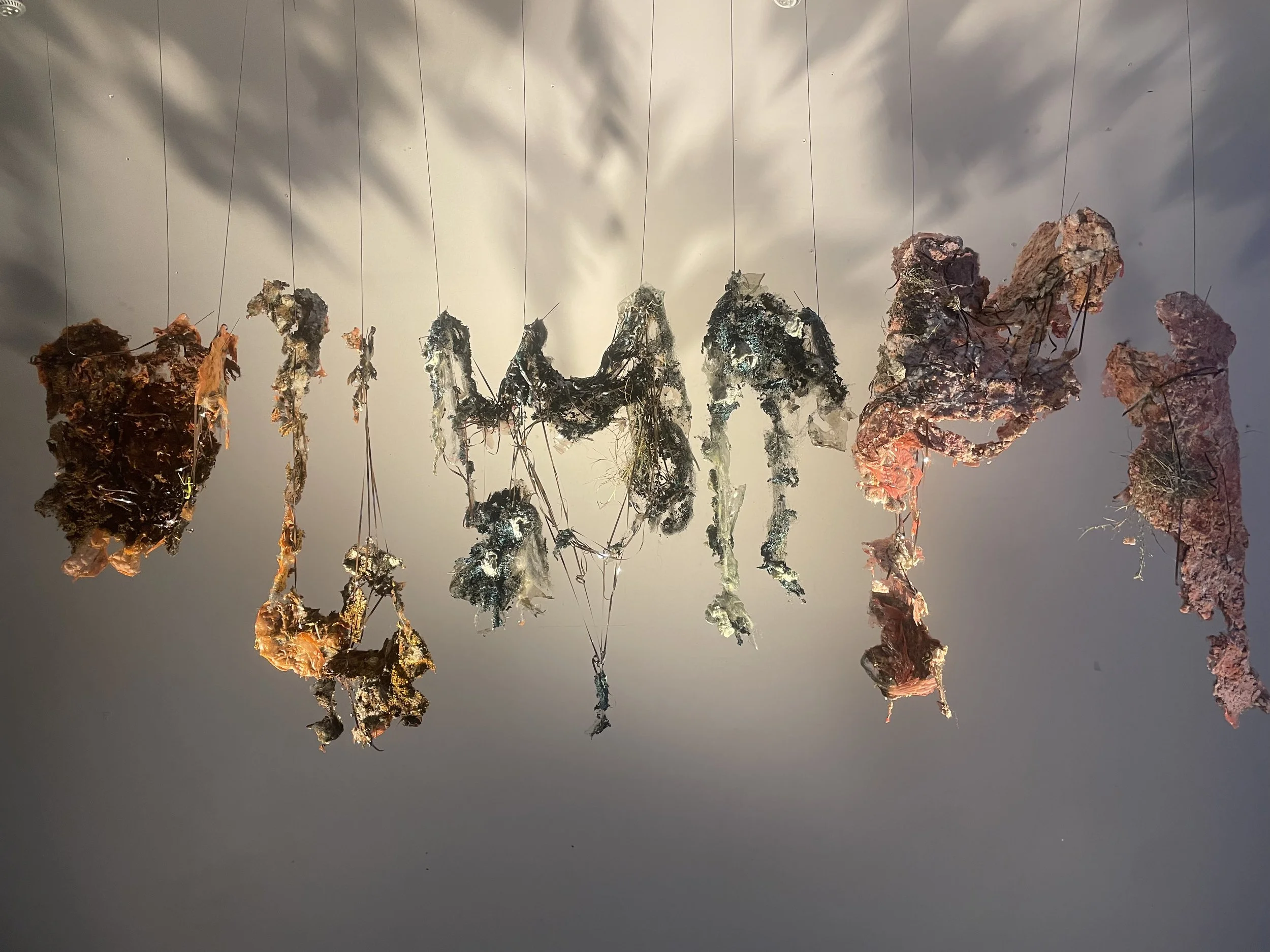
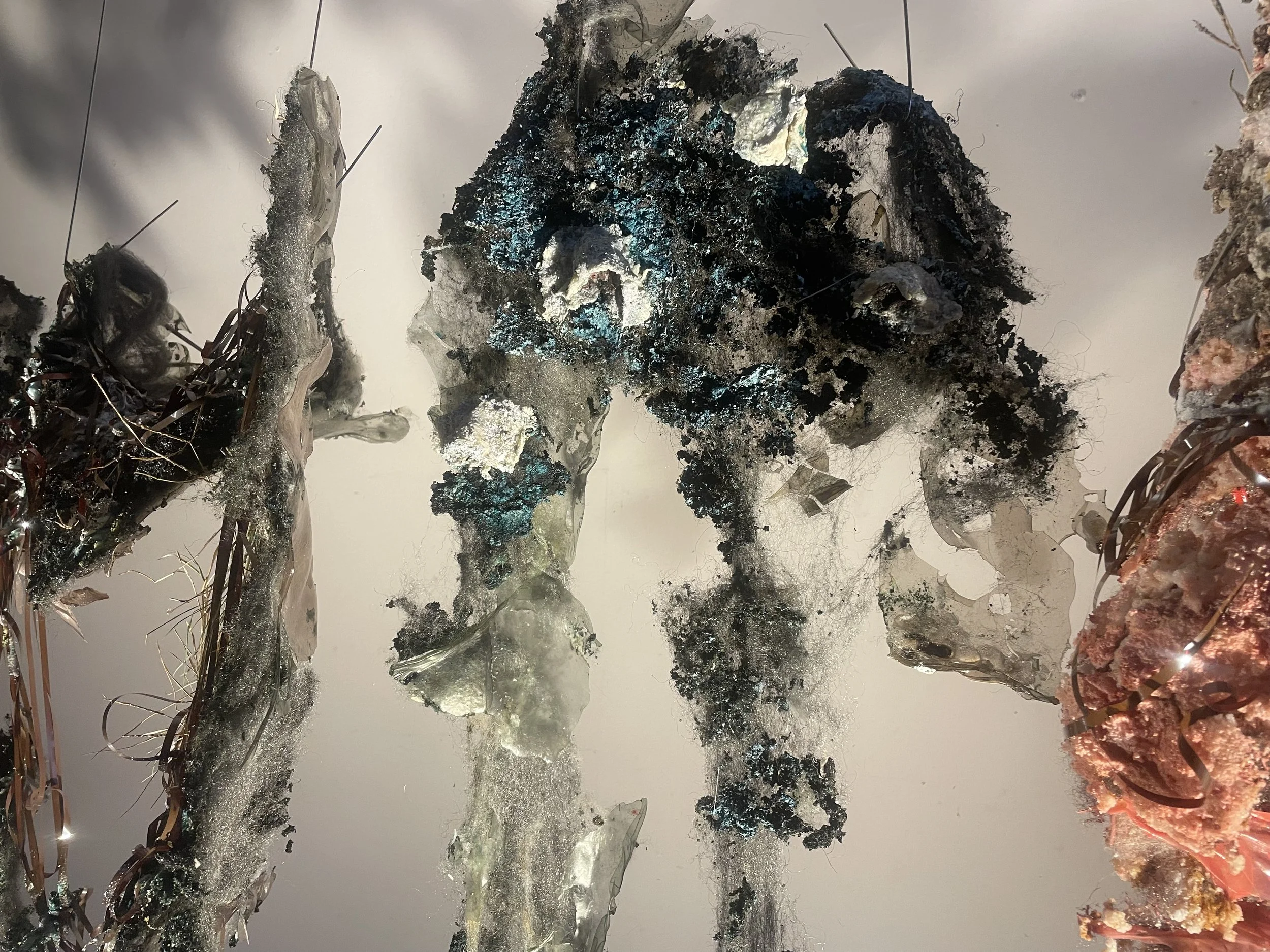
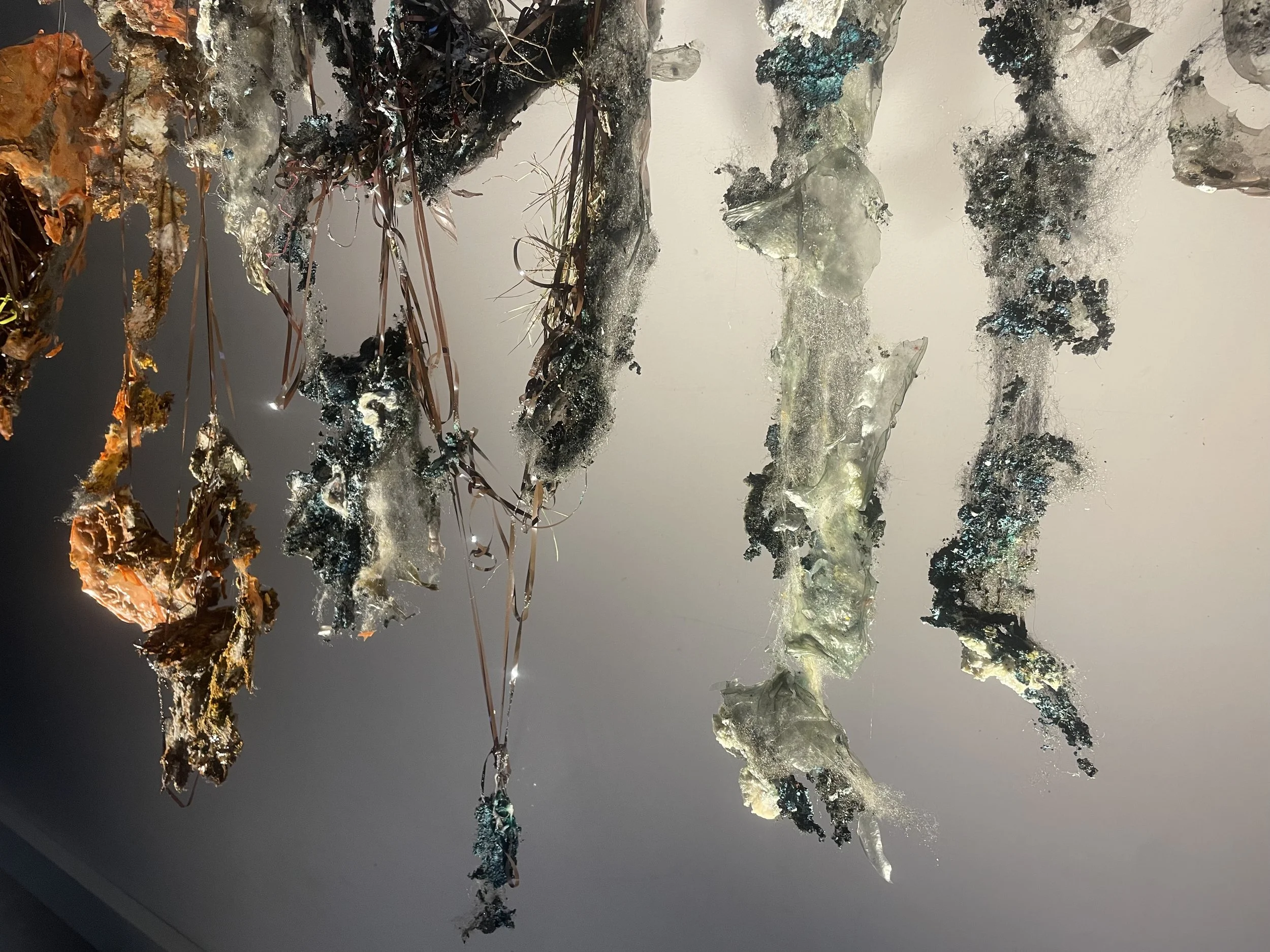
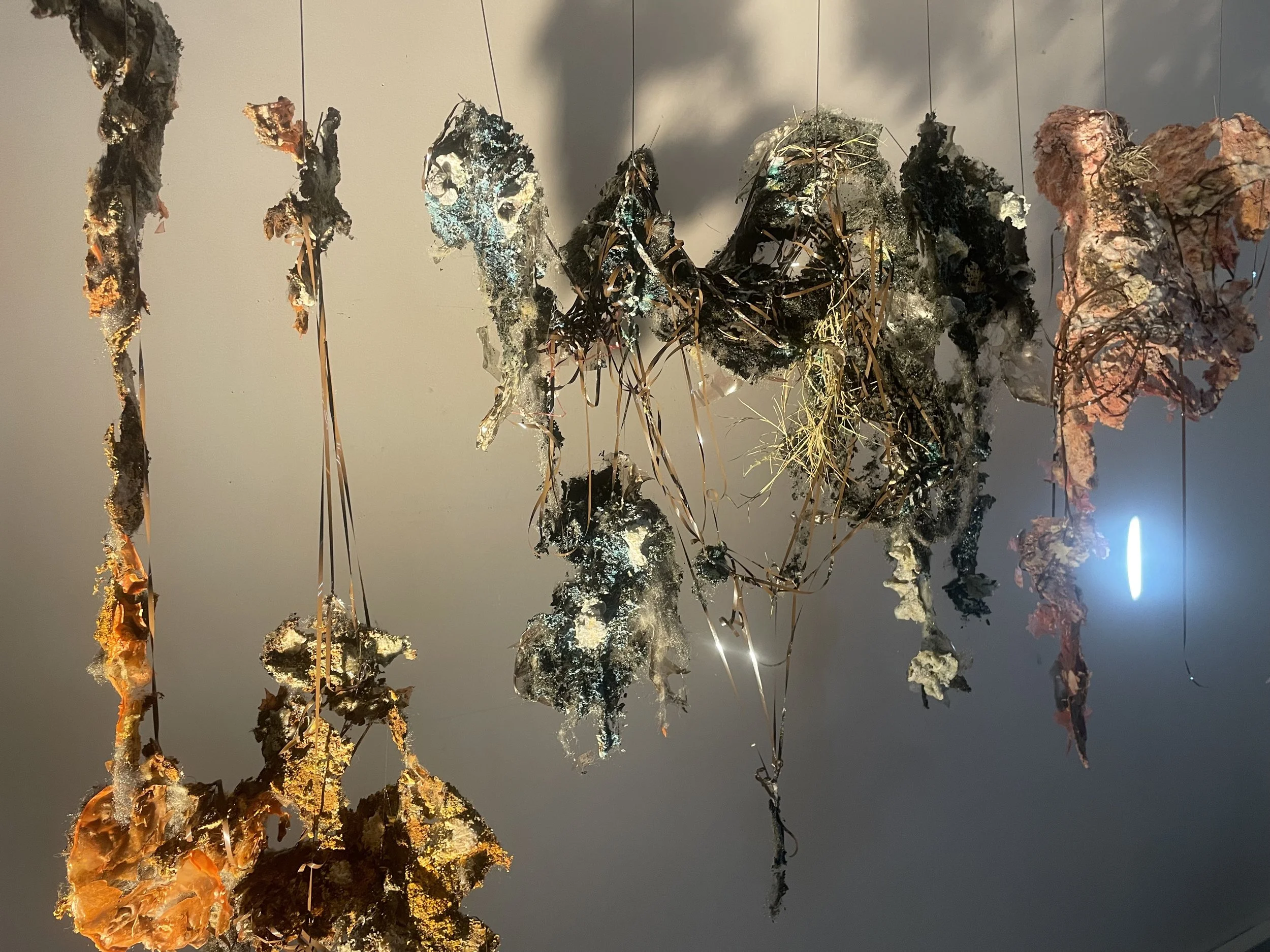
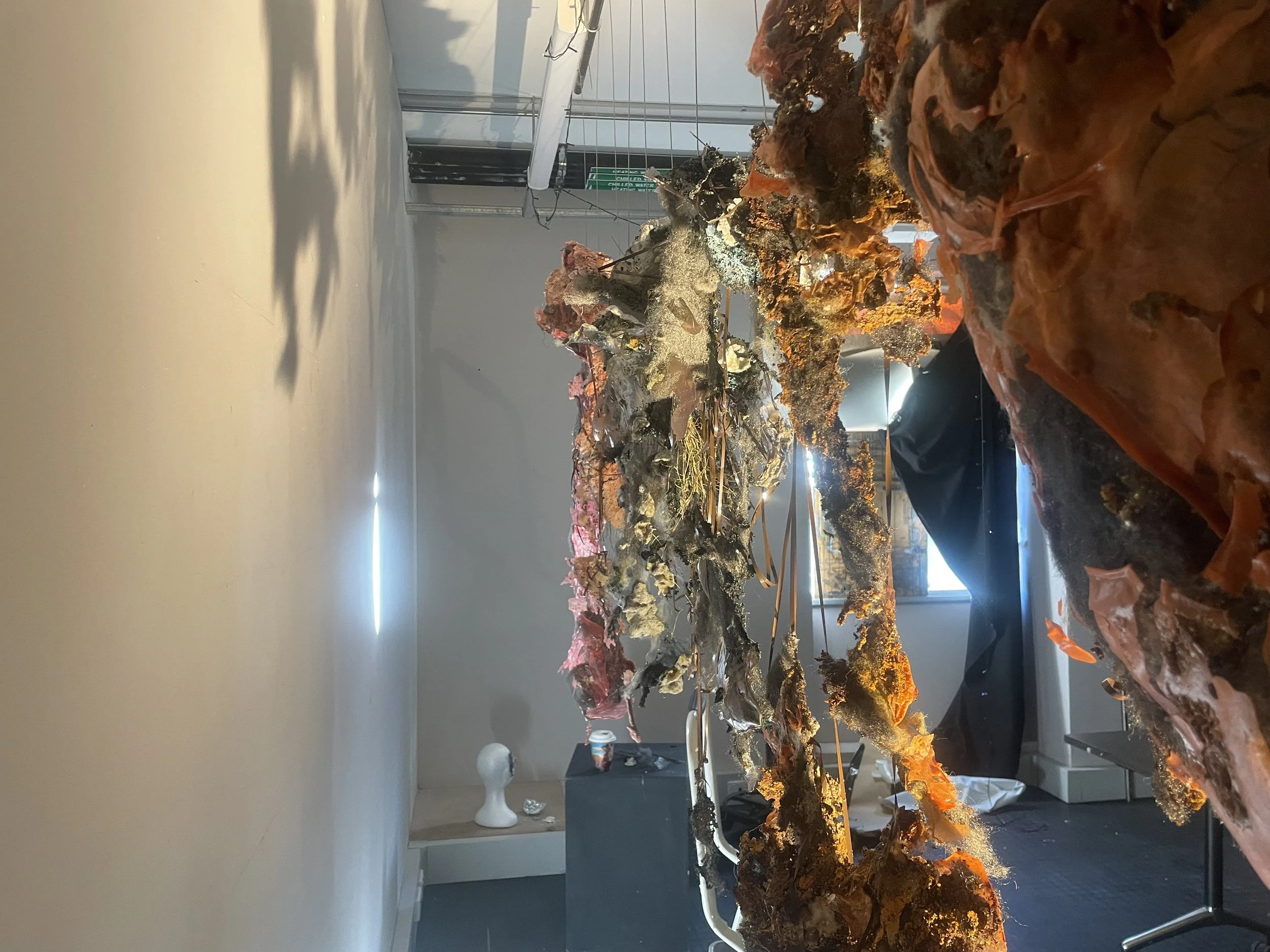
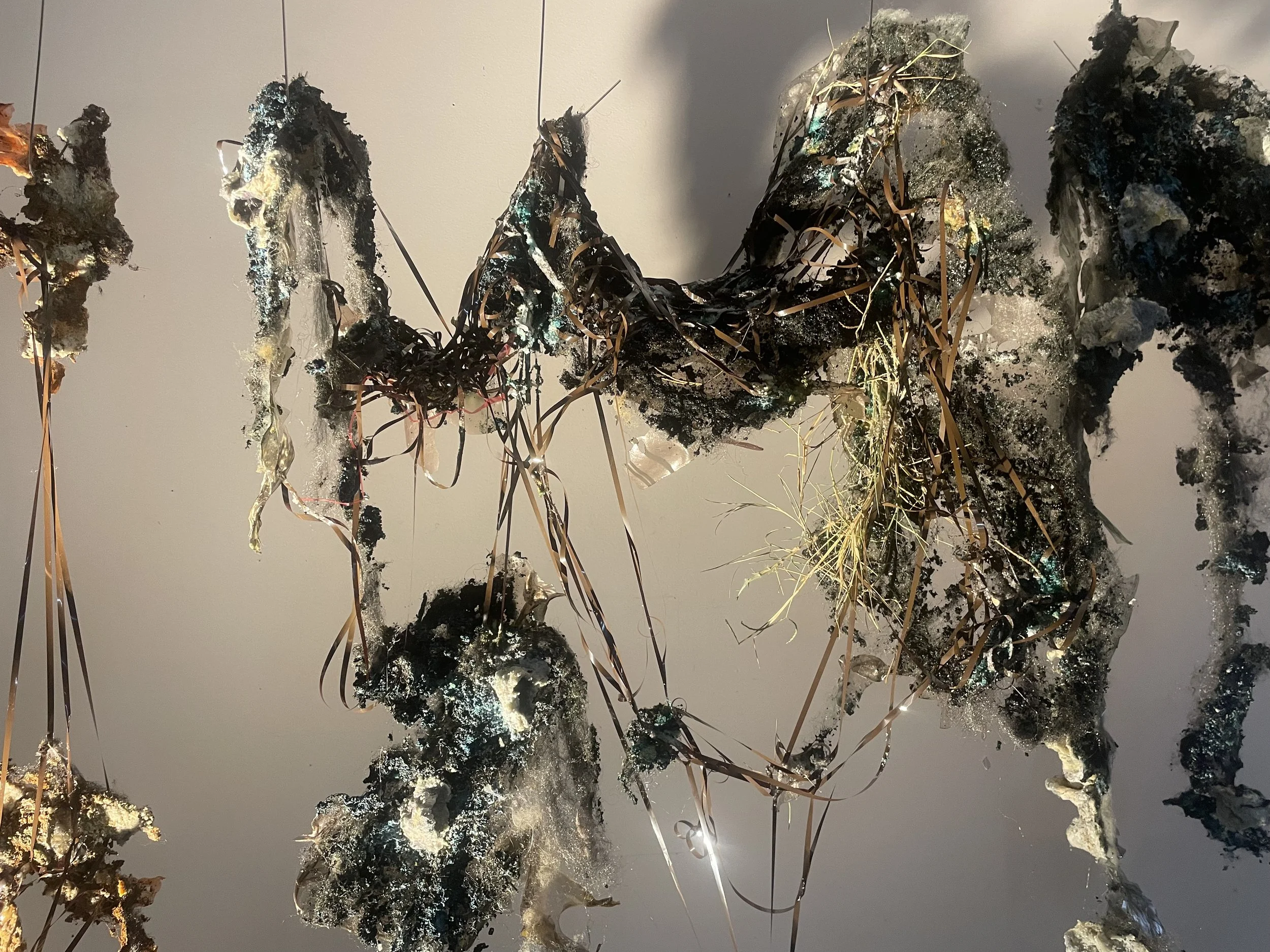
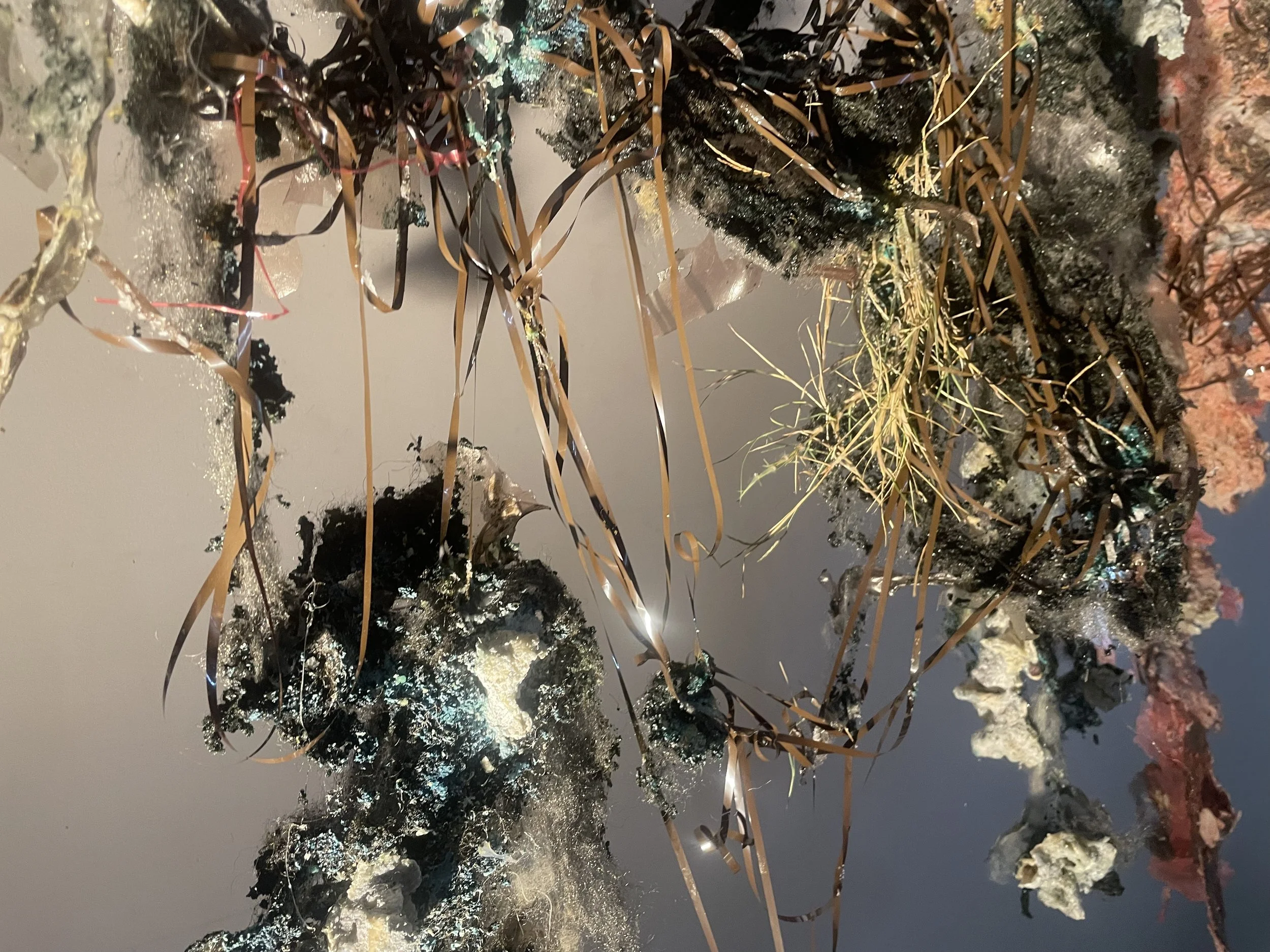
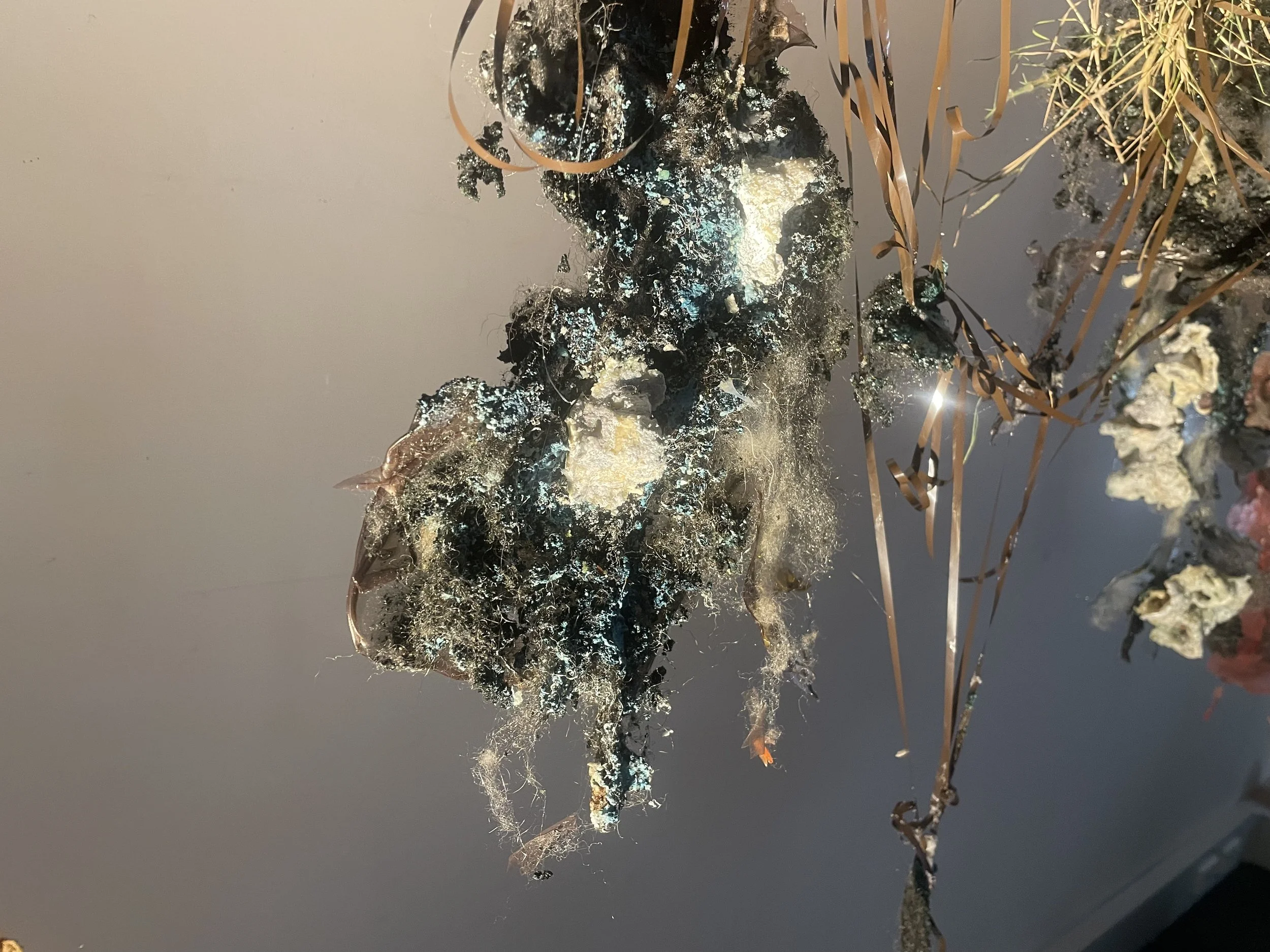
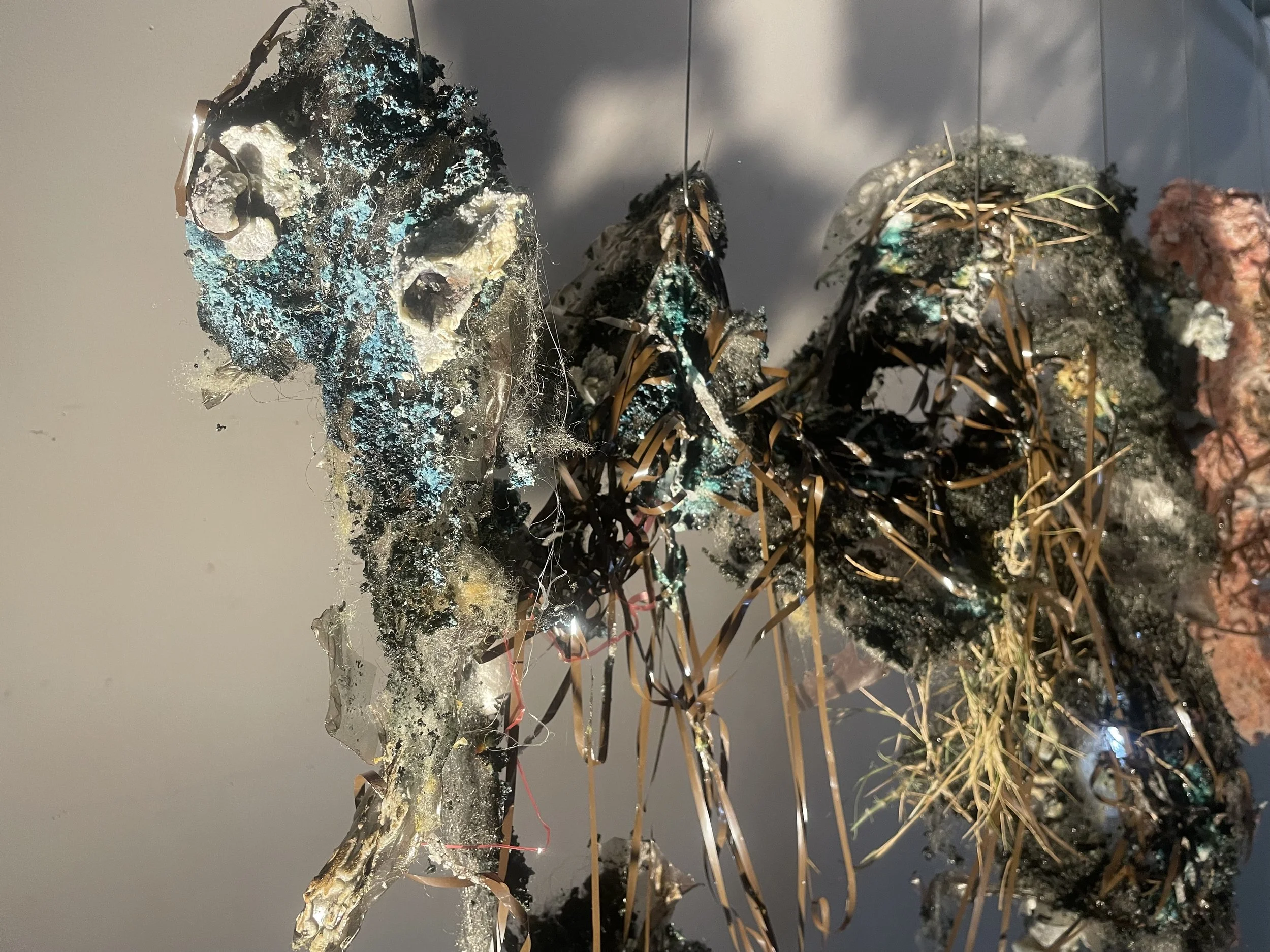
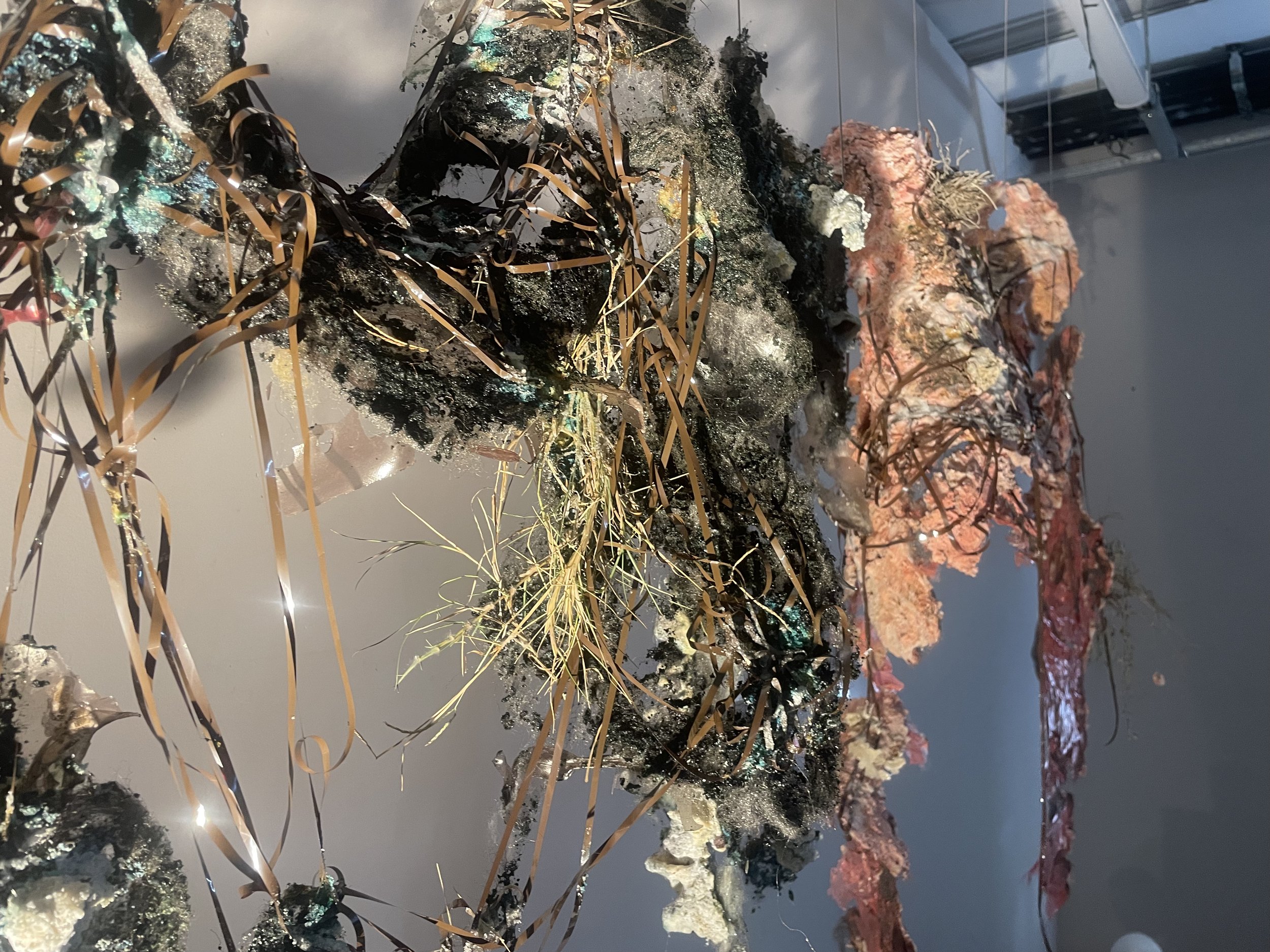
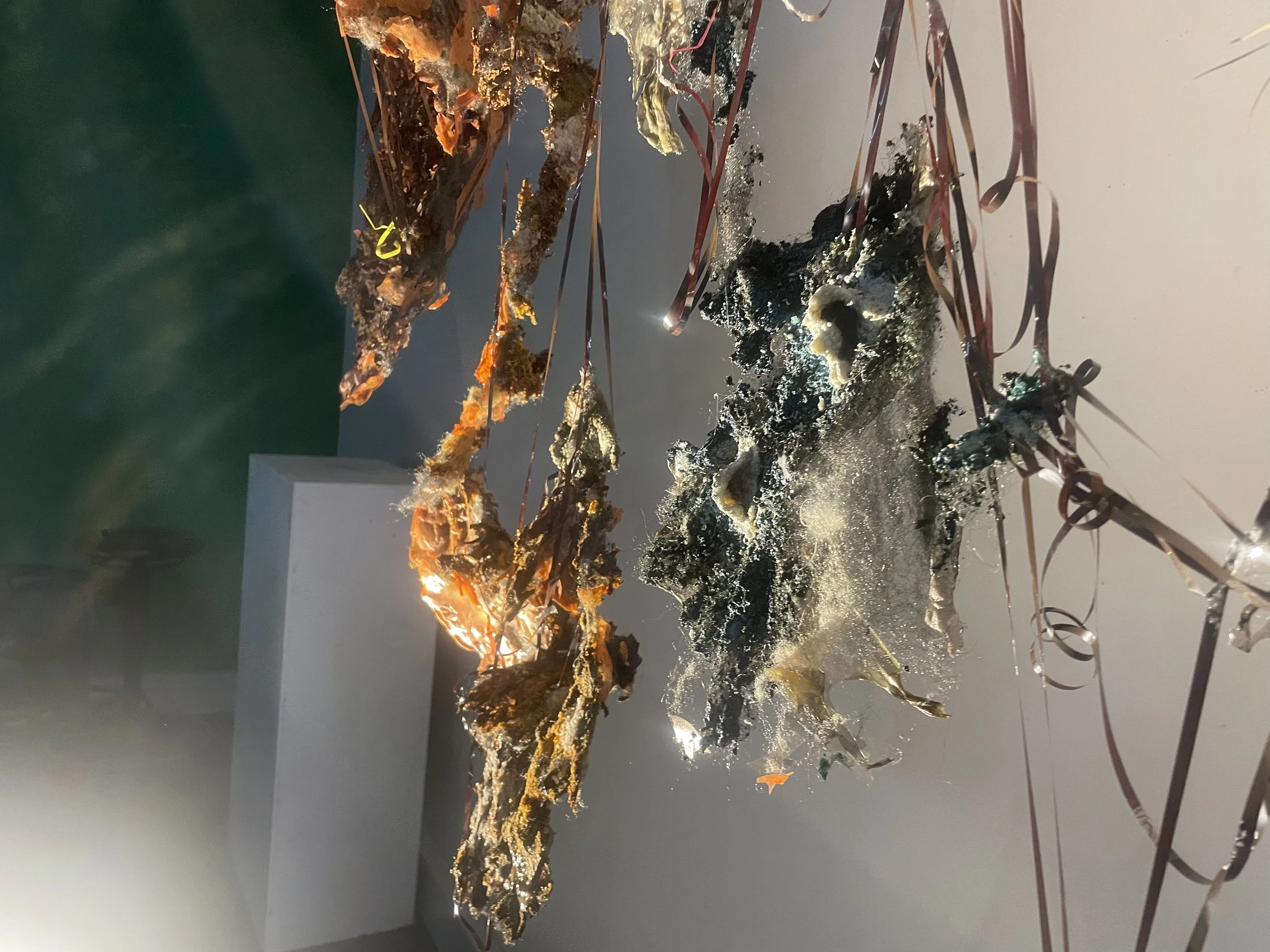
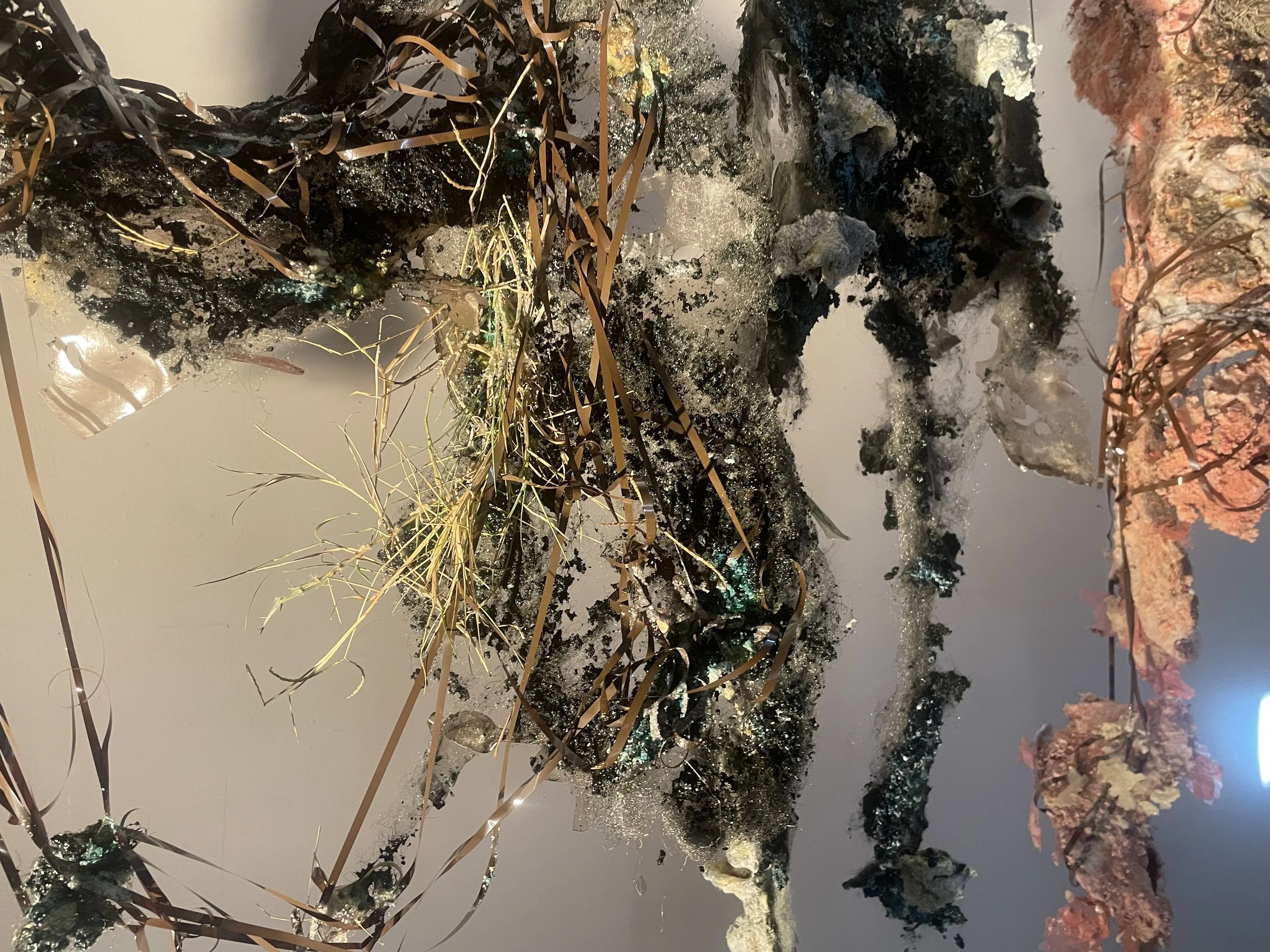
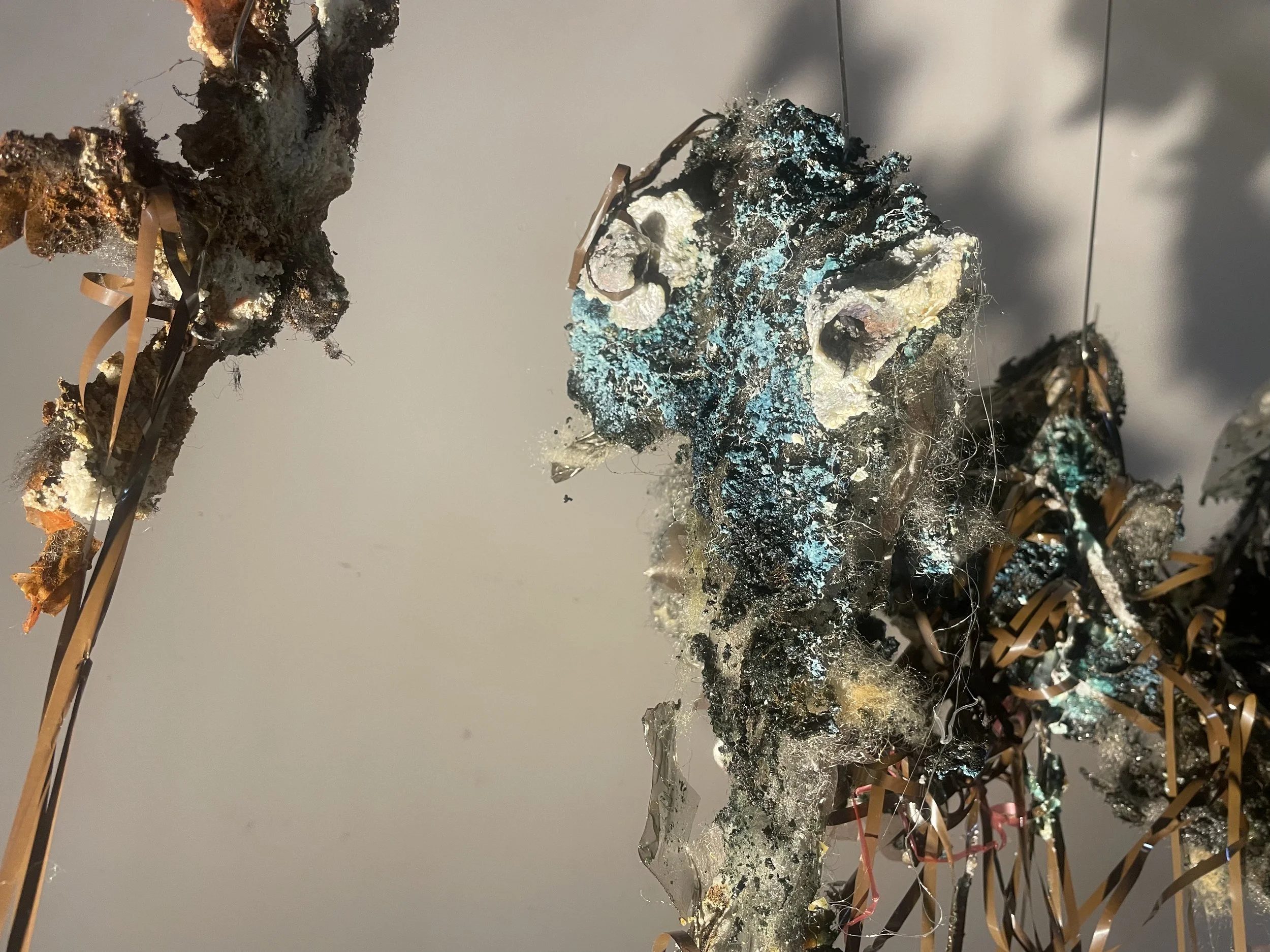
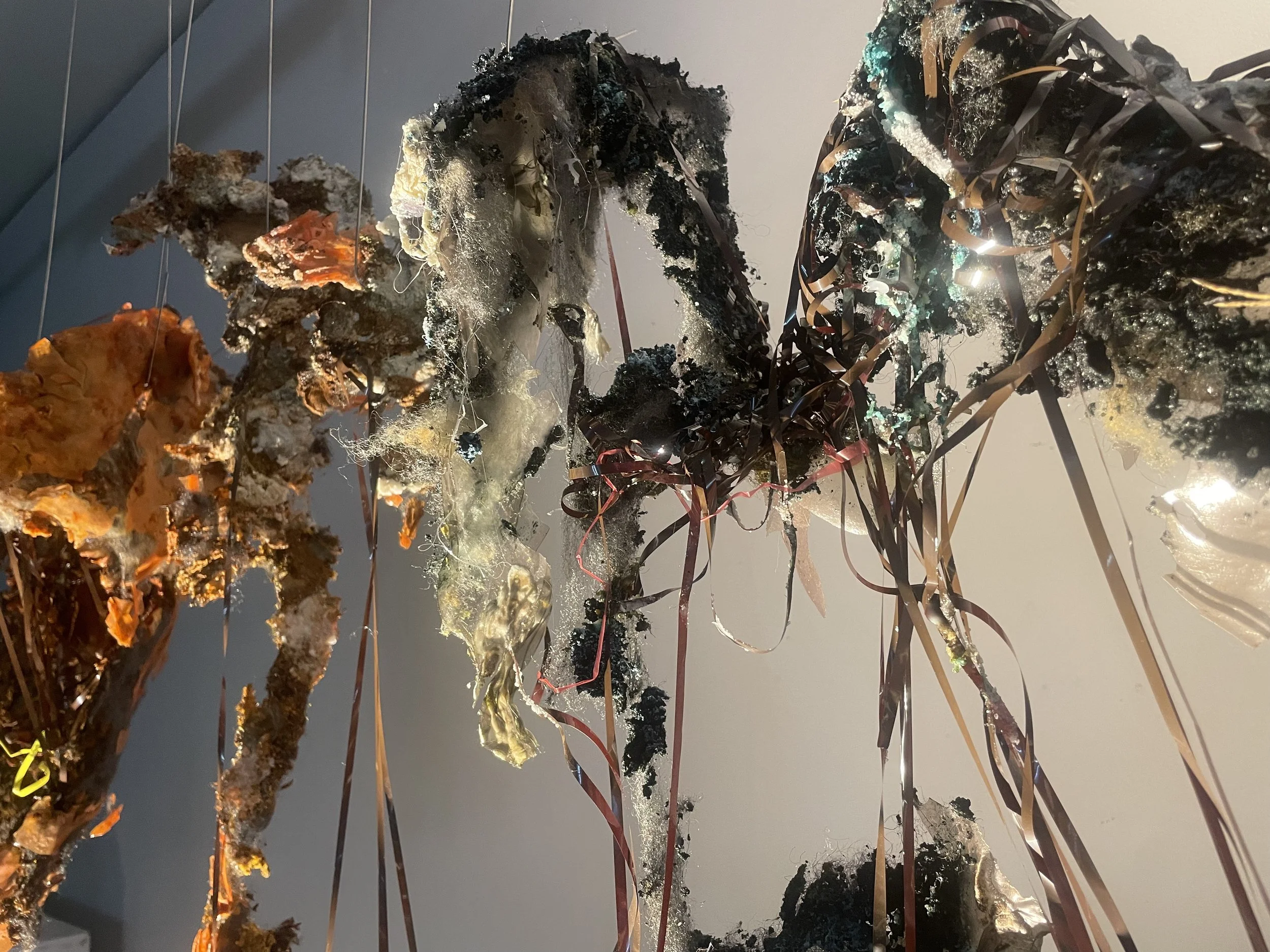
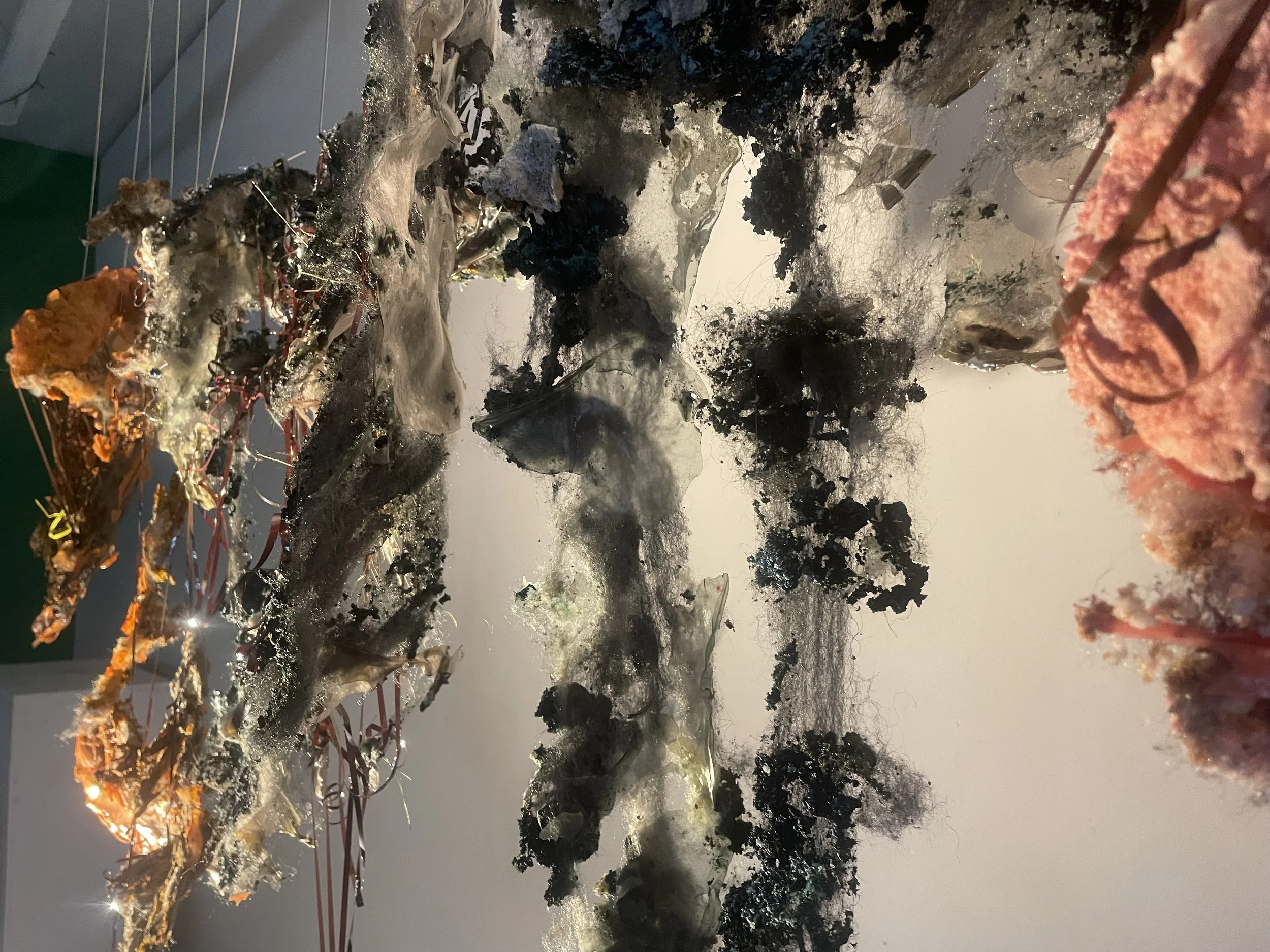
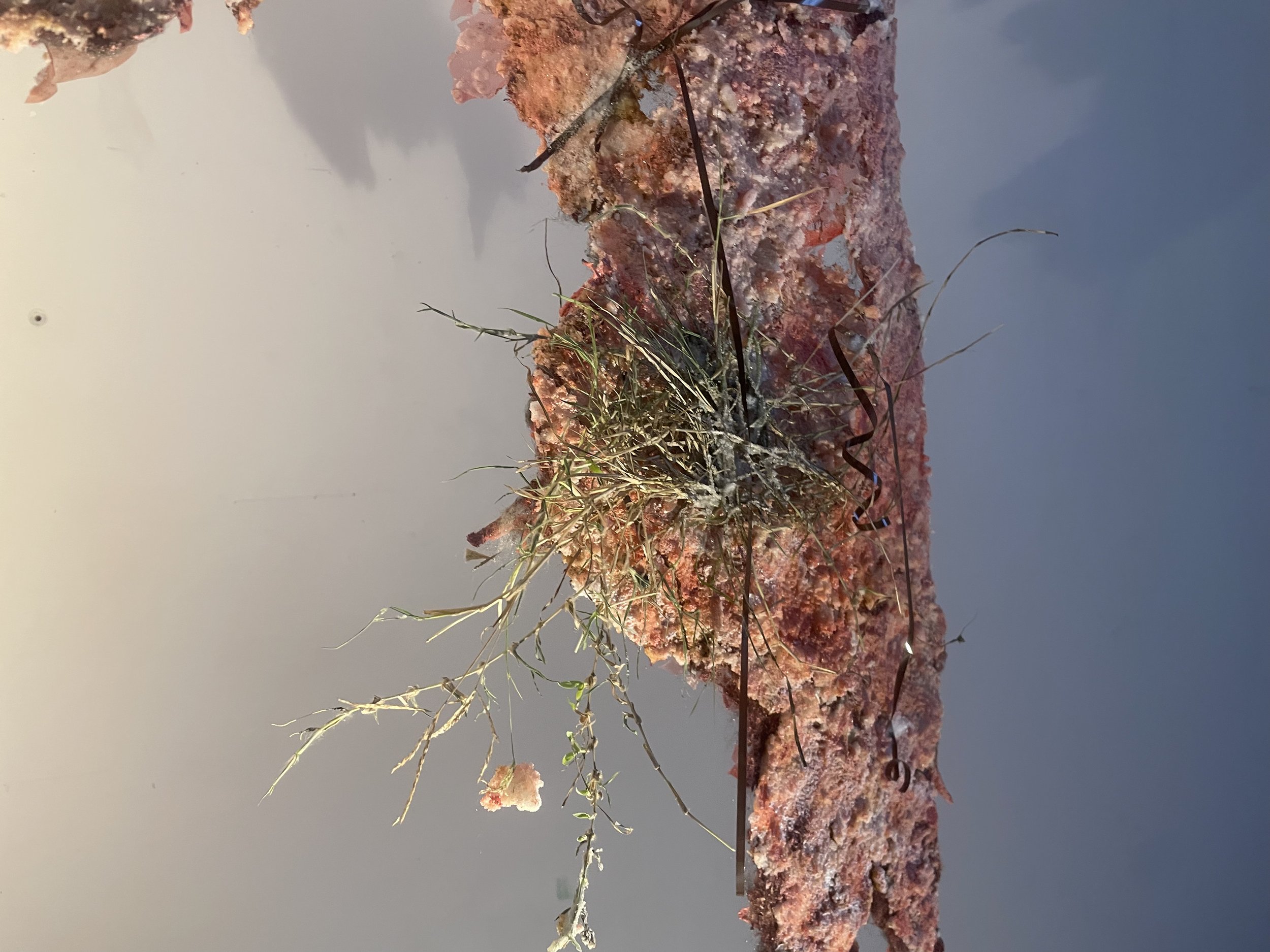
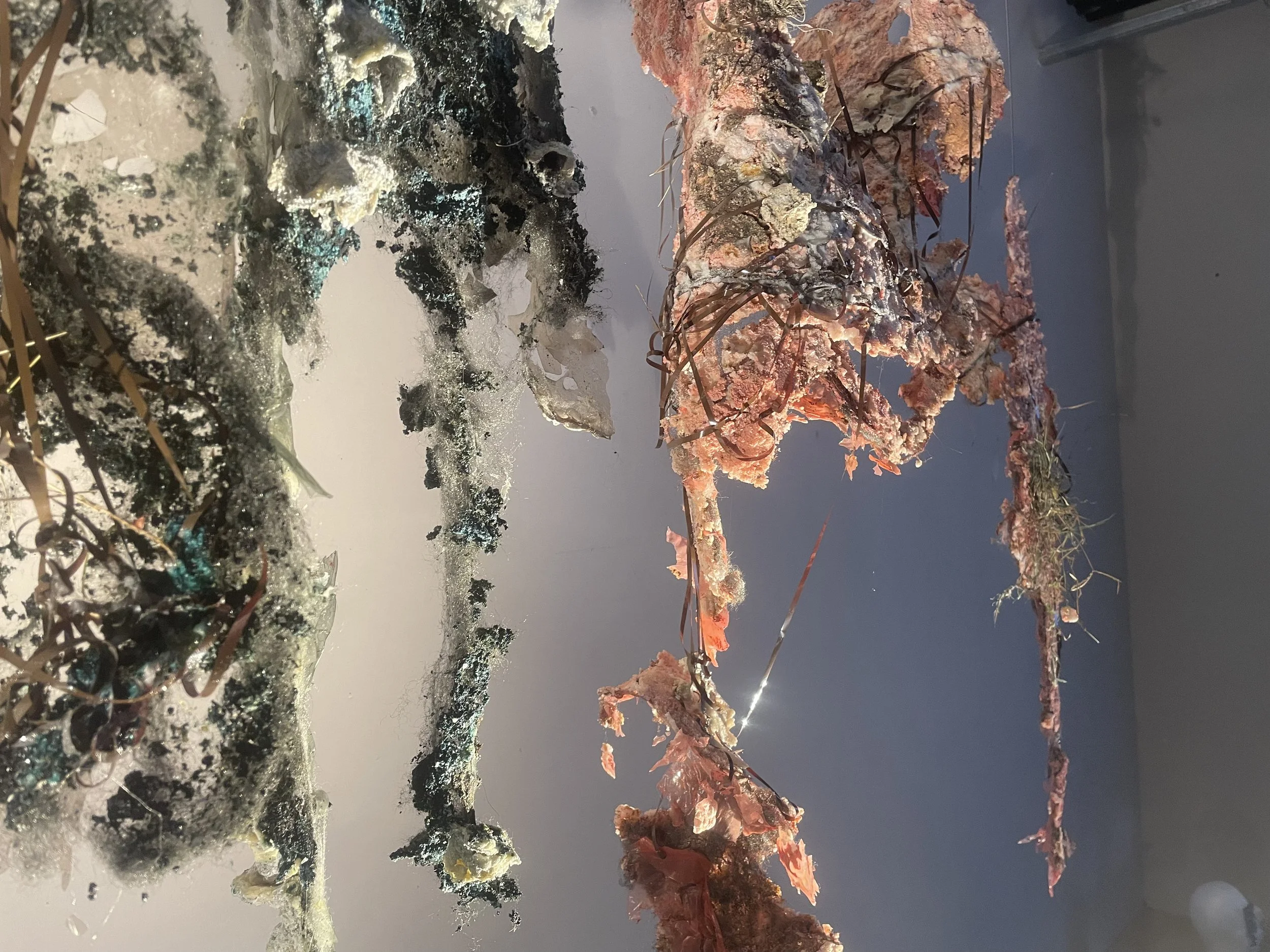
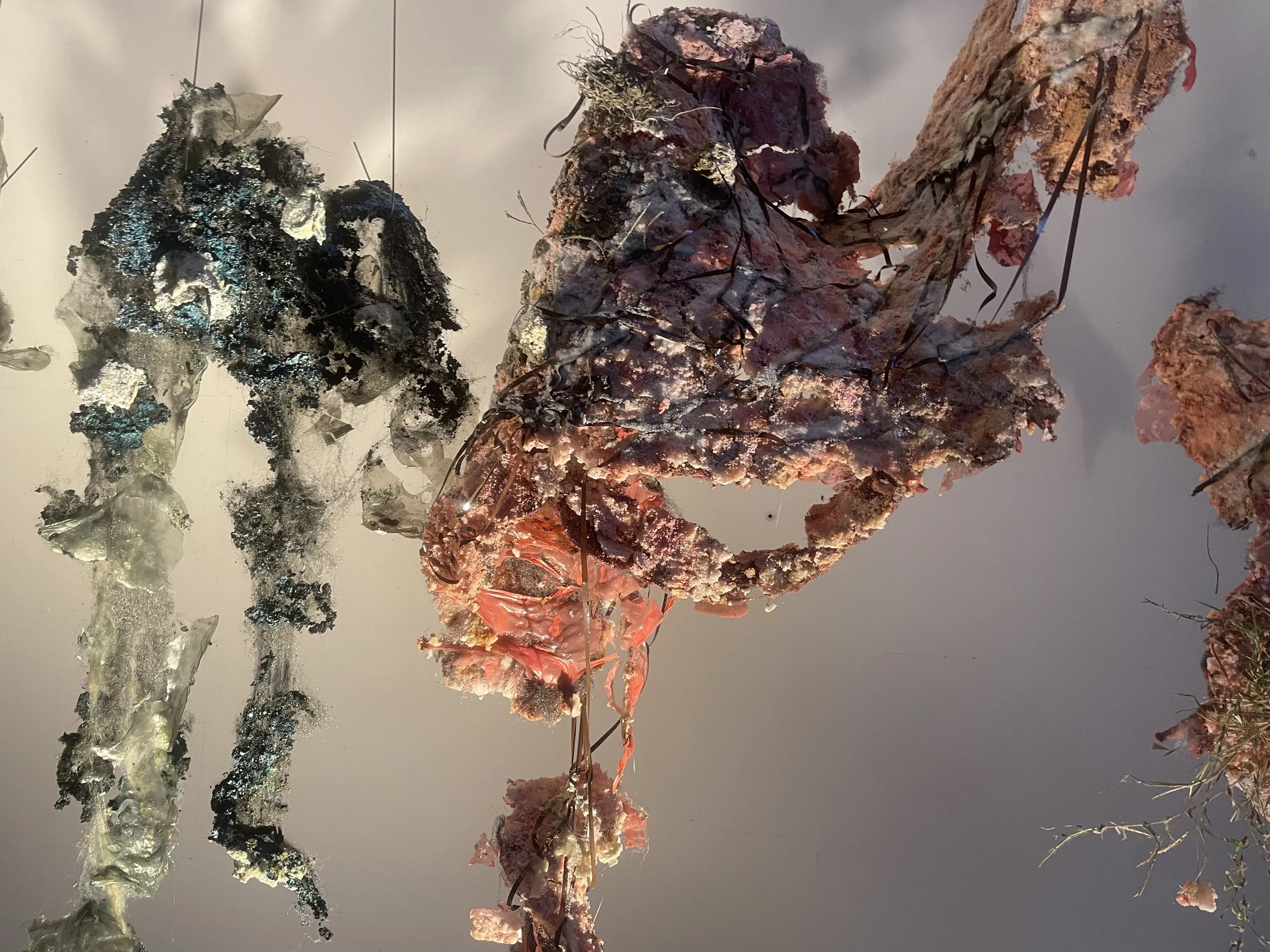
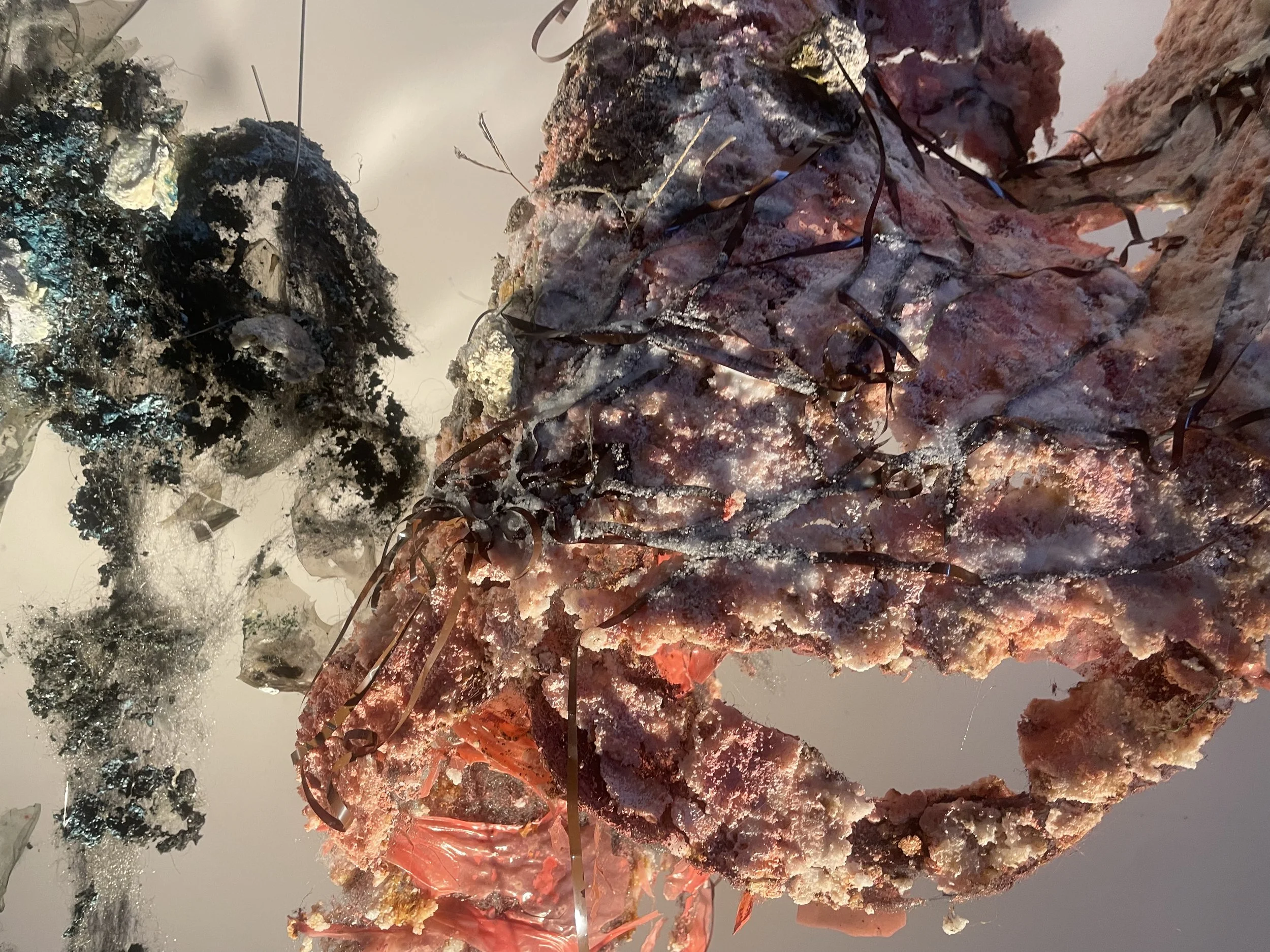
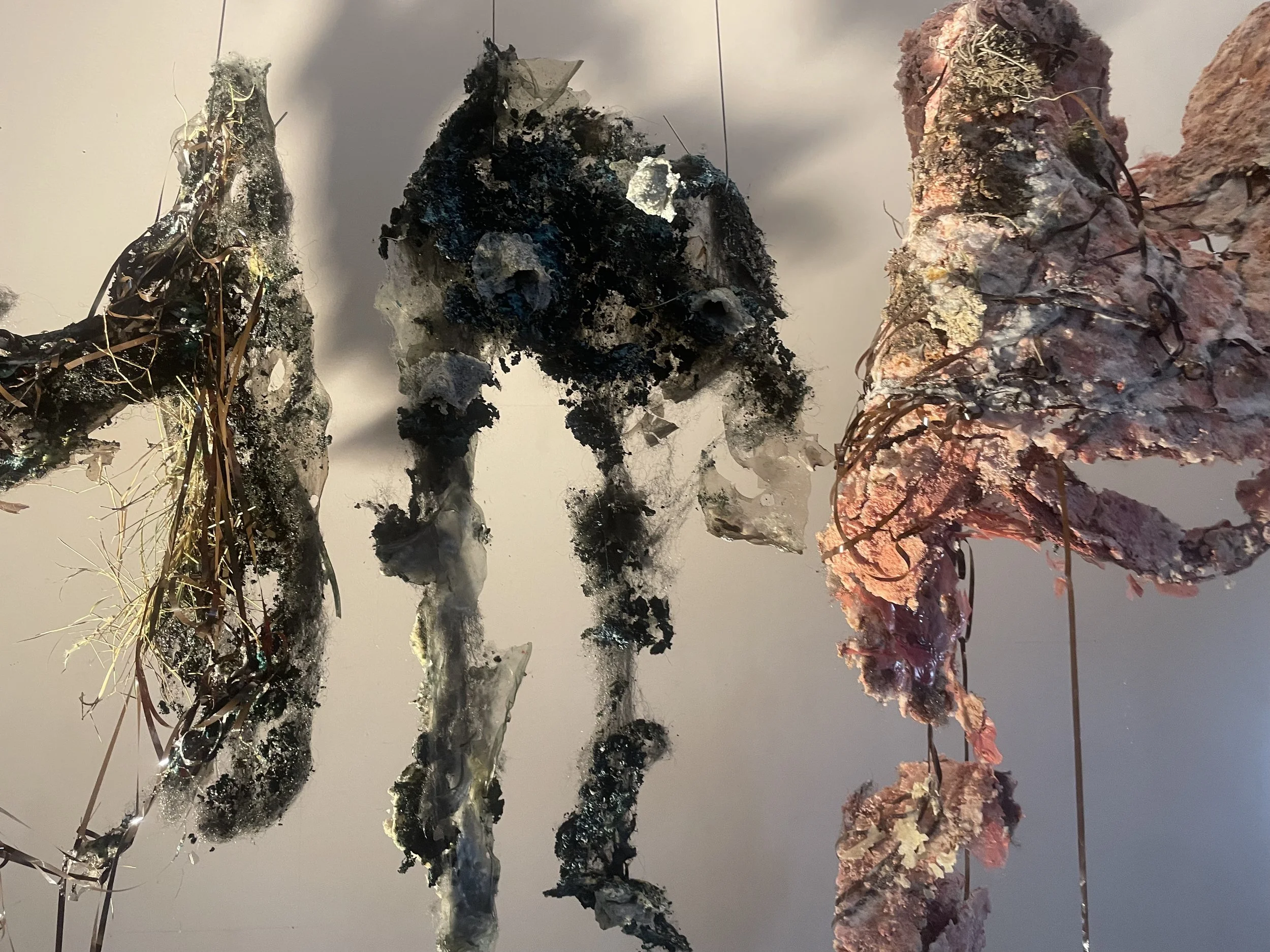
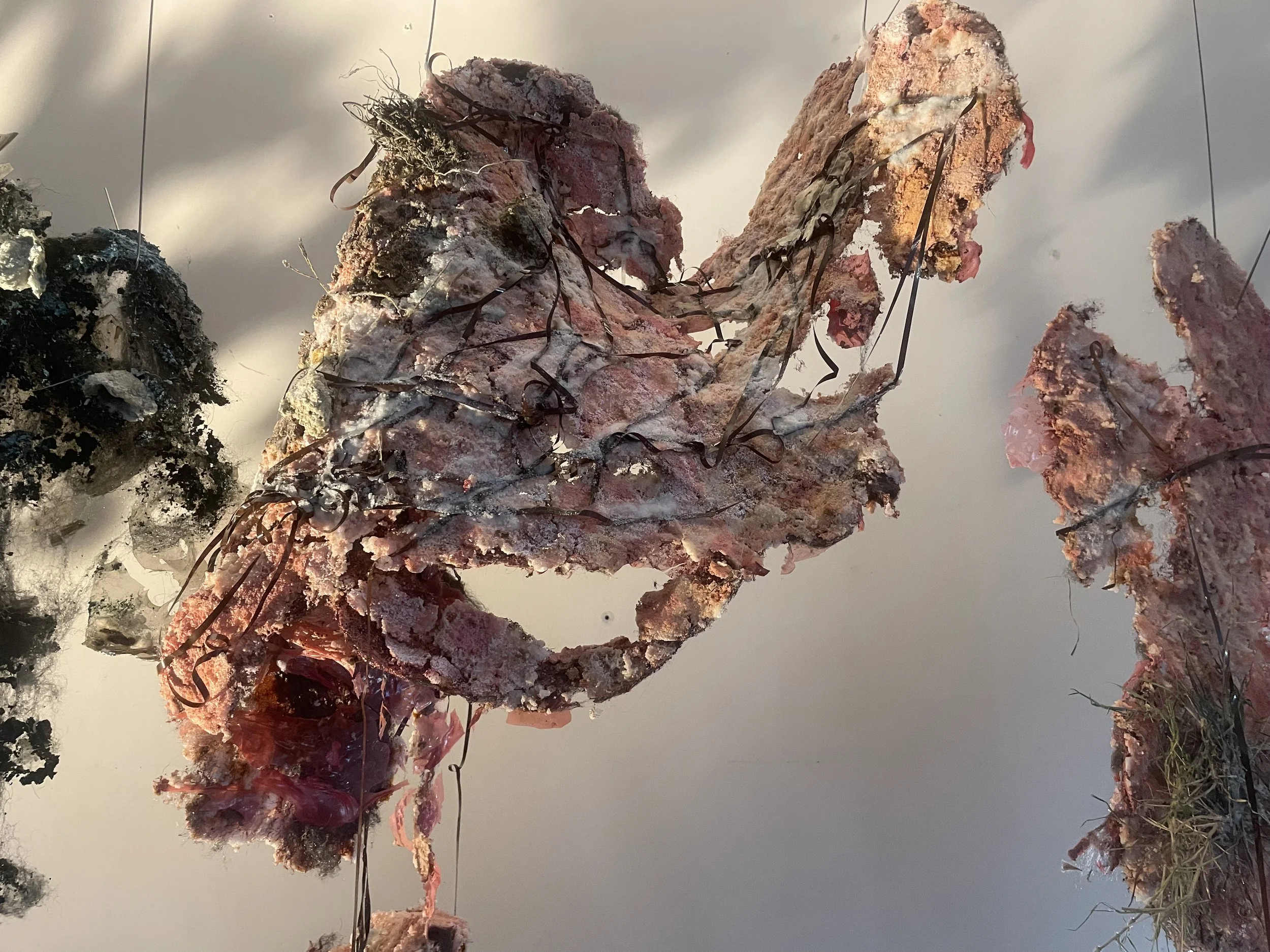
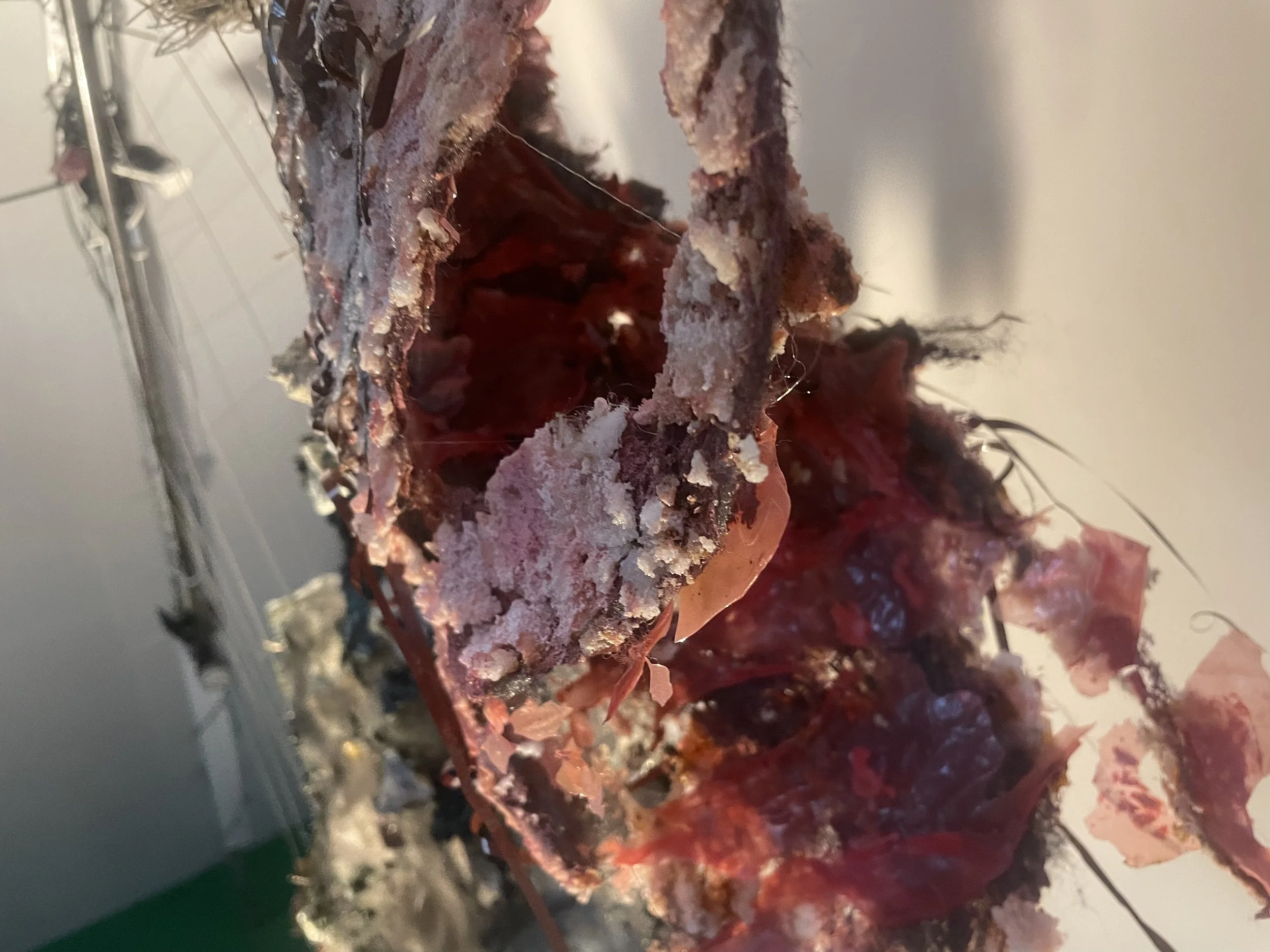
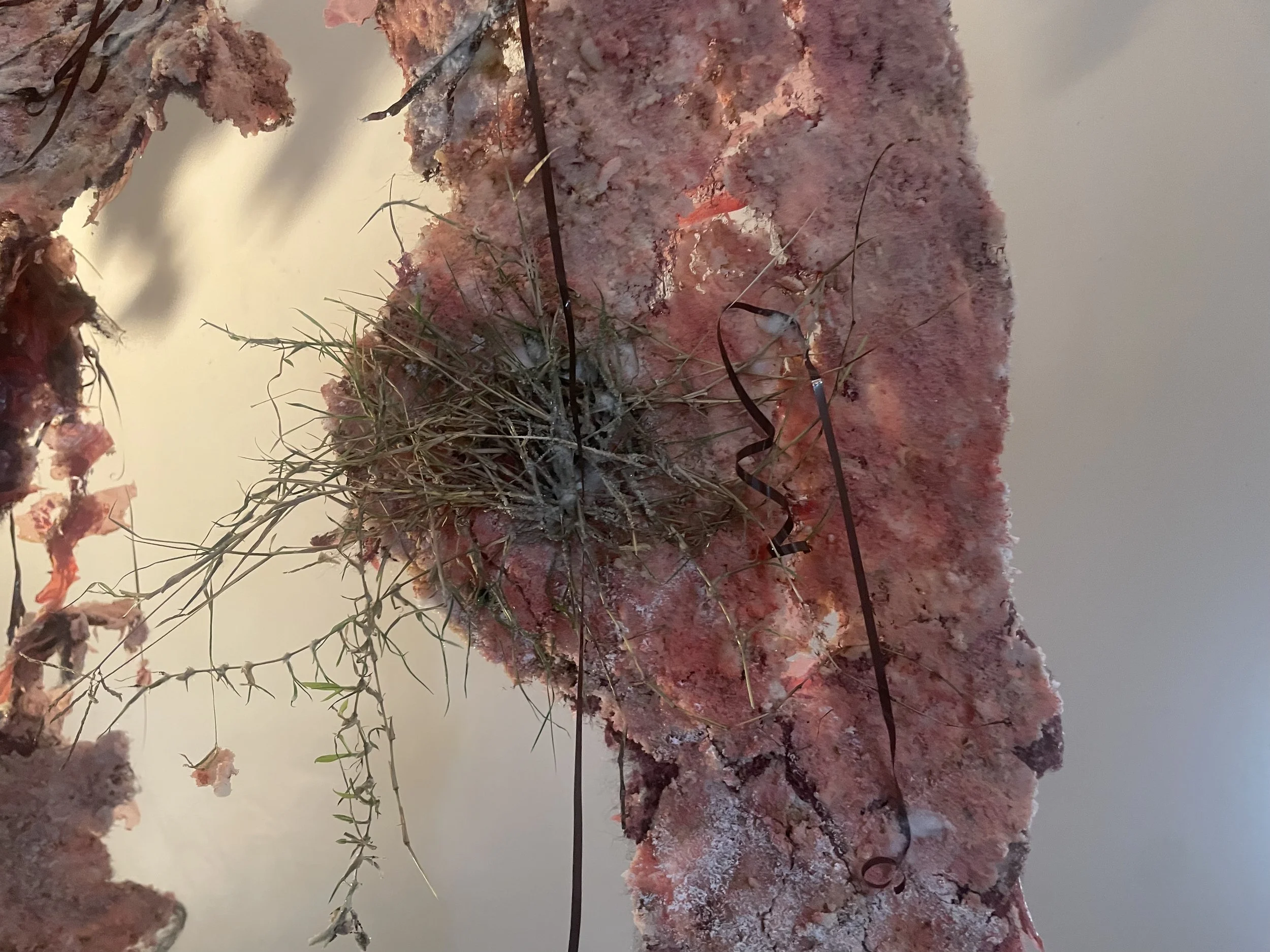
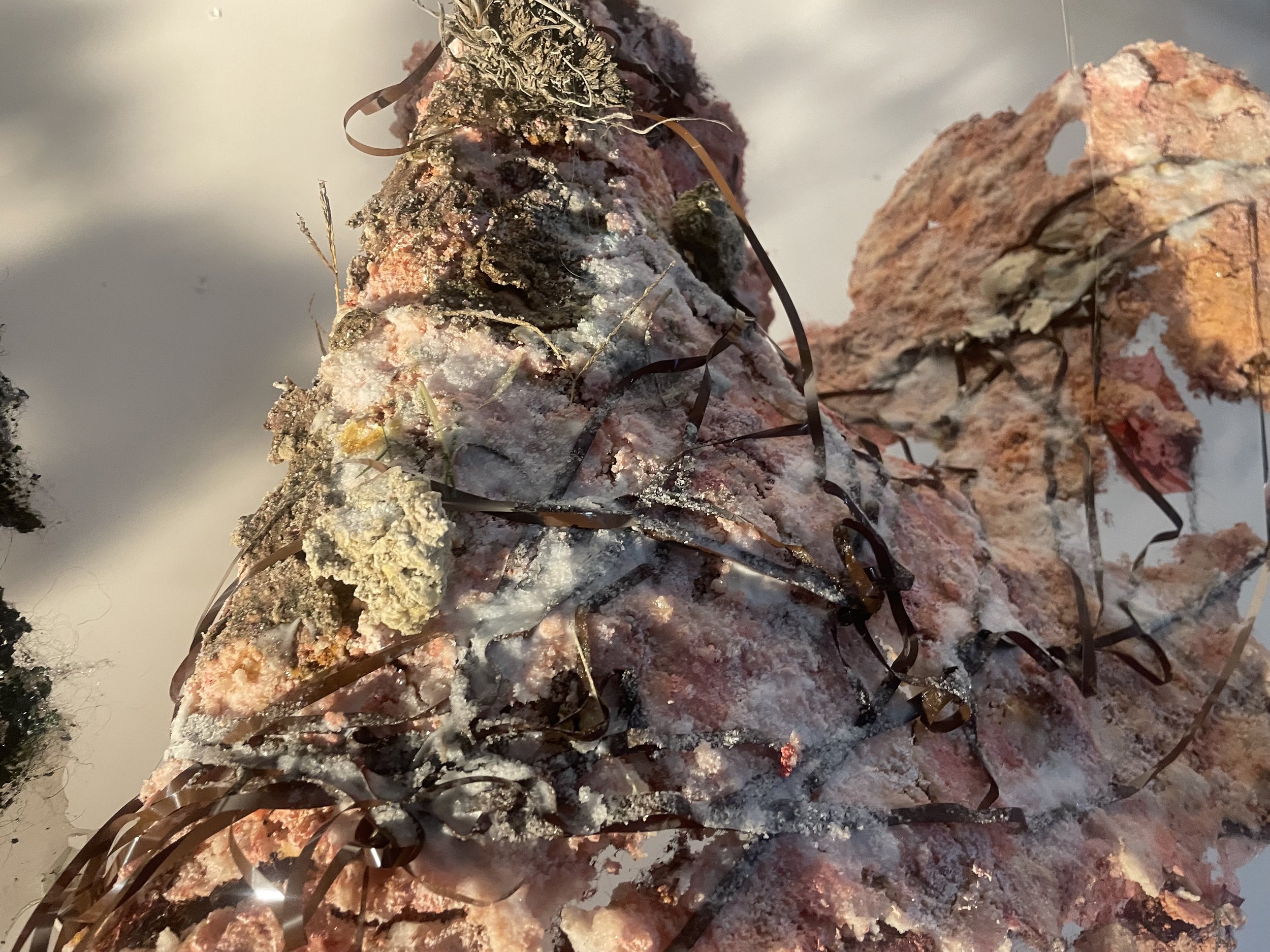
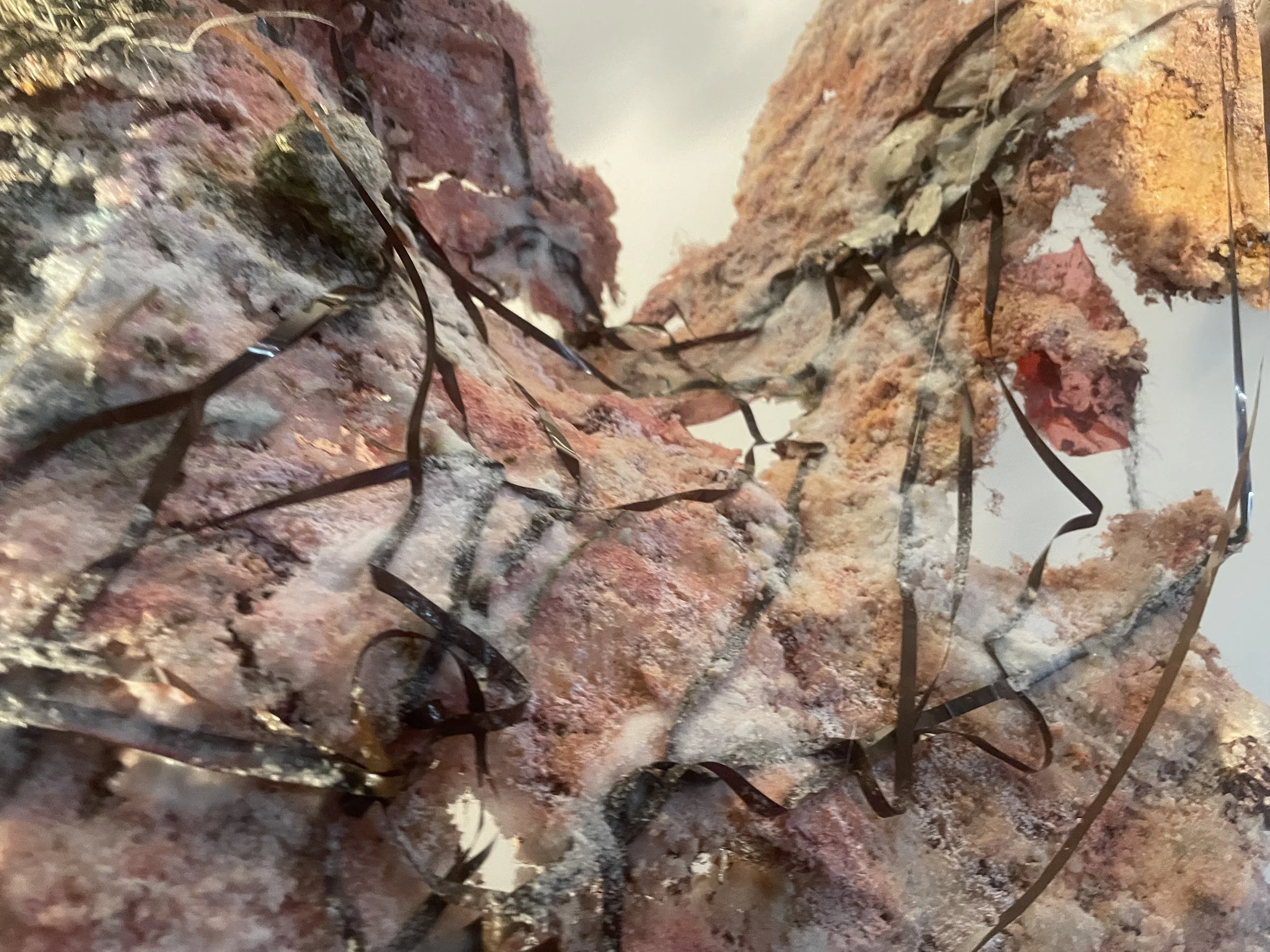
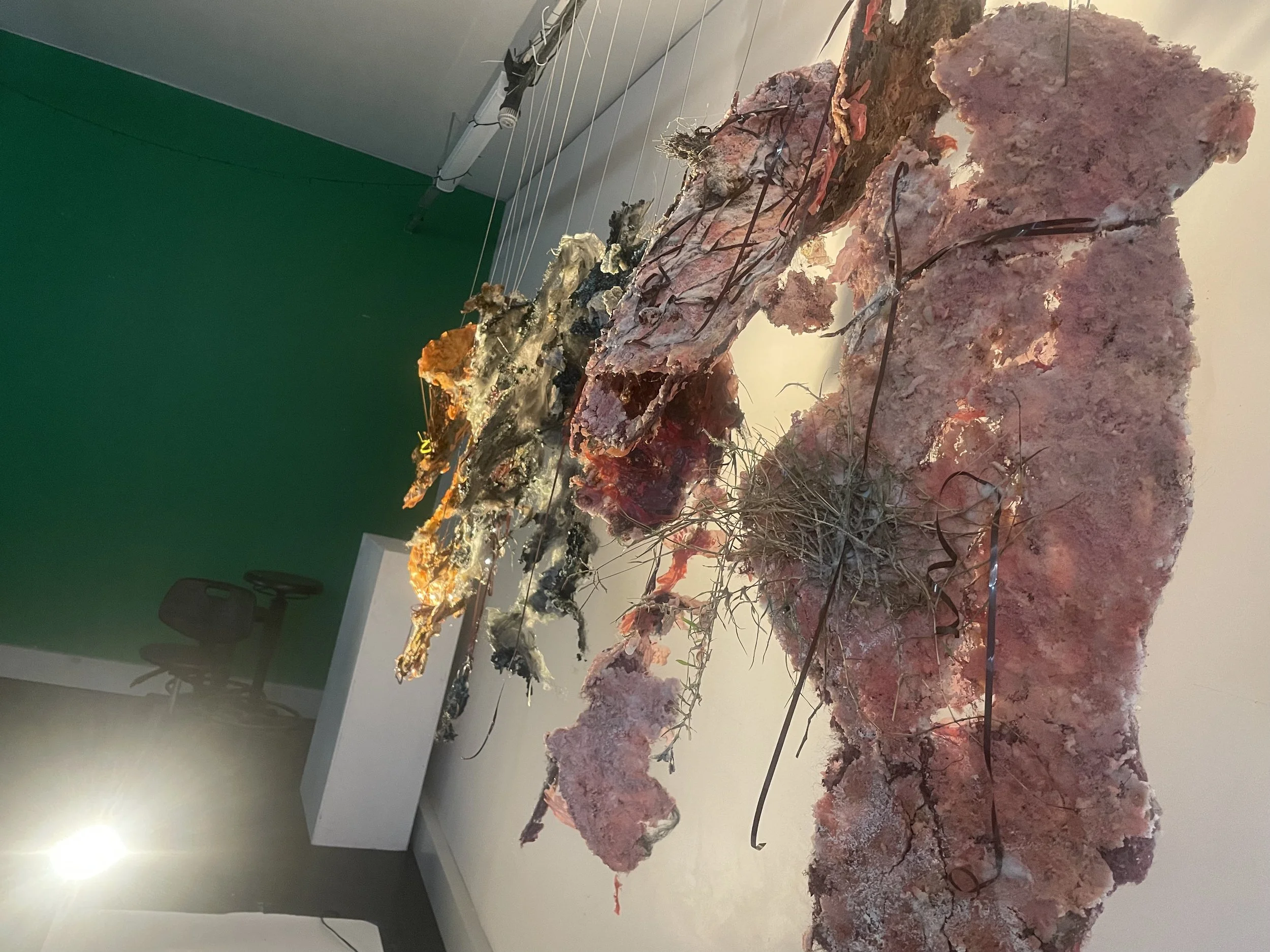
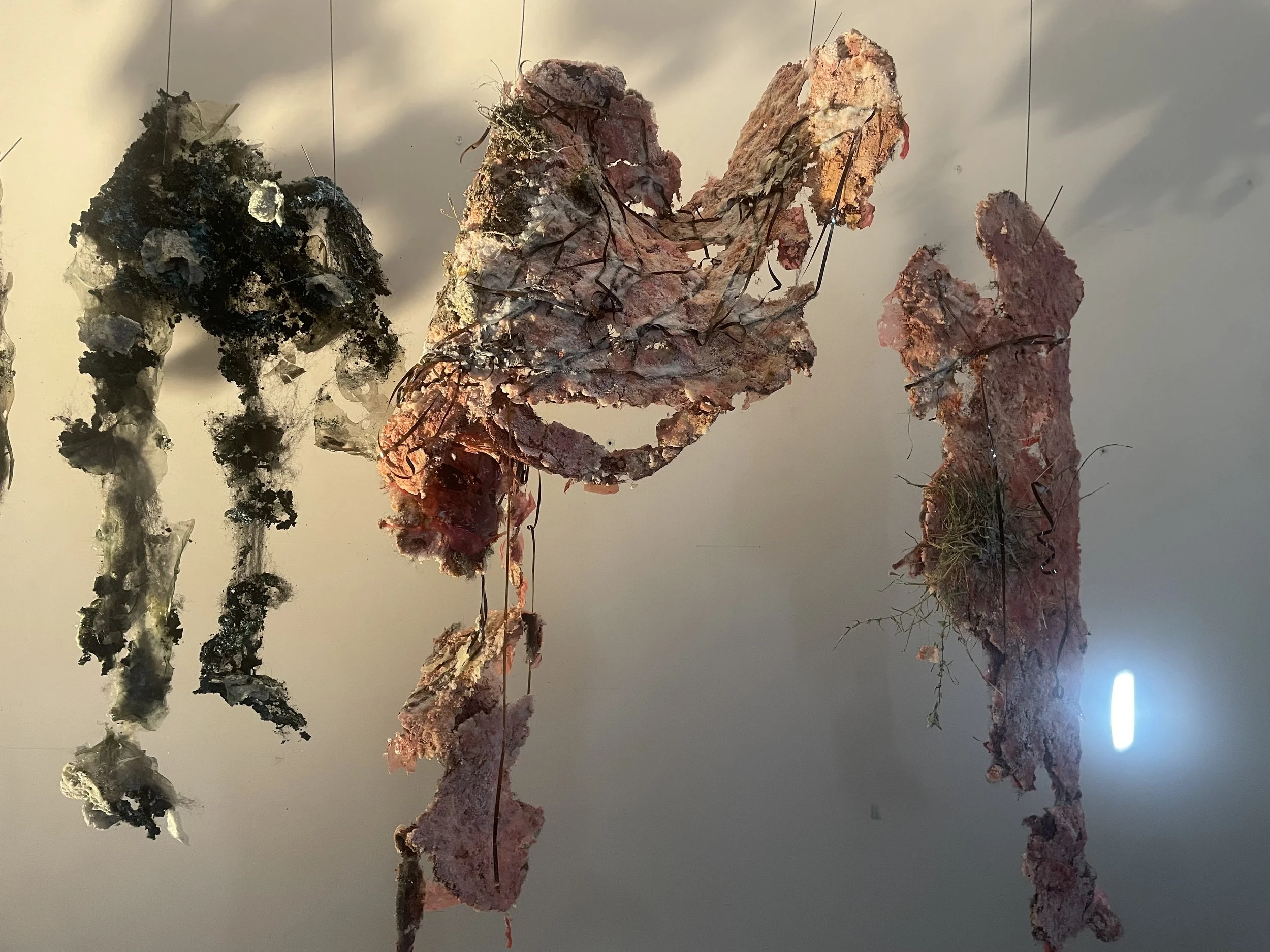
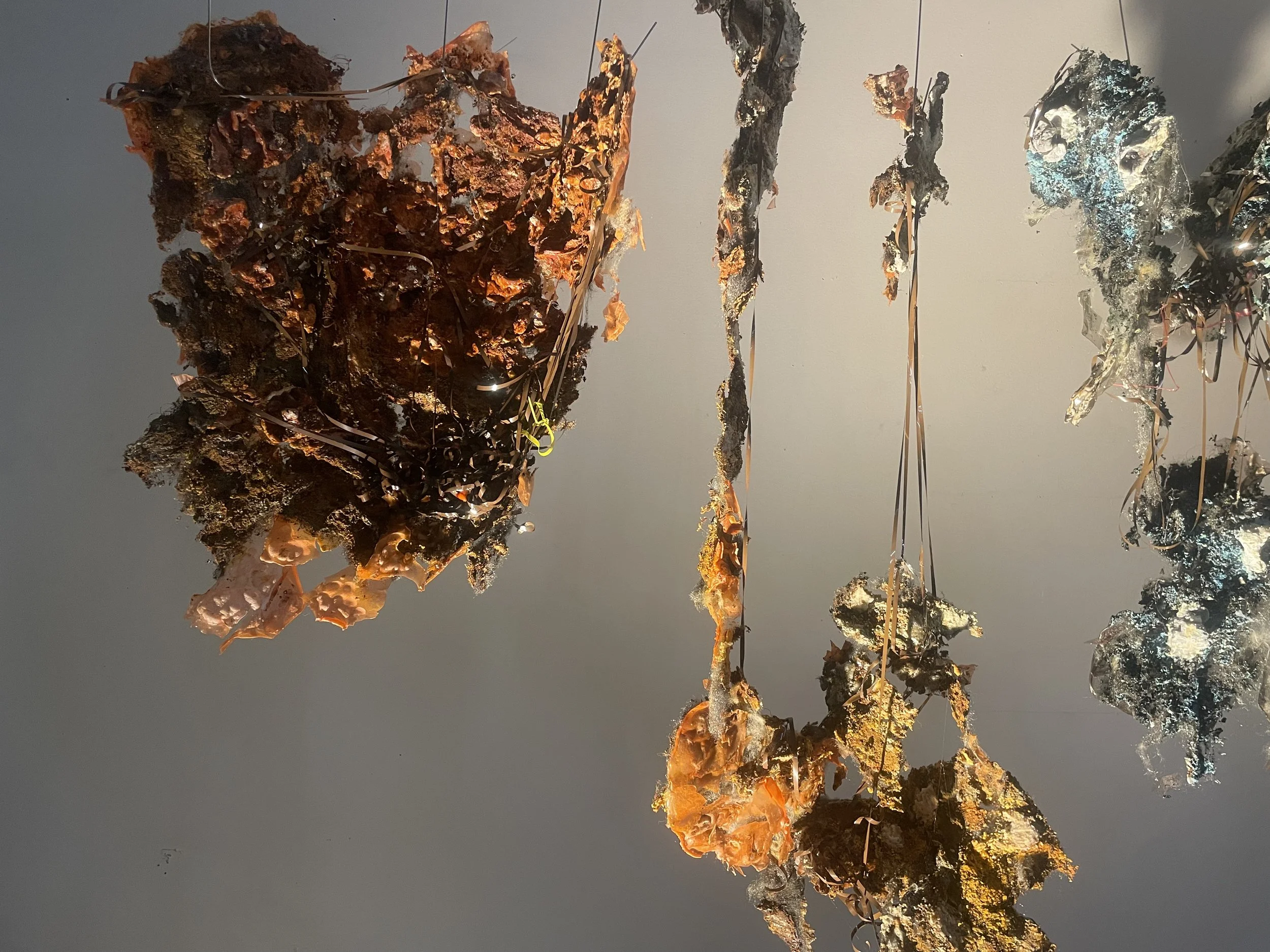
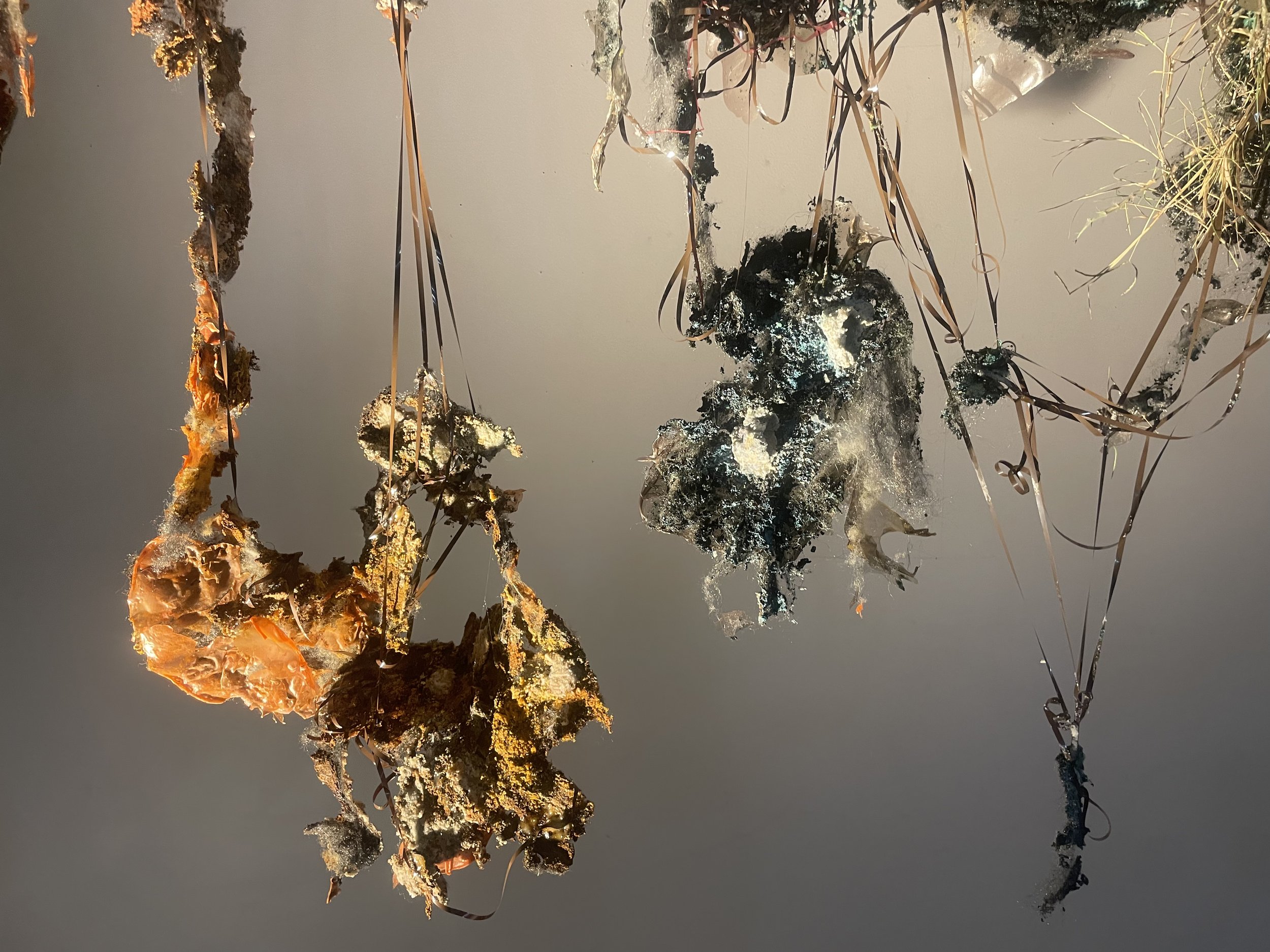
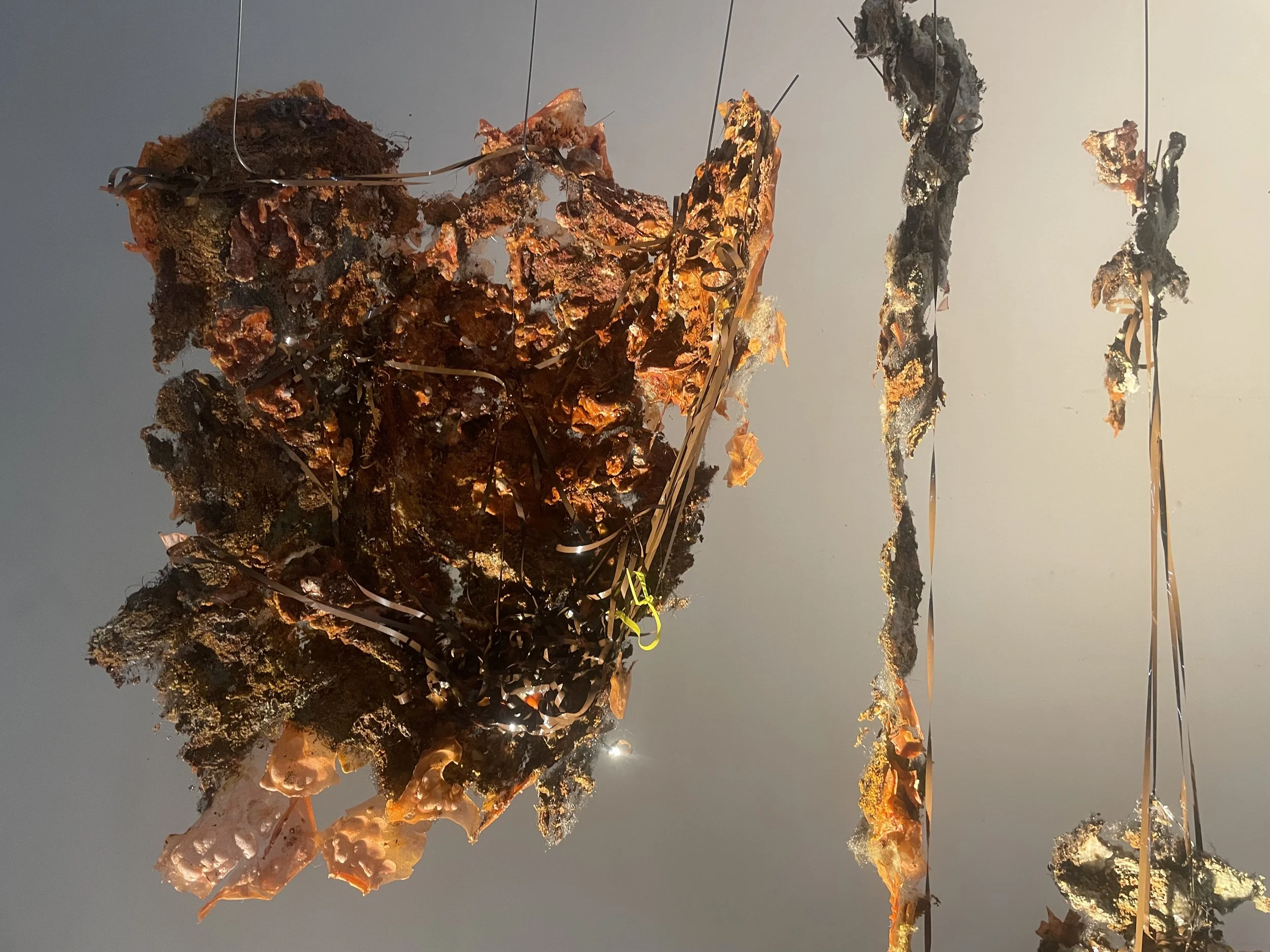
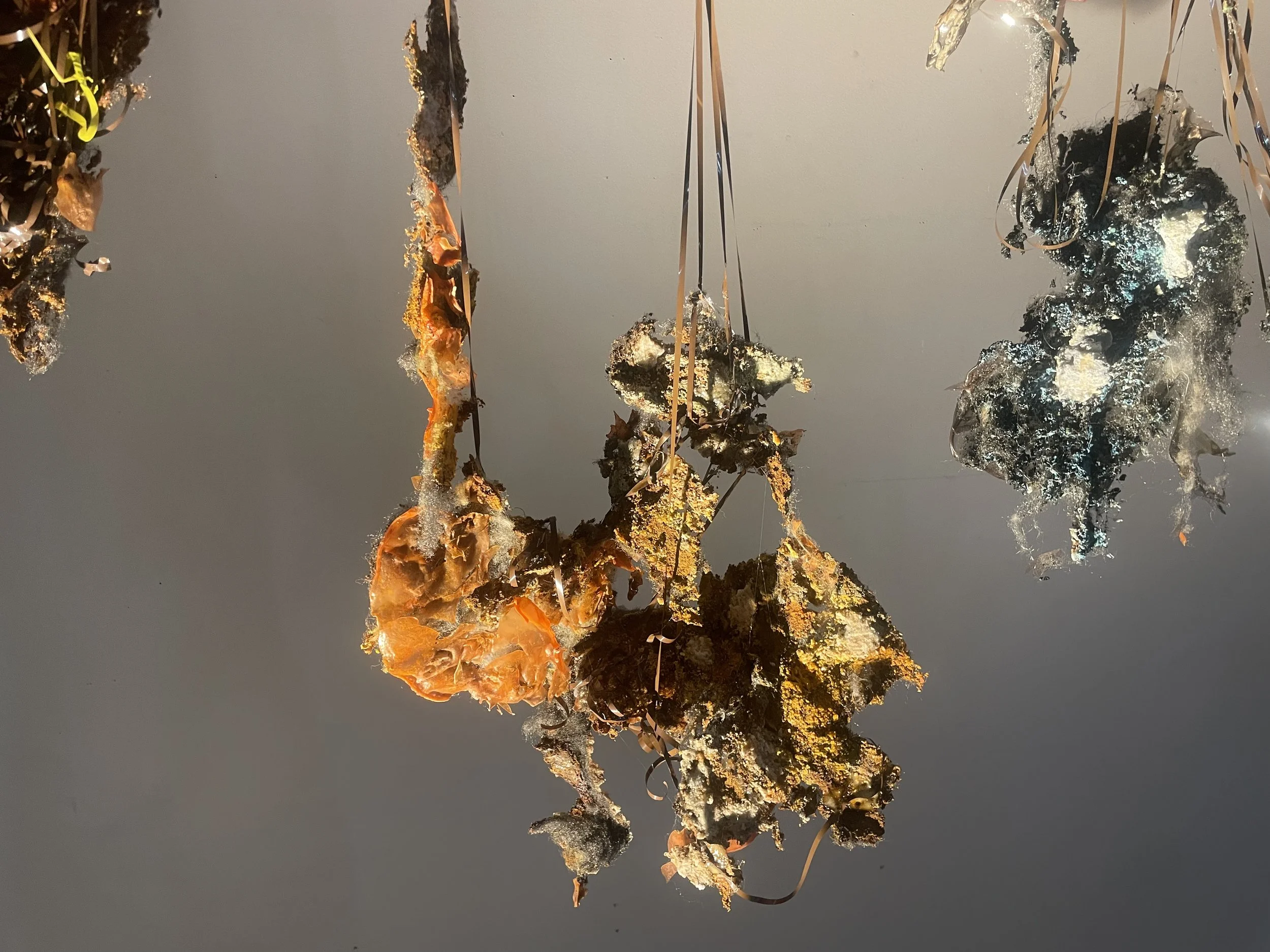
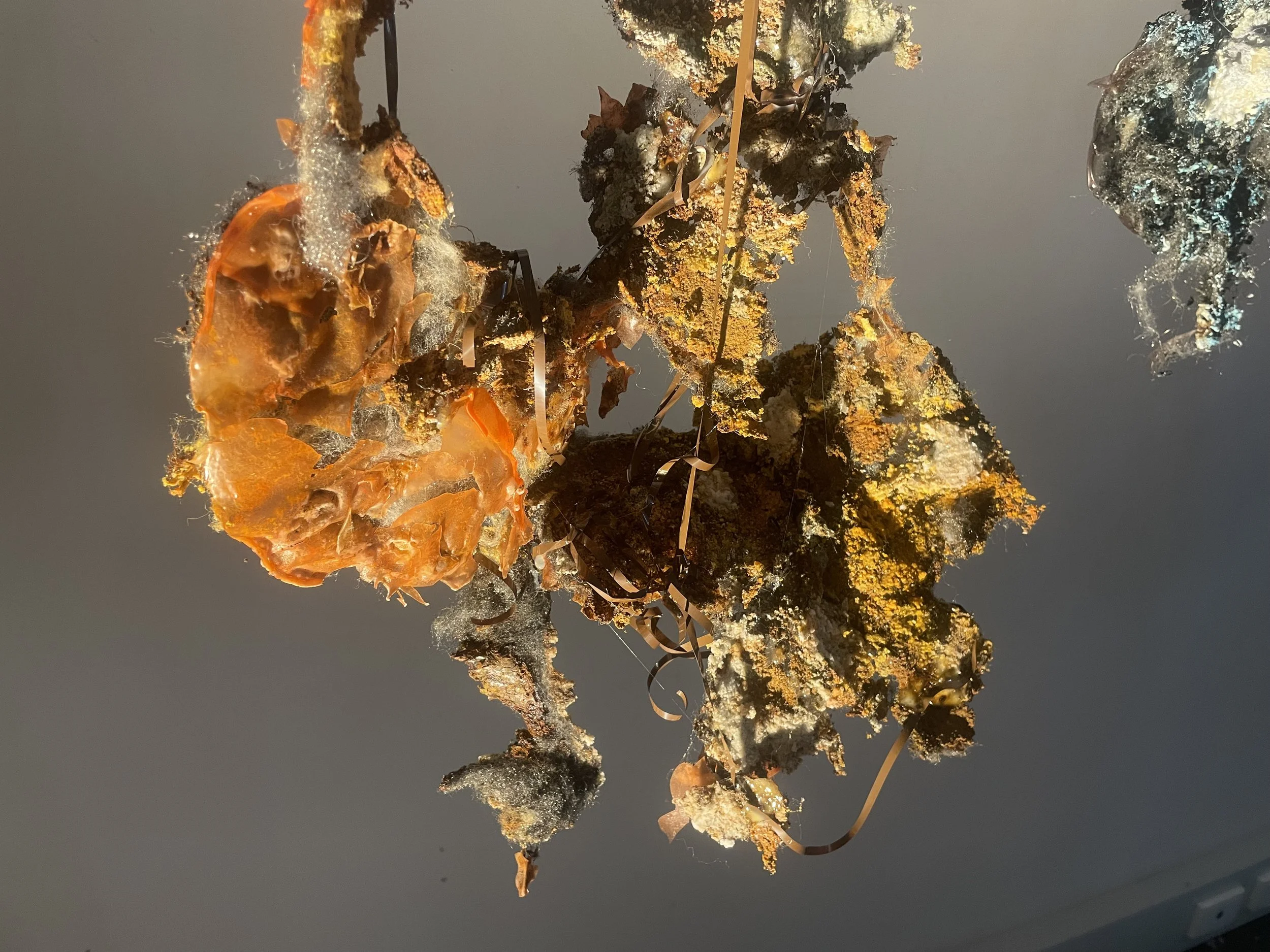
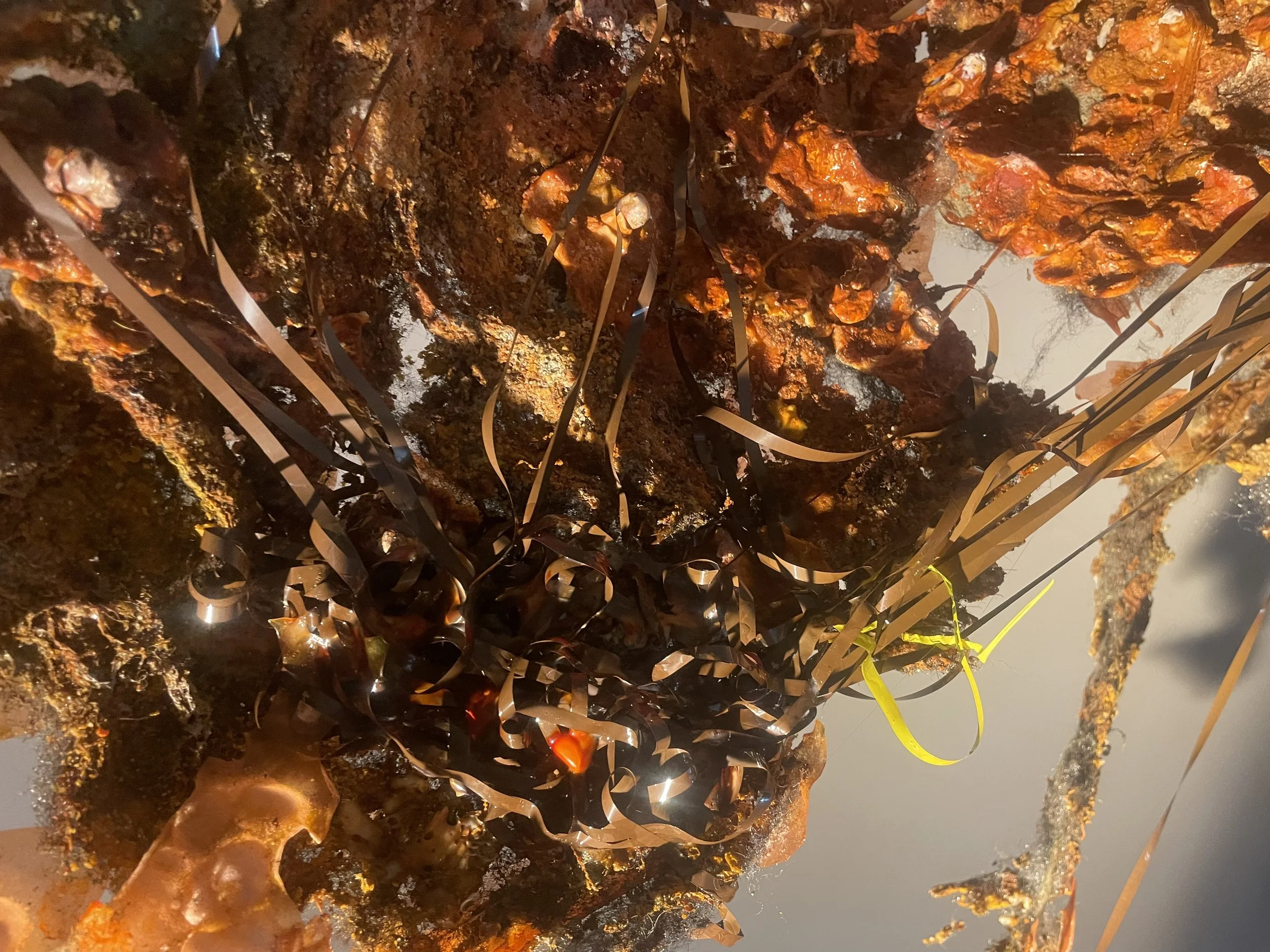
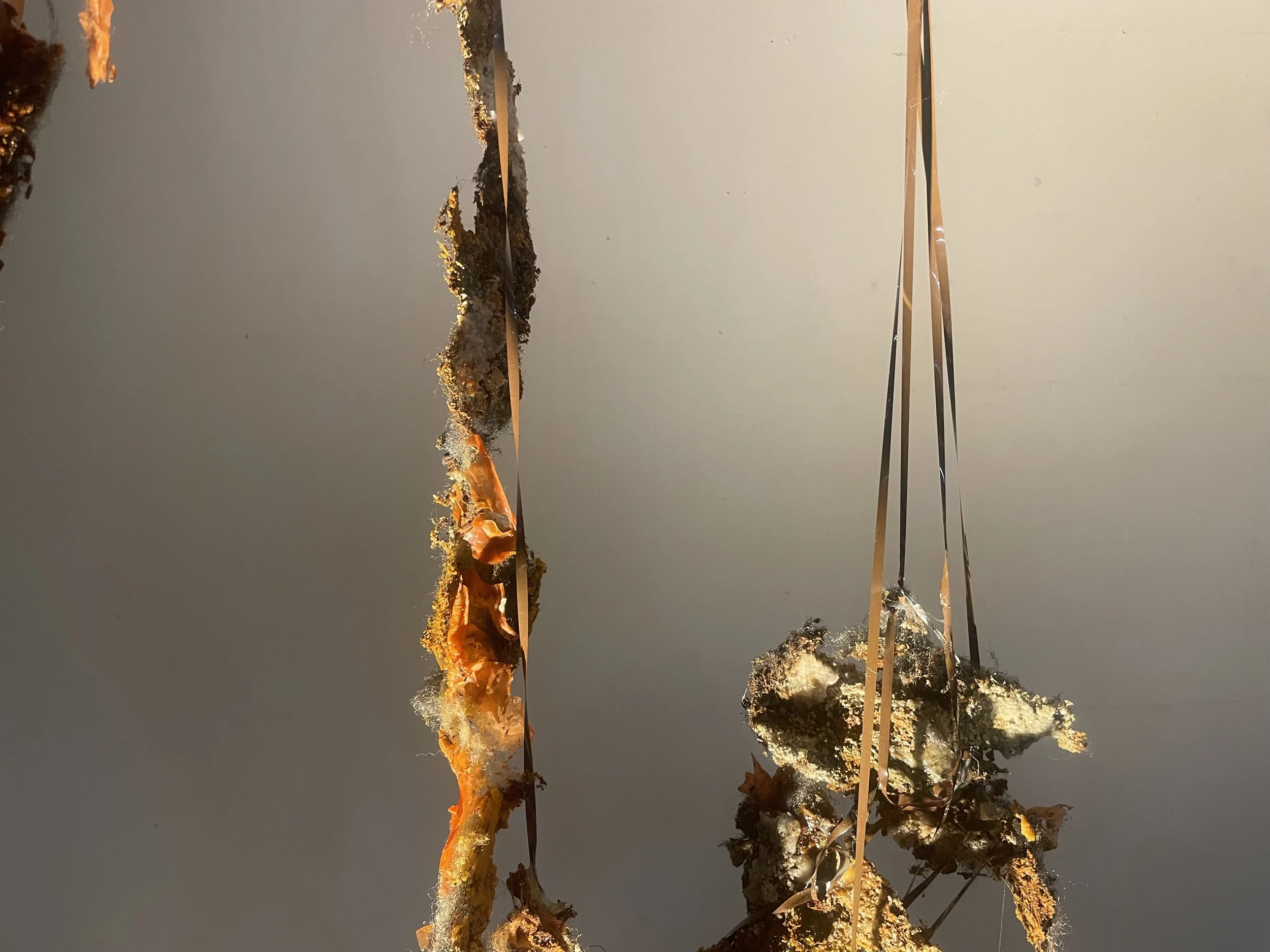
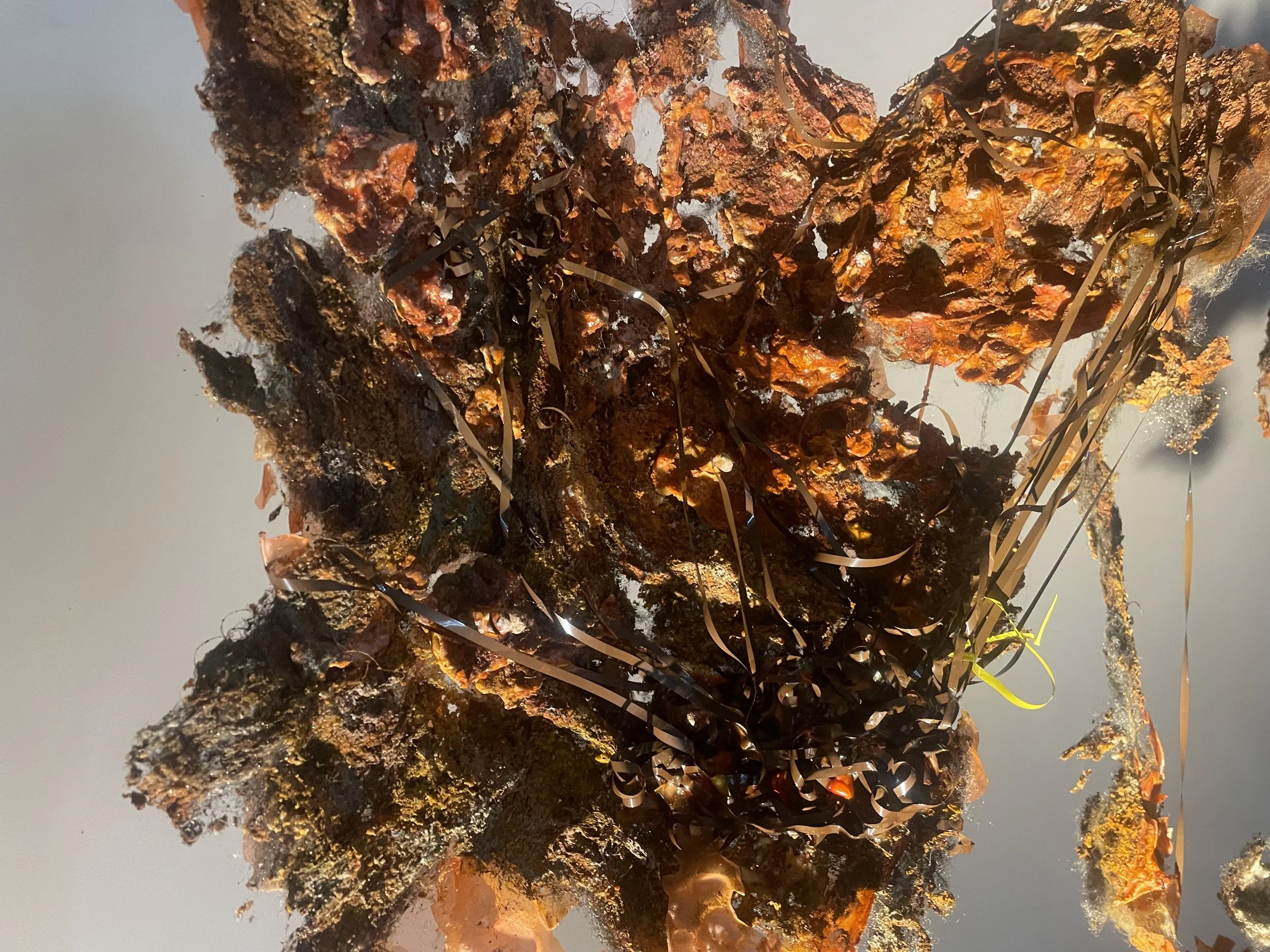
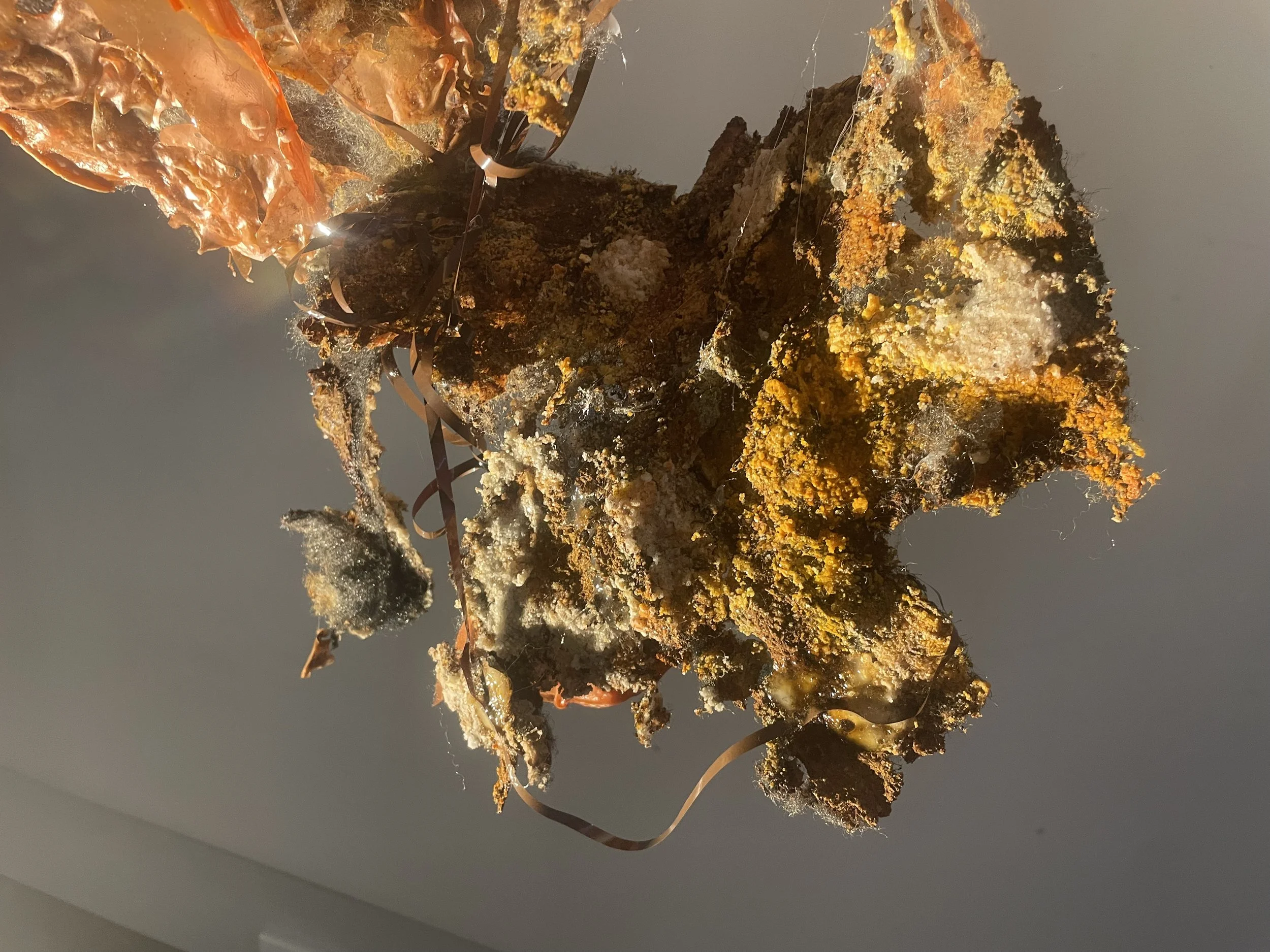
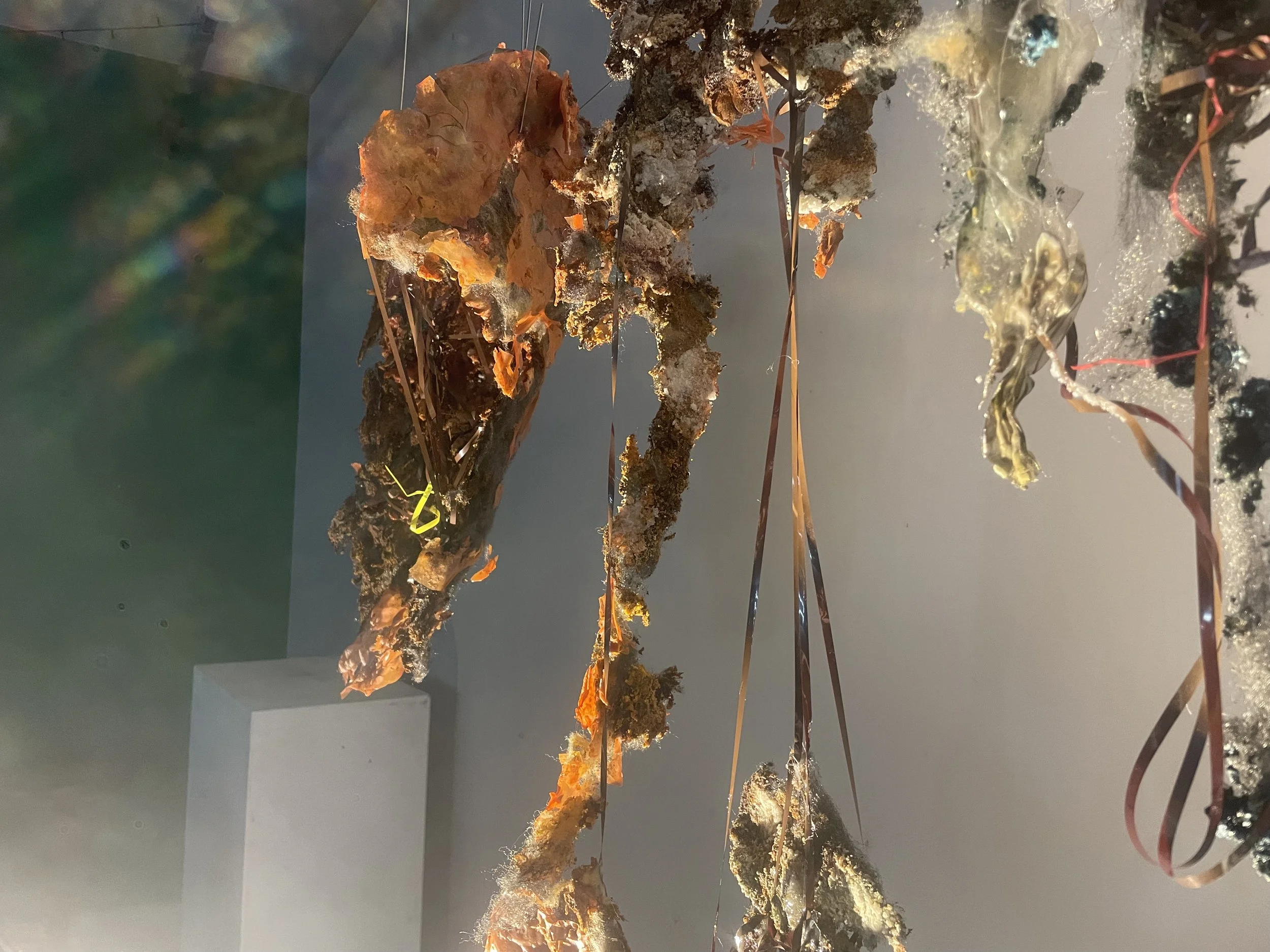
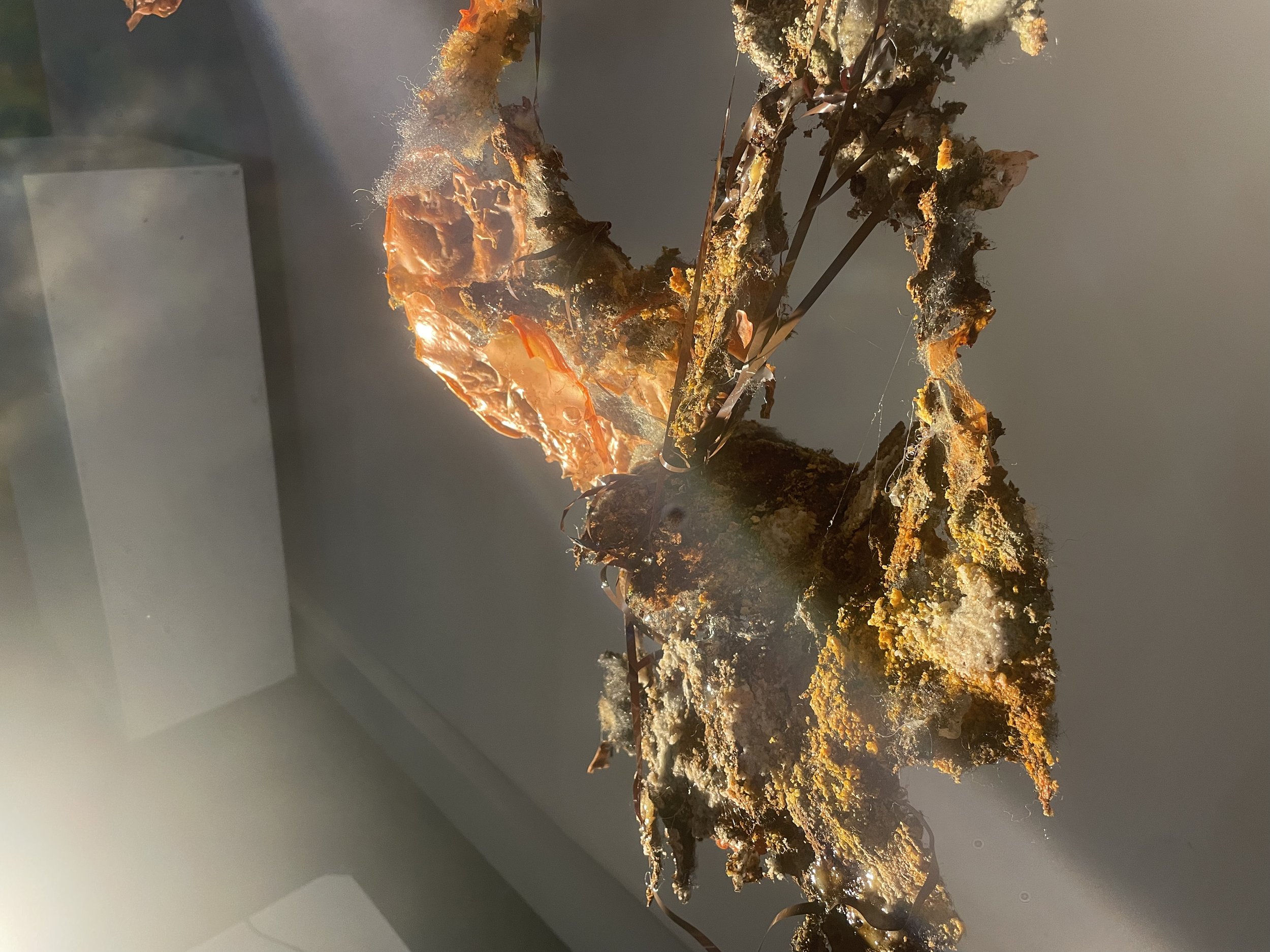
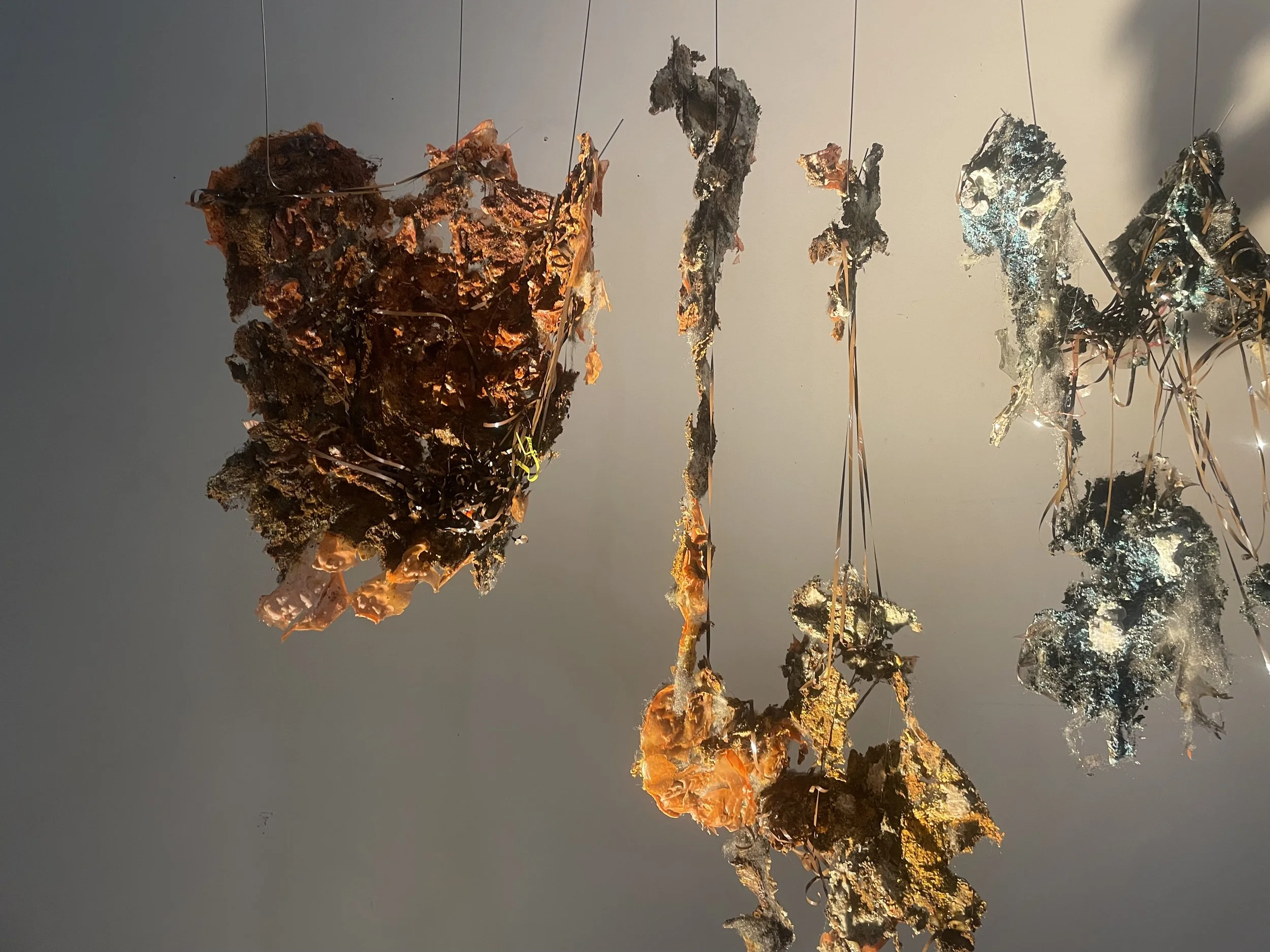
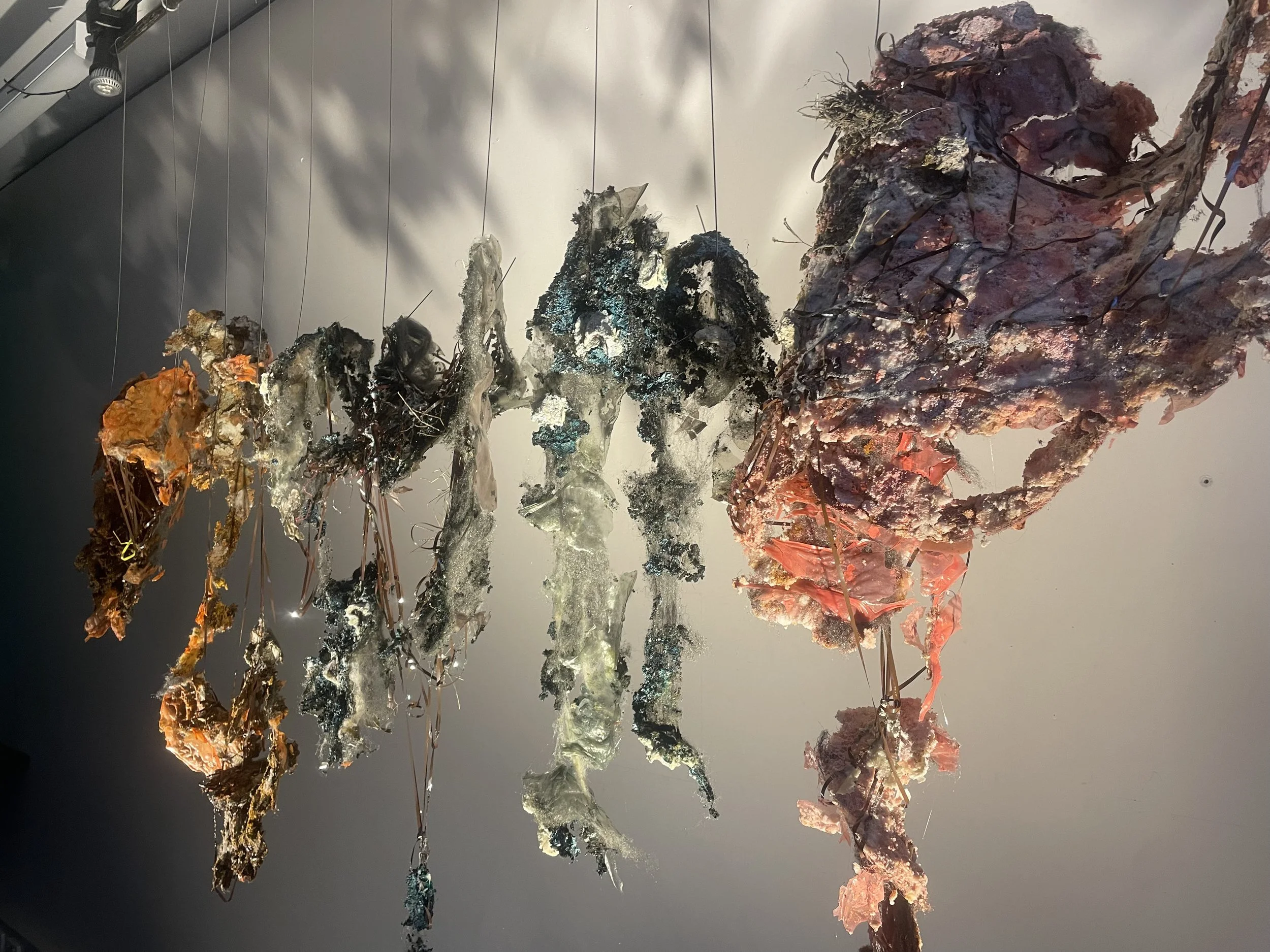
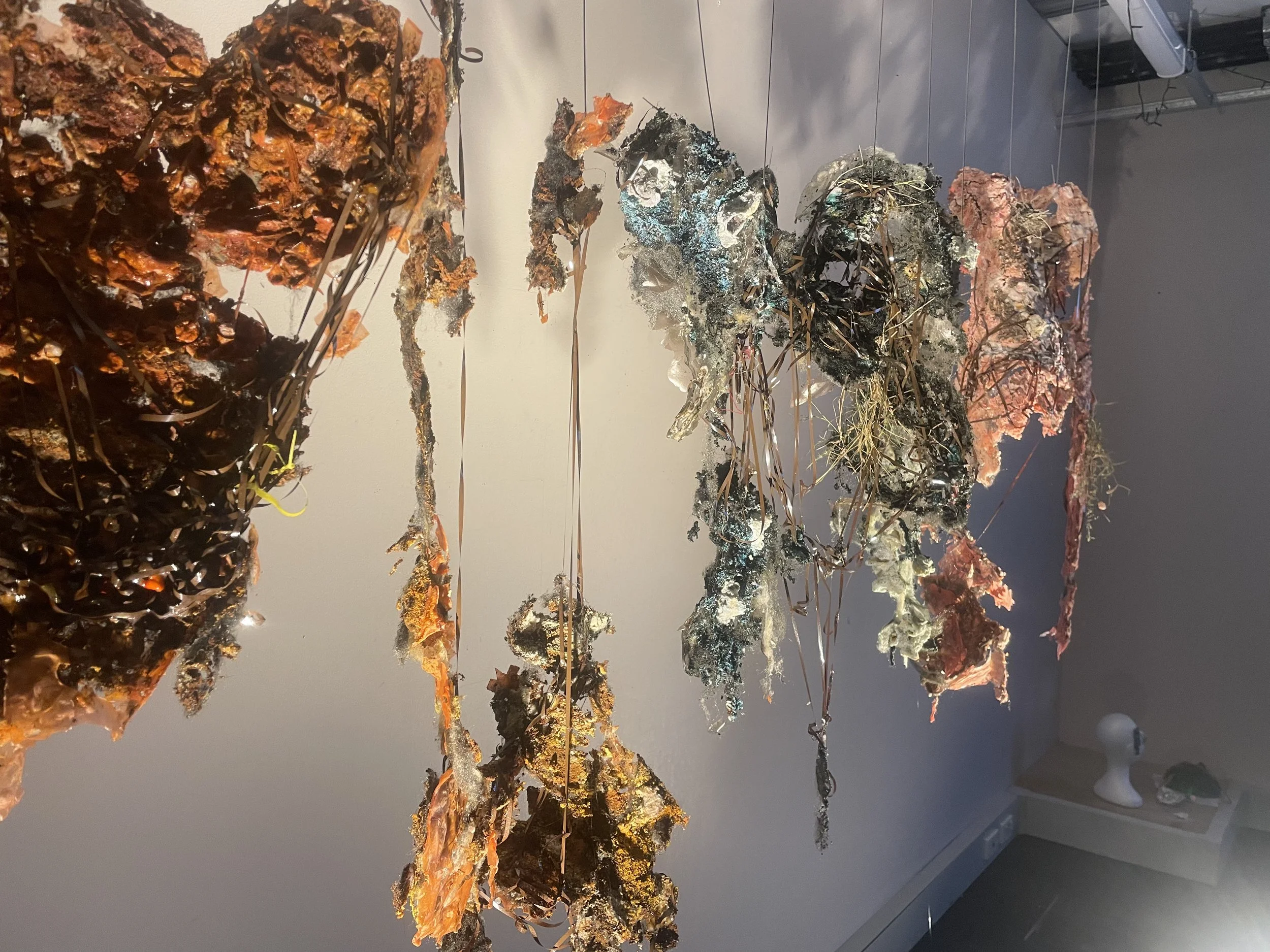
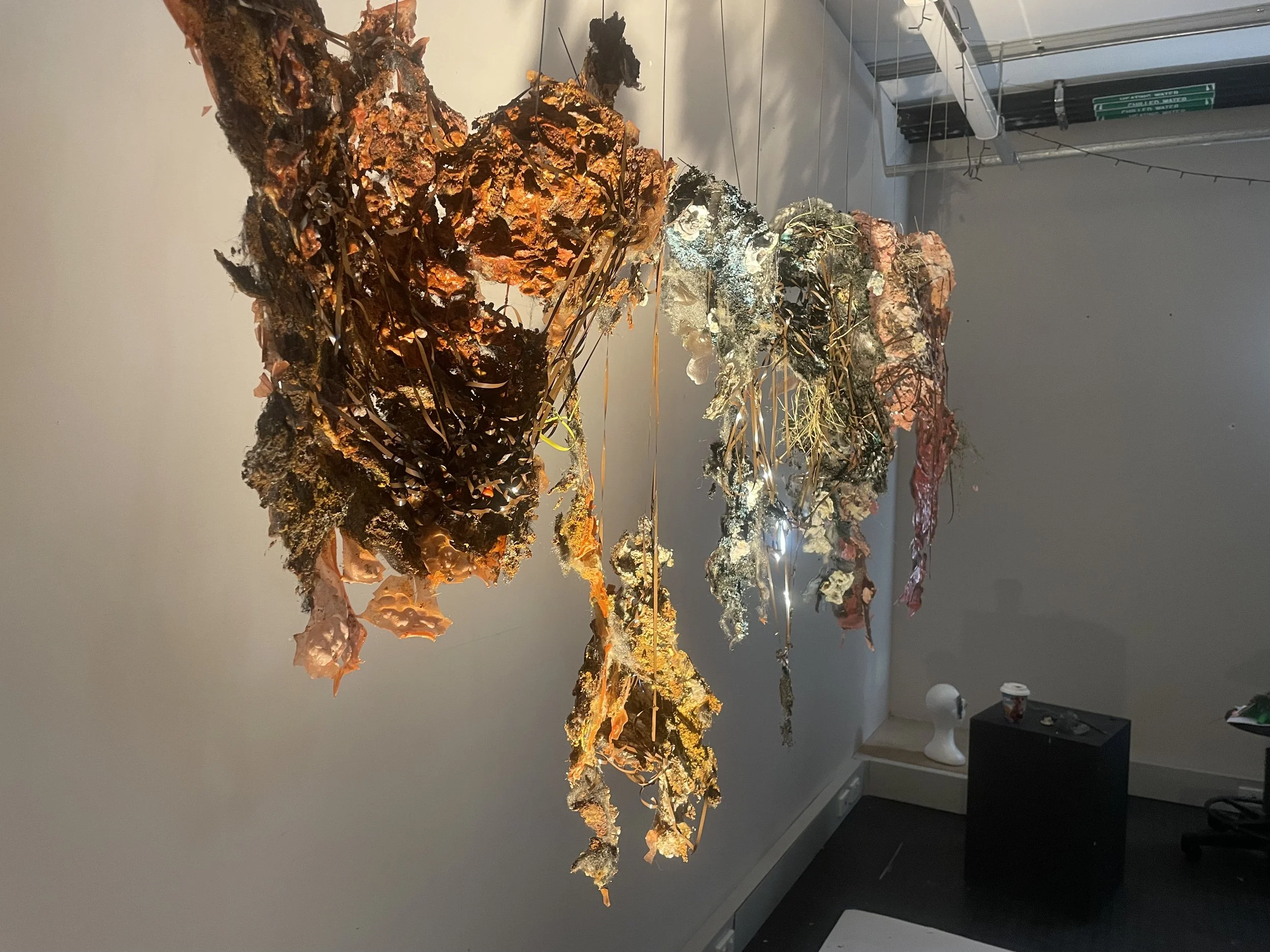
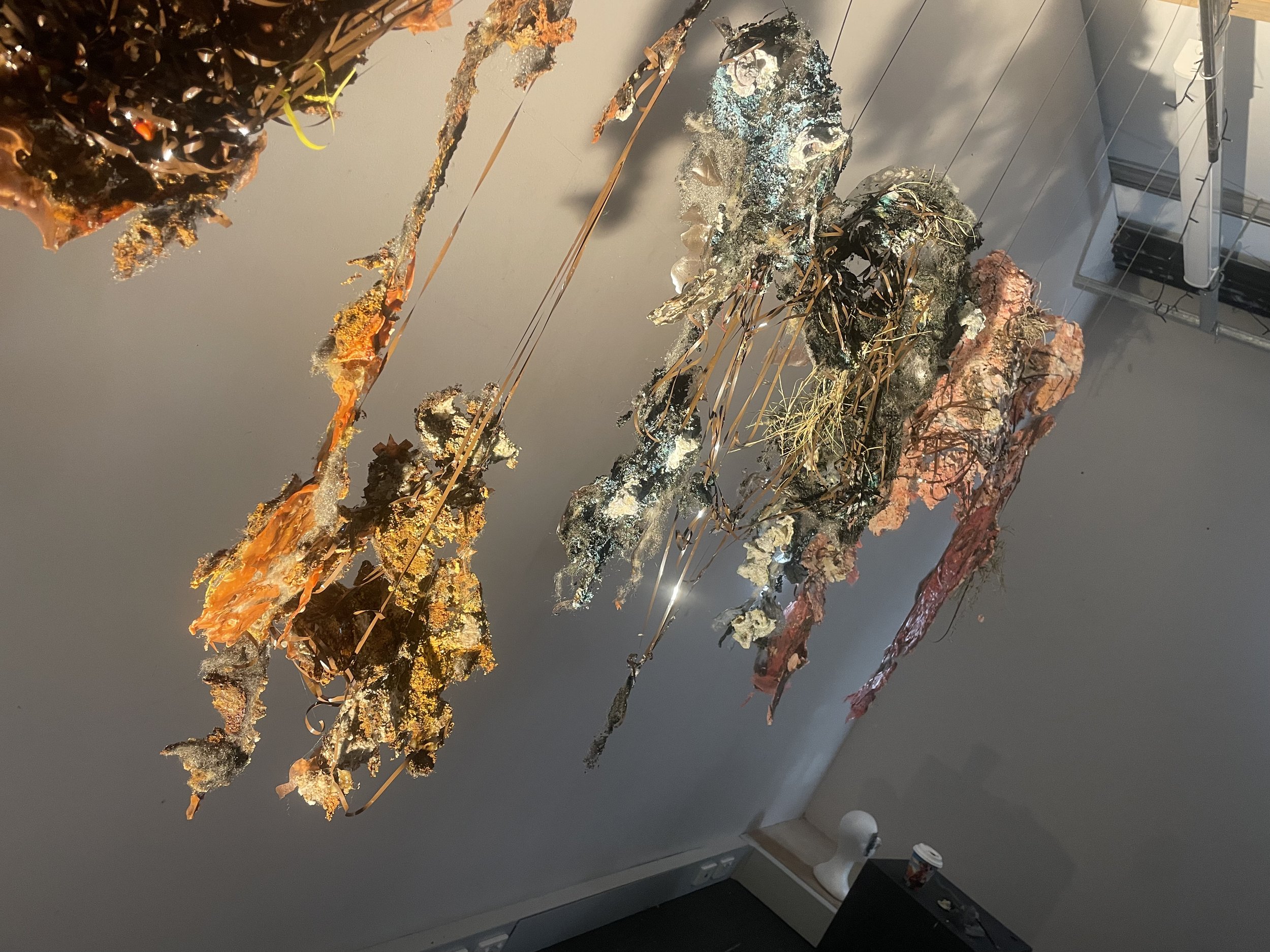
After Rusting: Final Installation
Salt-Lakes
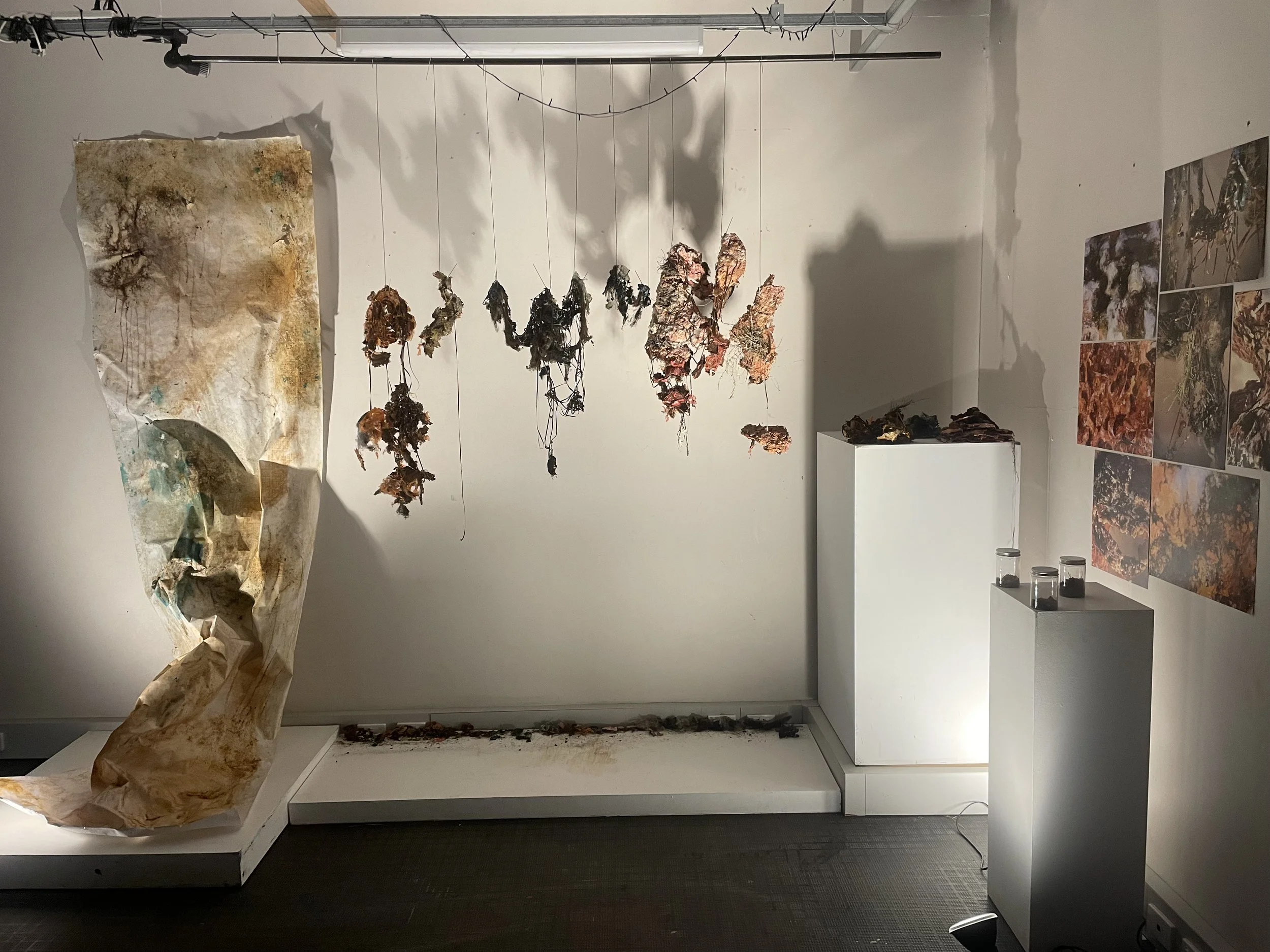
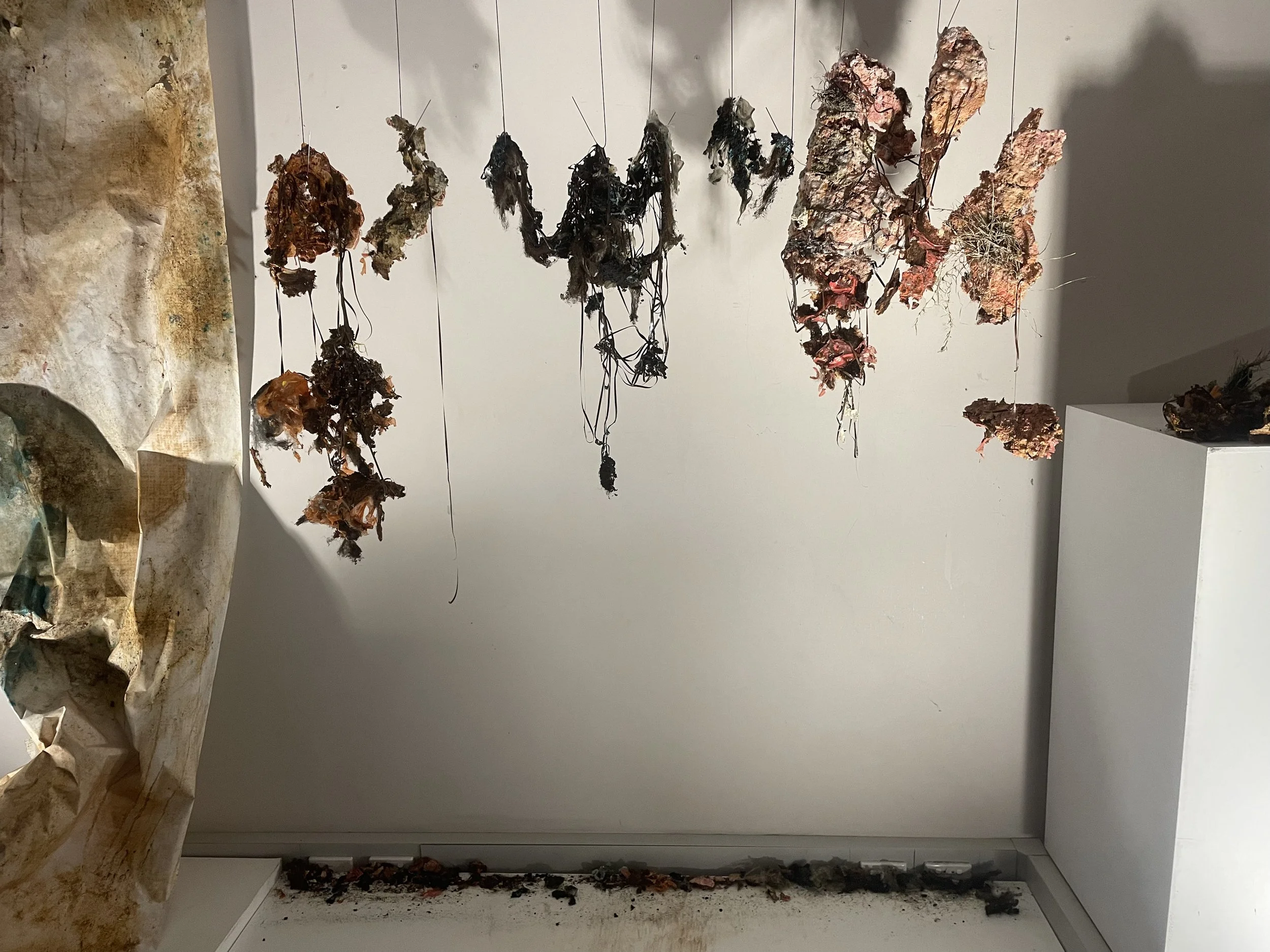
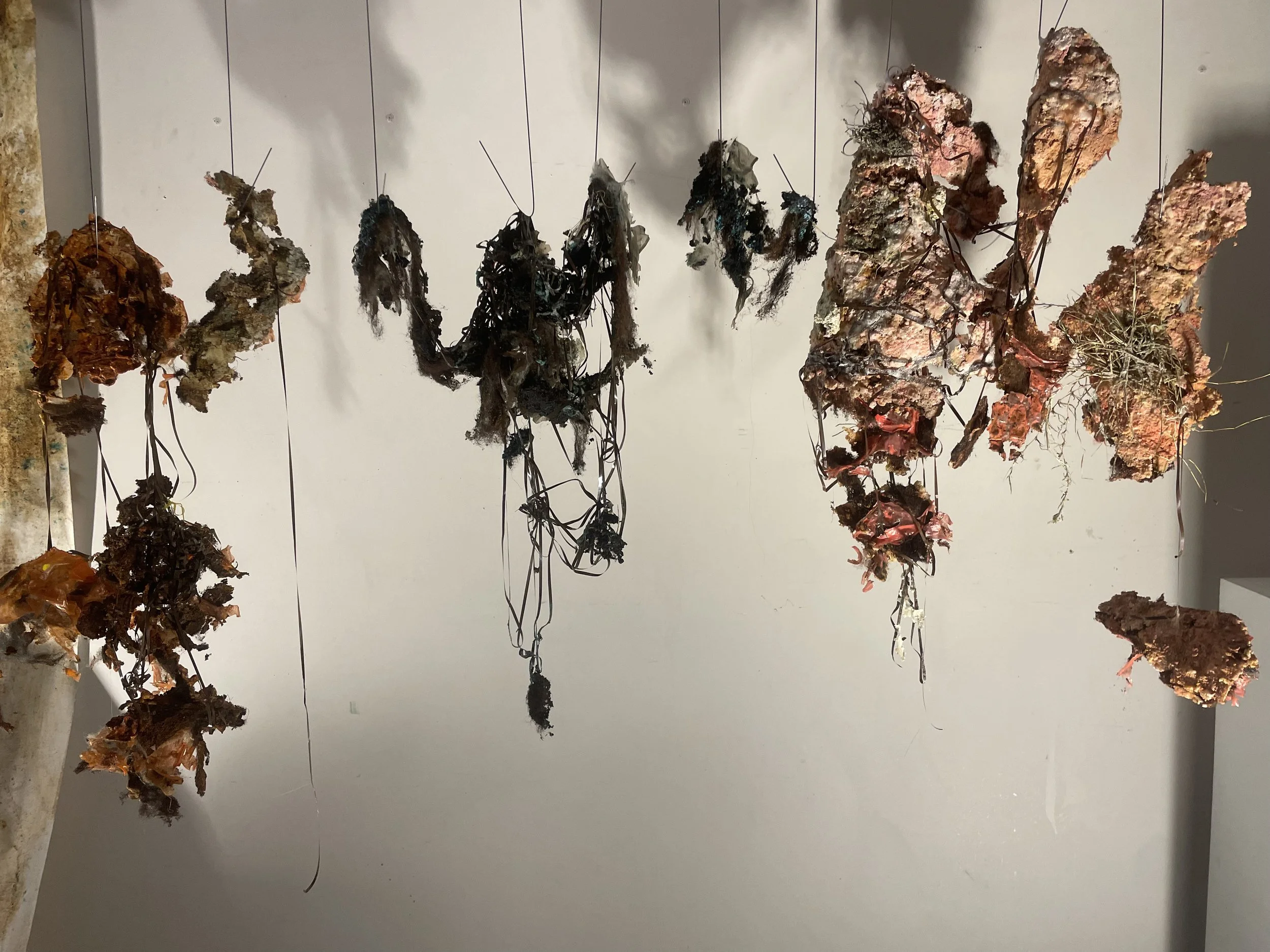
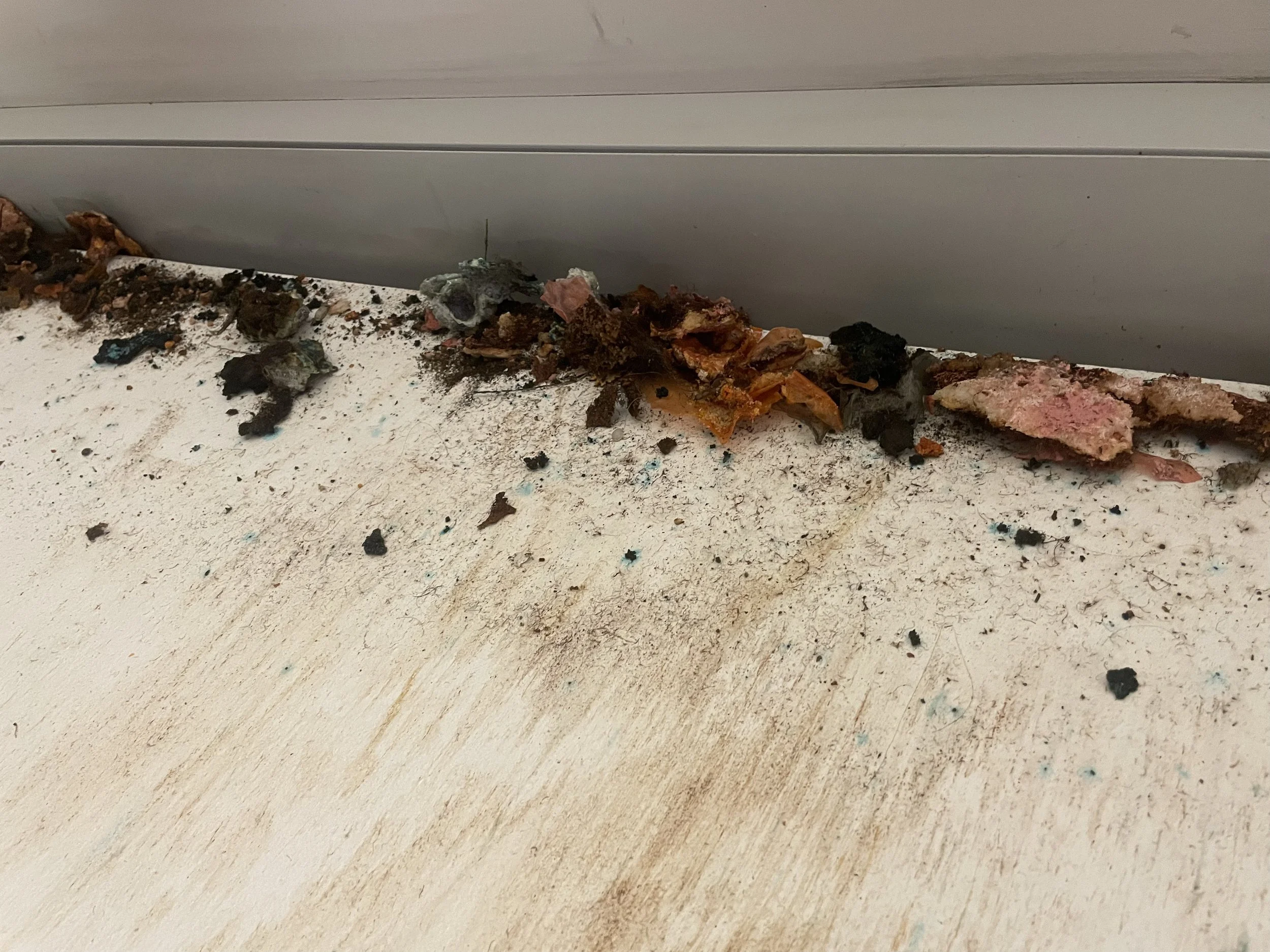
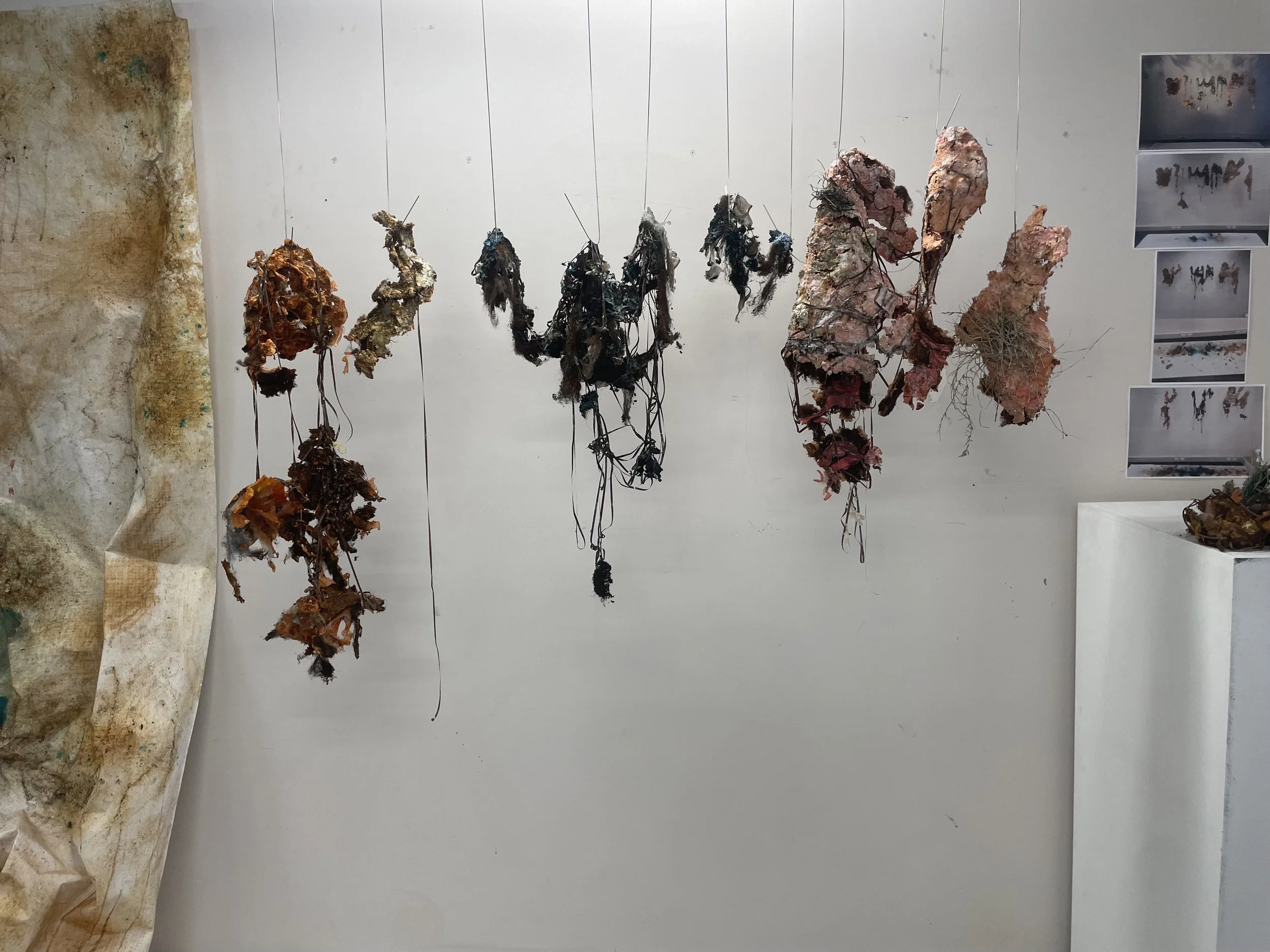
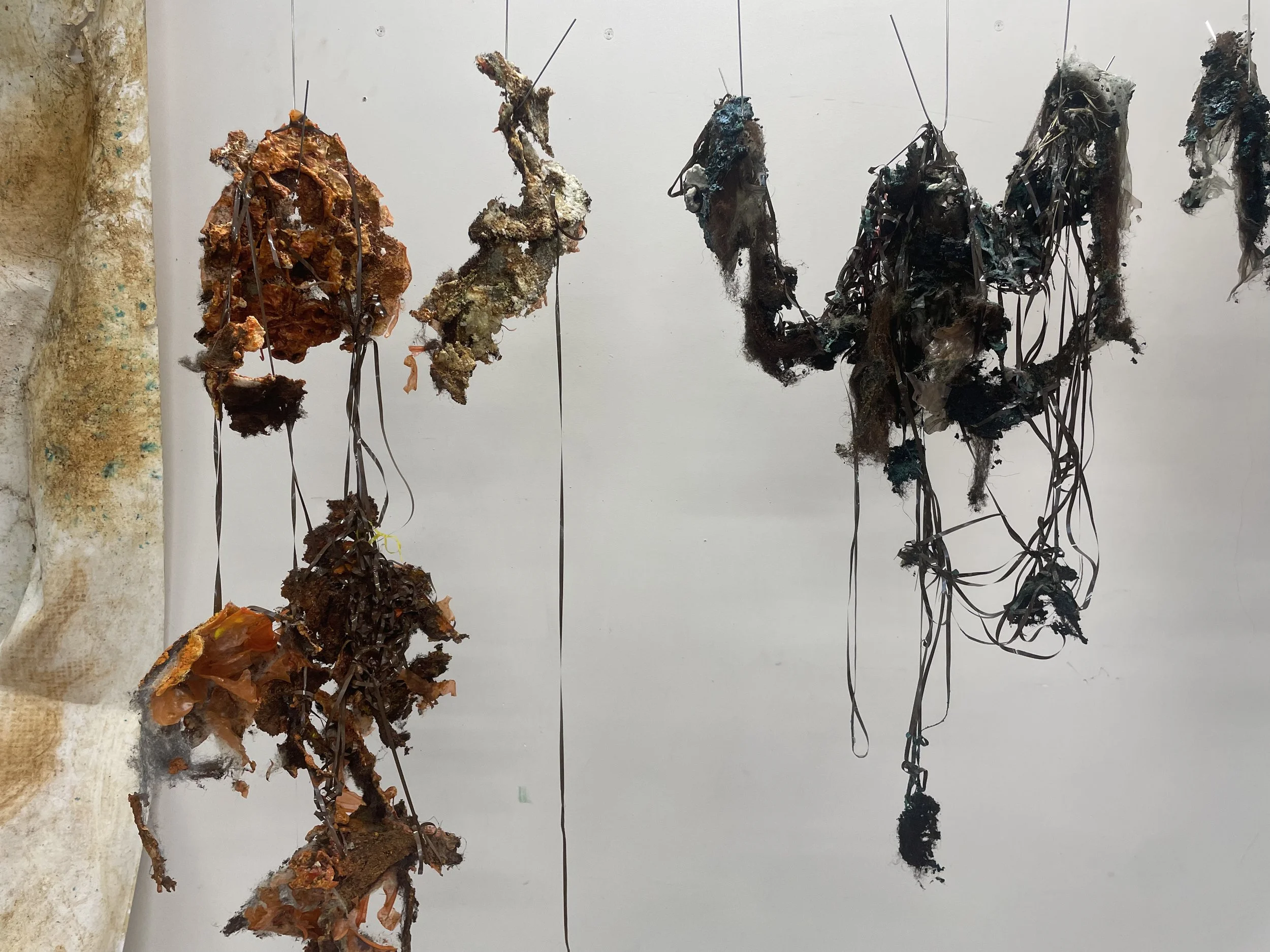
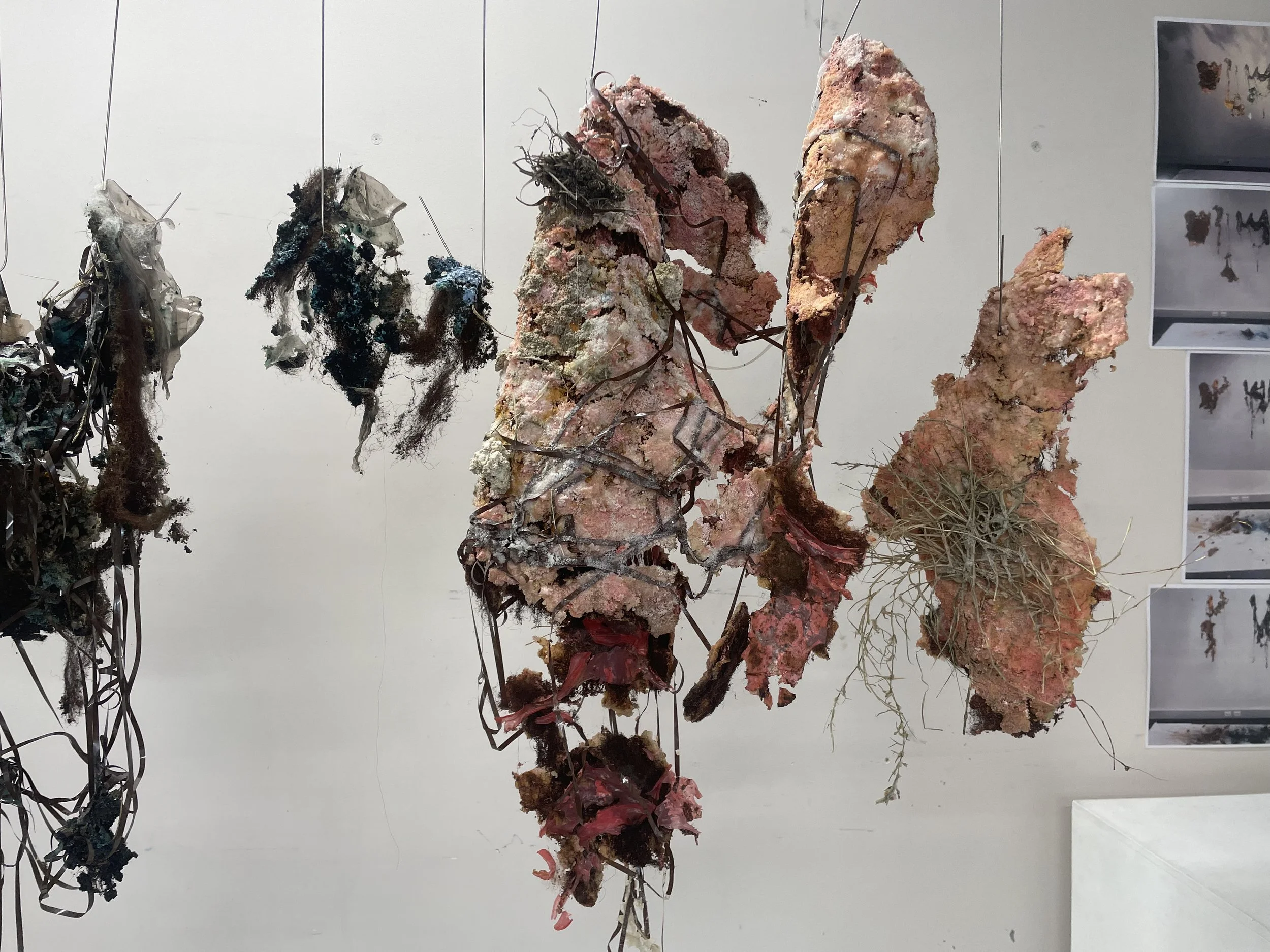
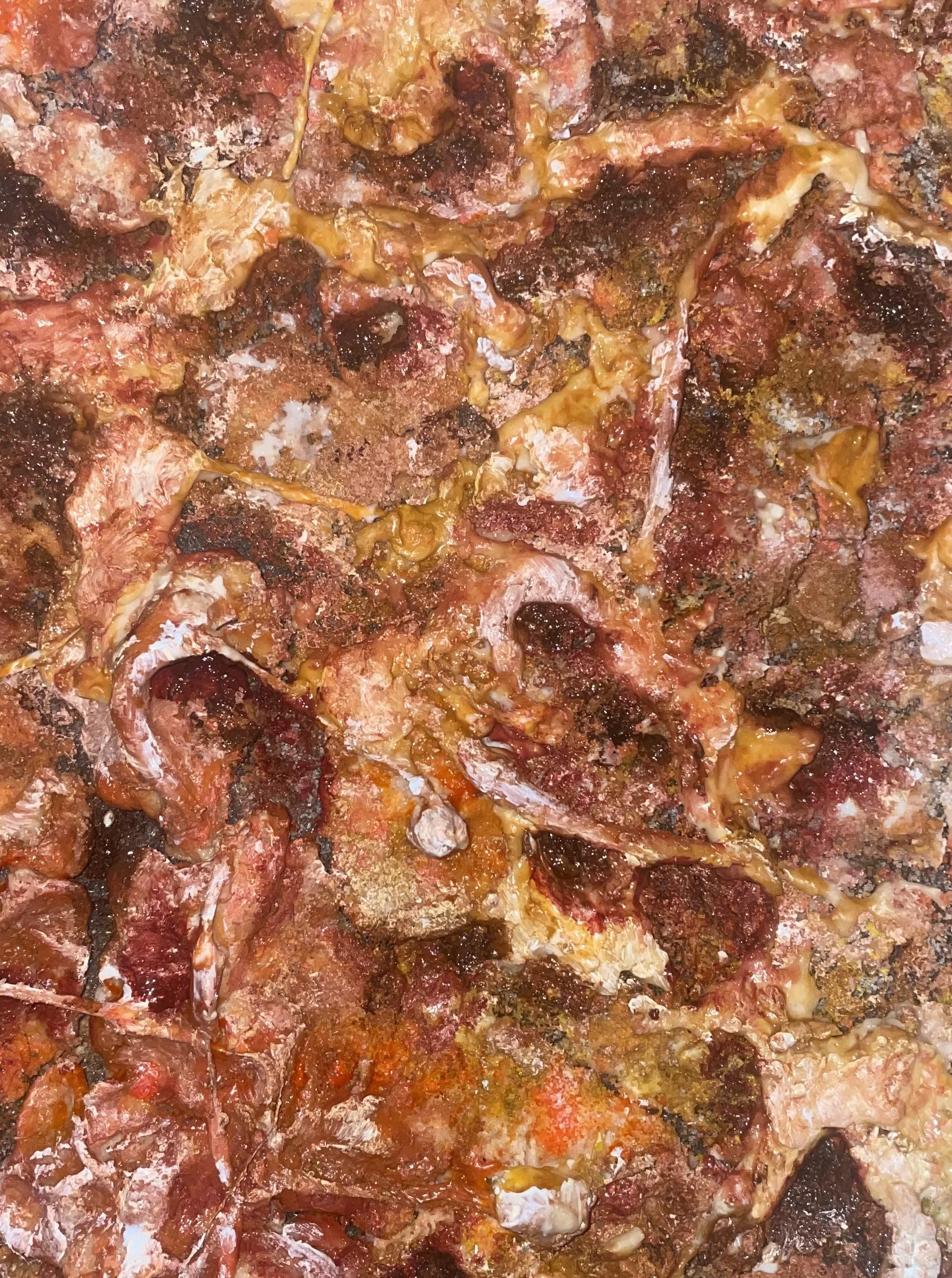
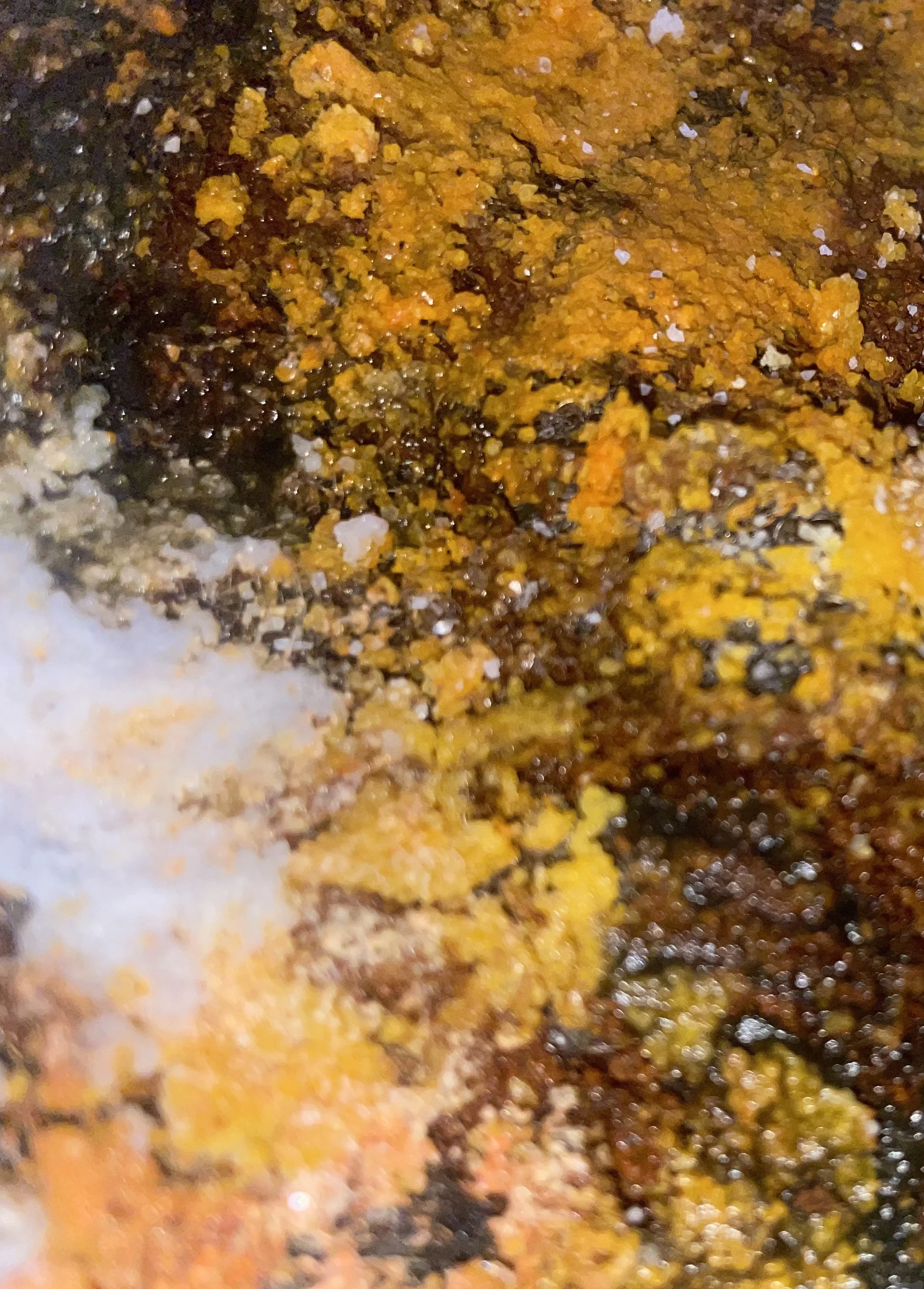
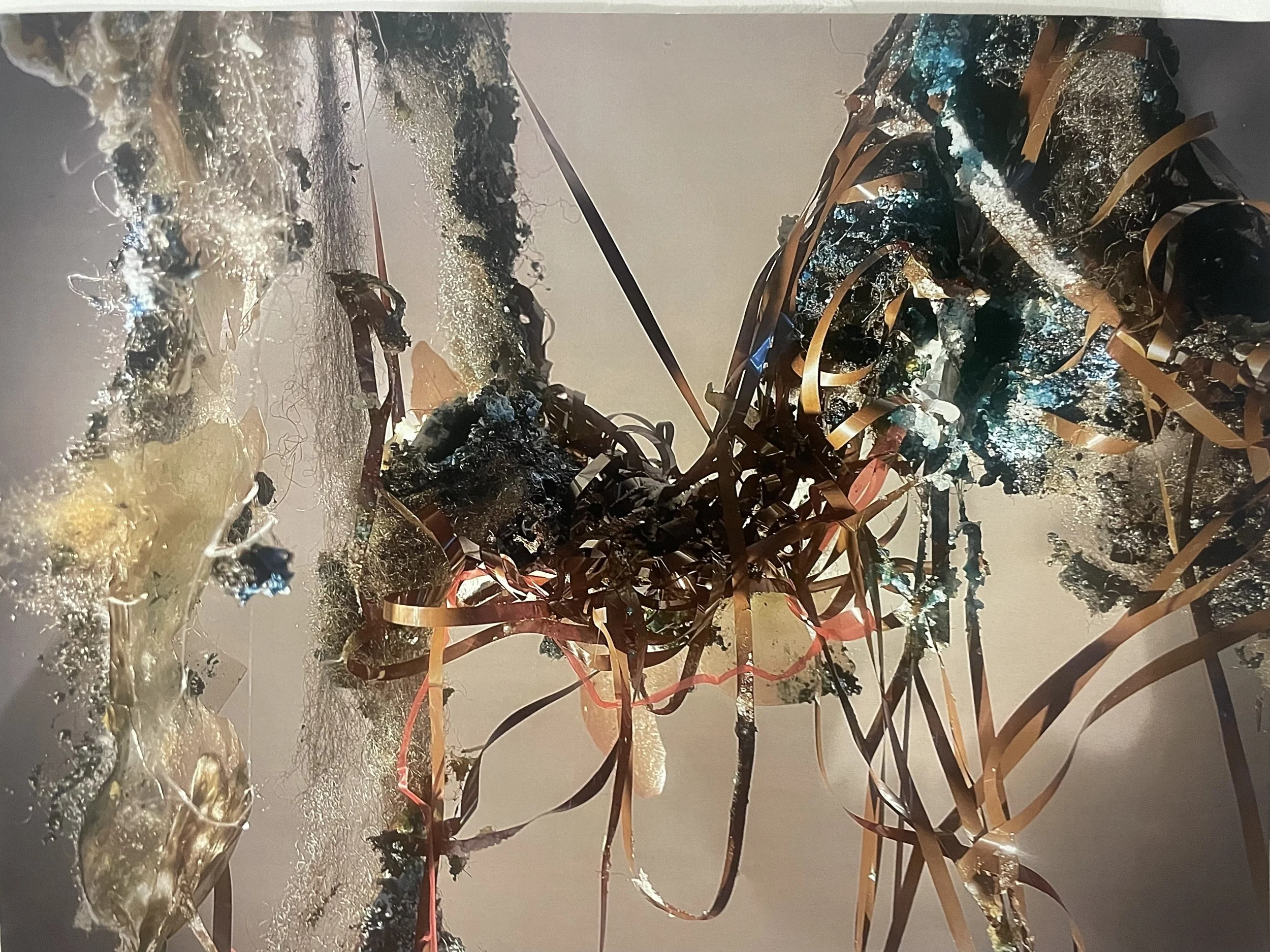
After Rusting: Final Installation
Rust Drawing
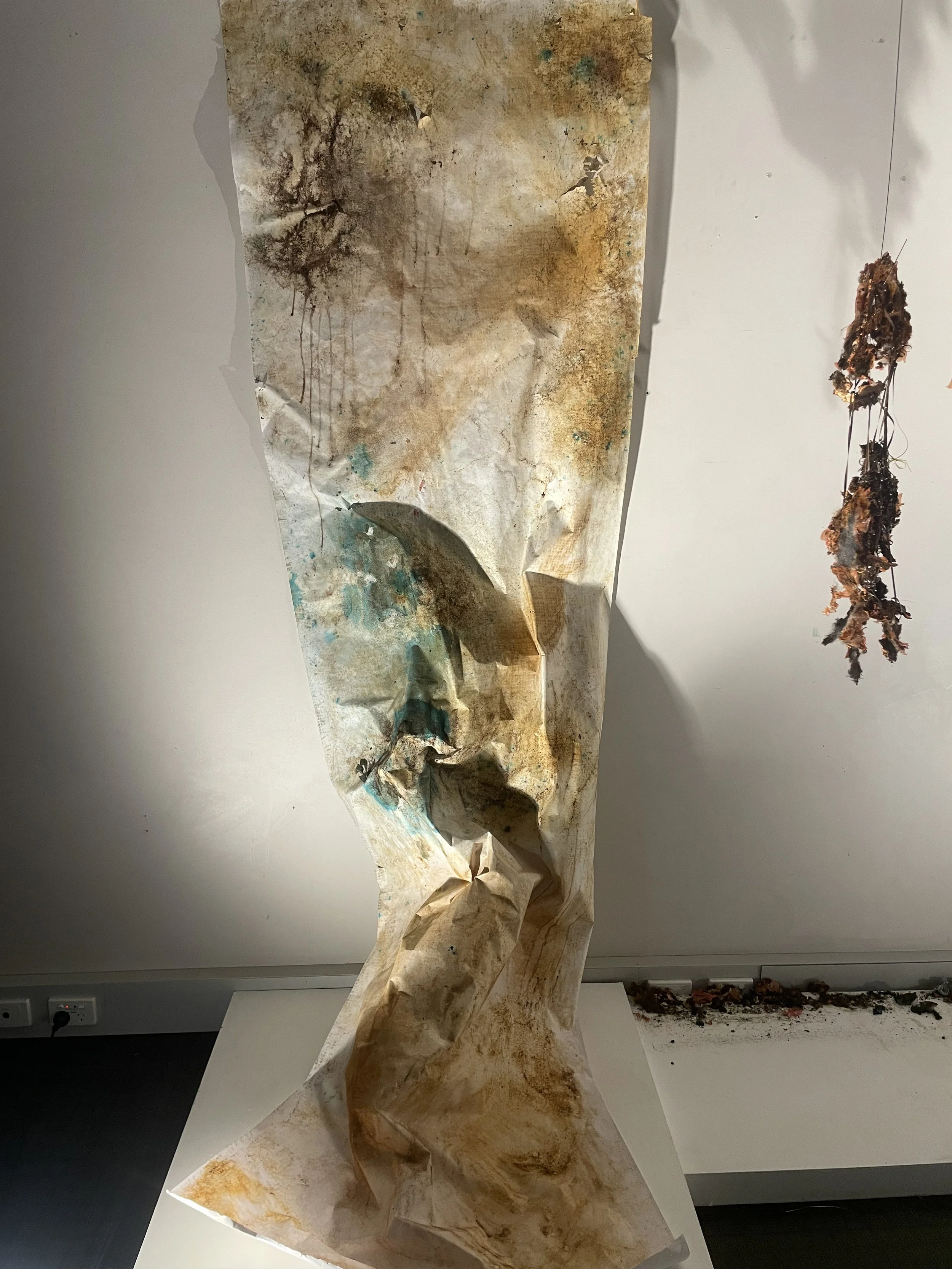
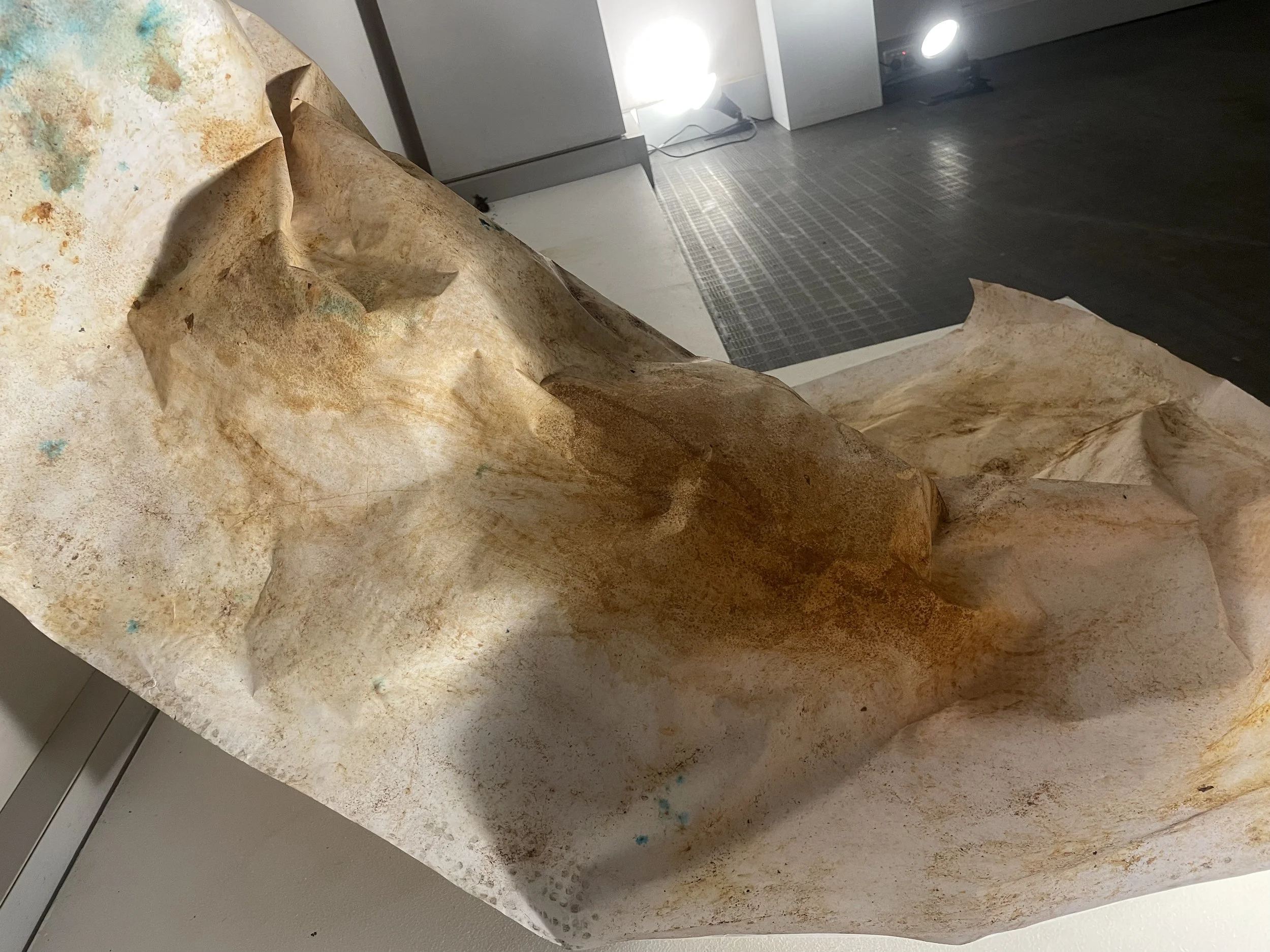
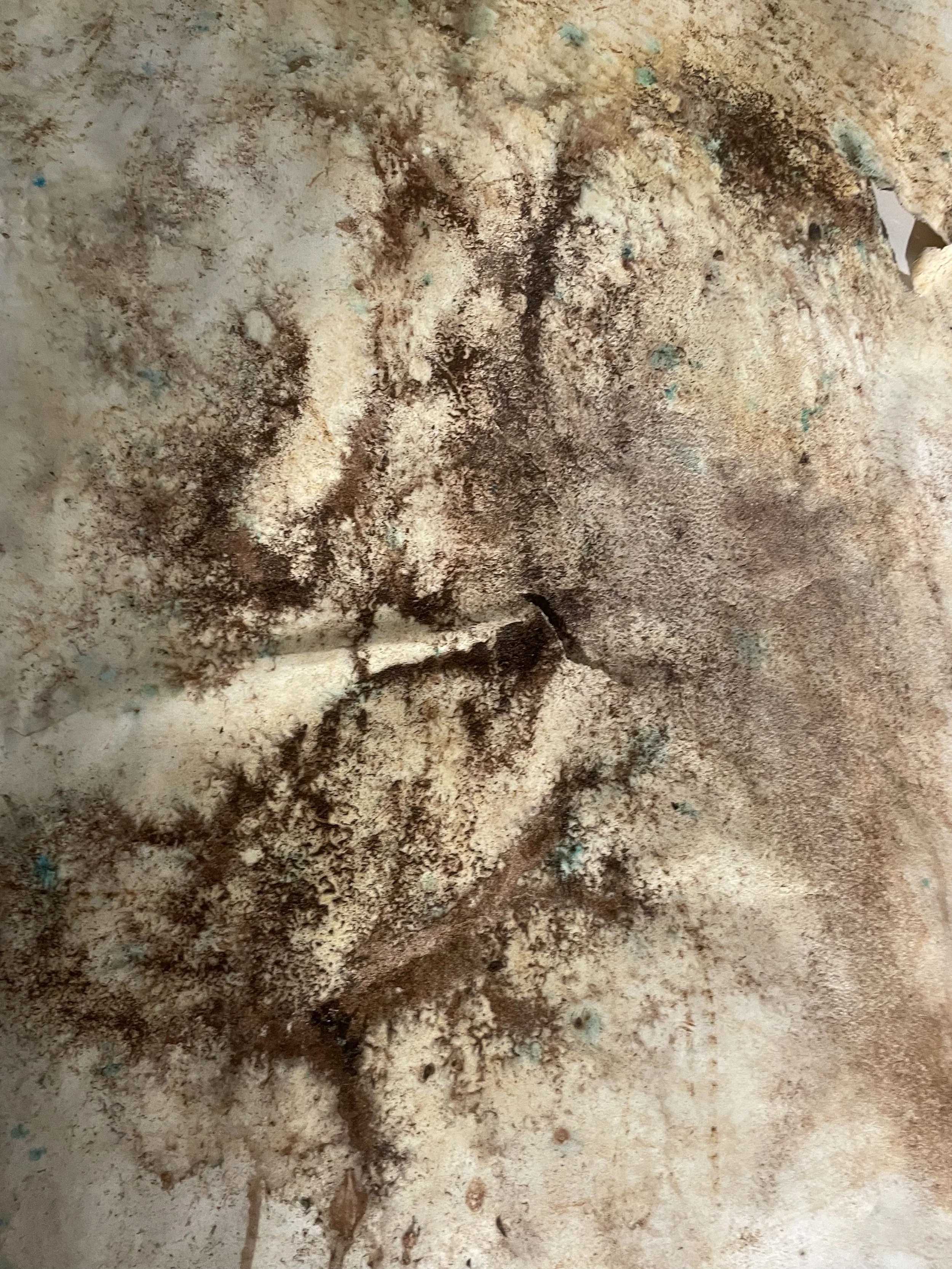
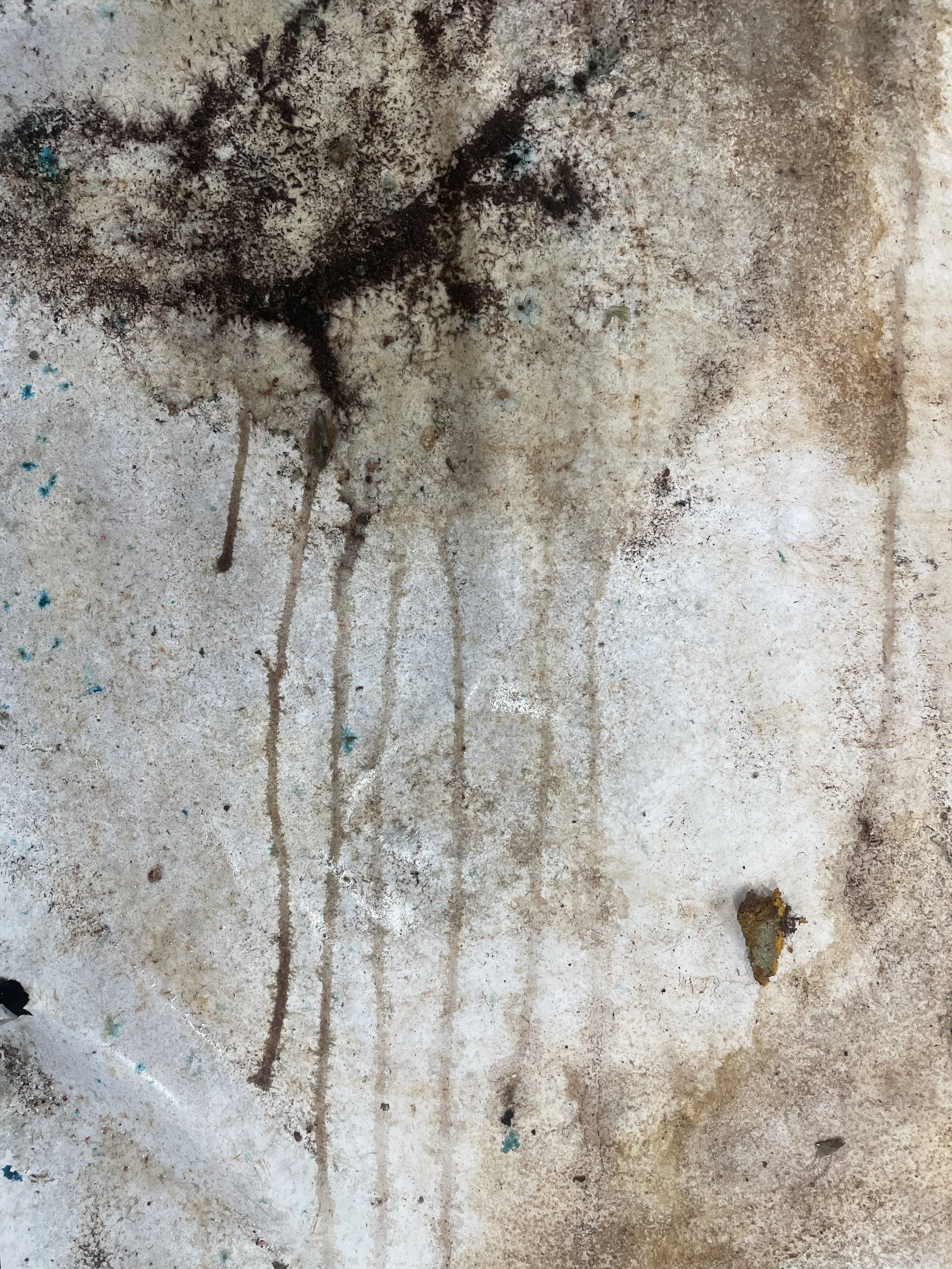
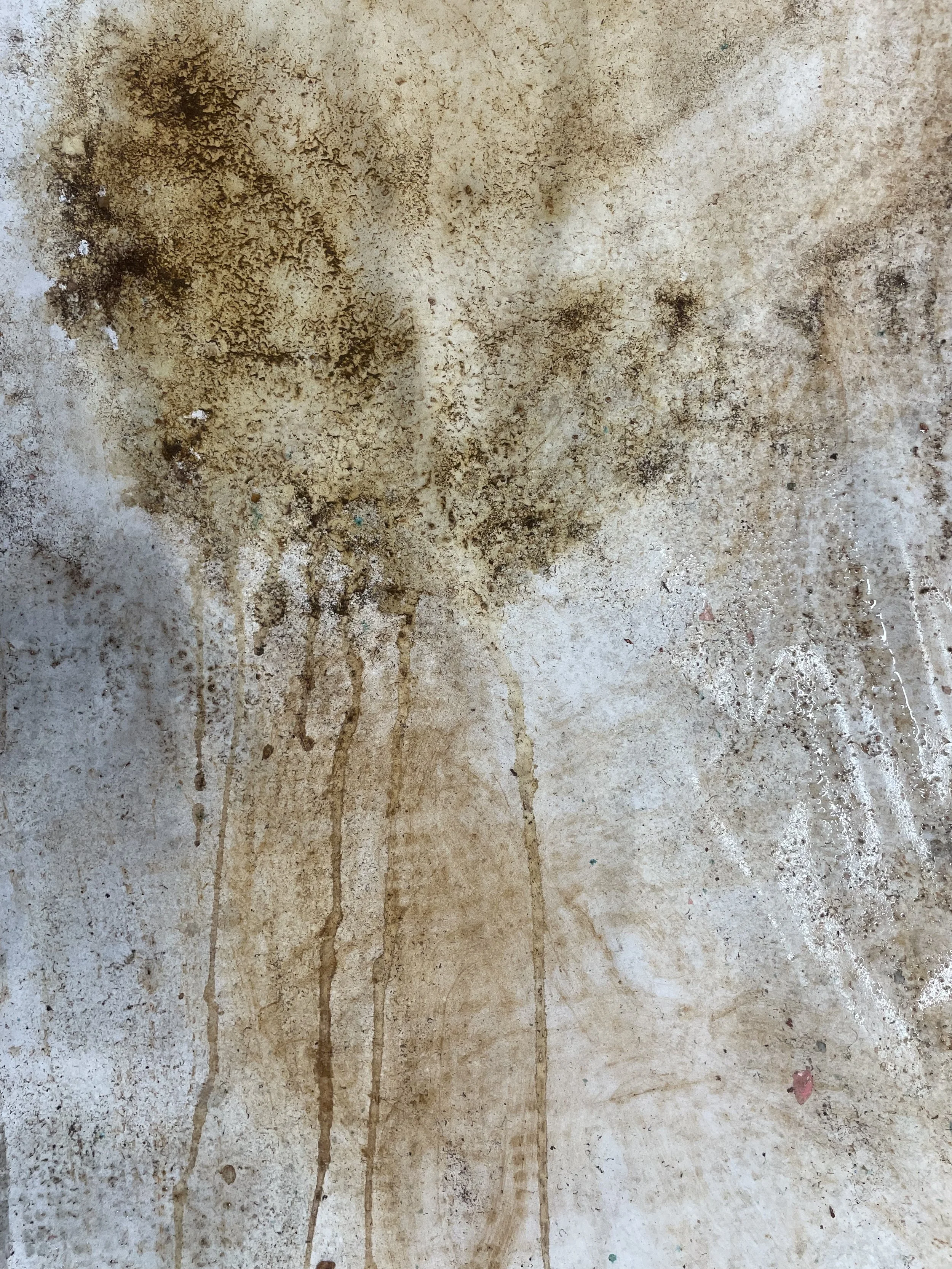
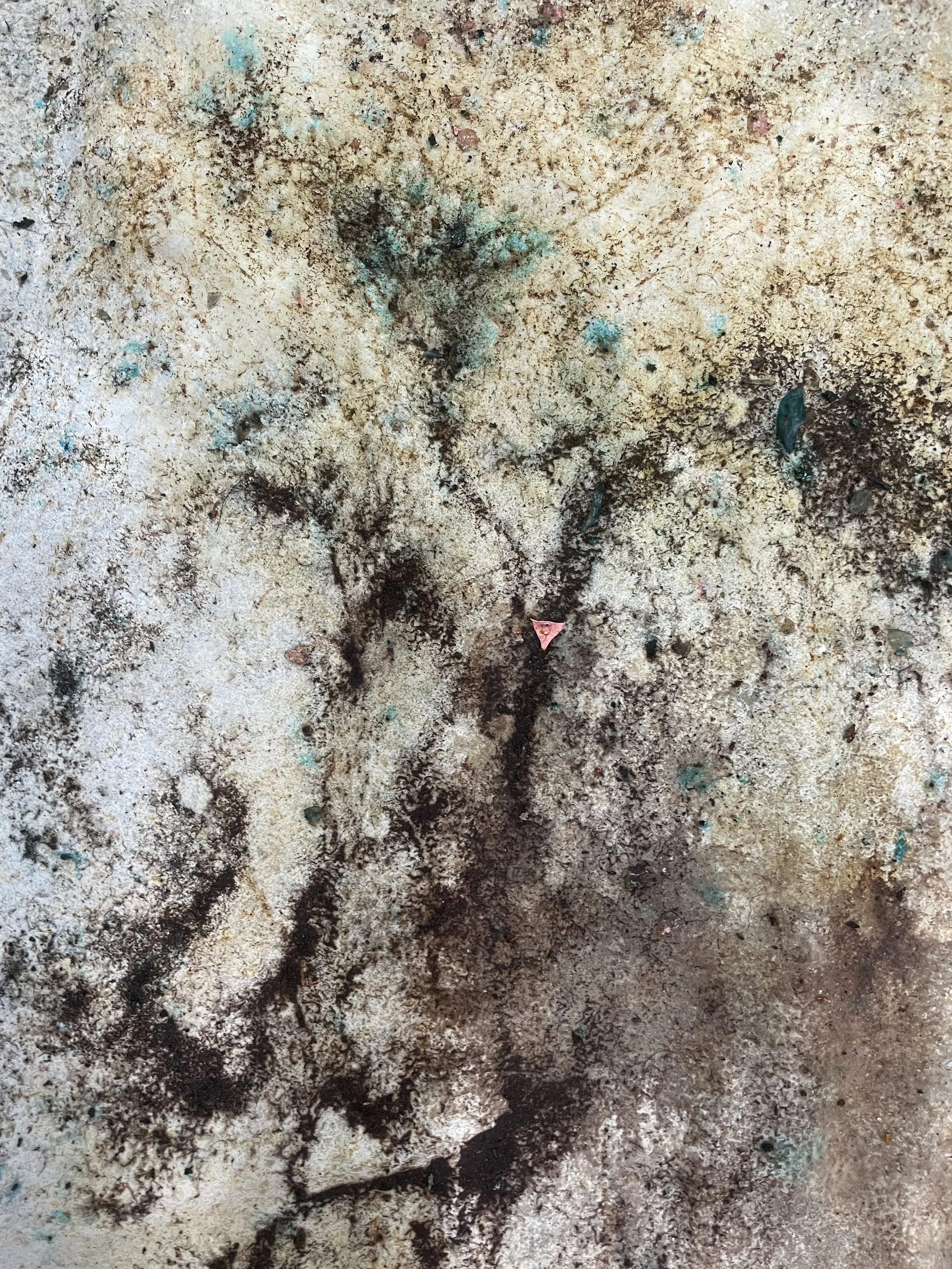
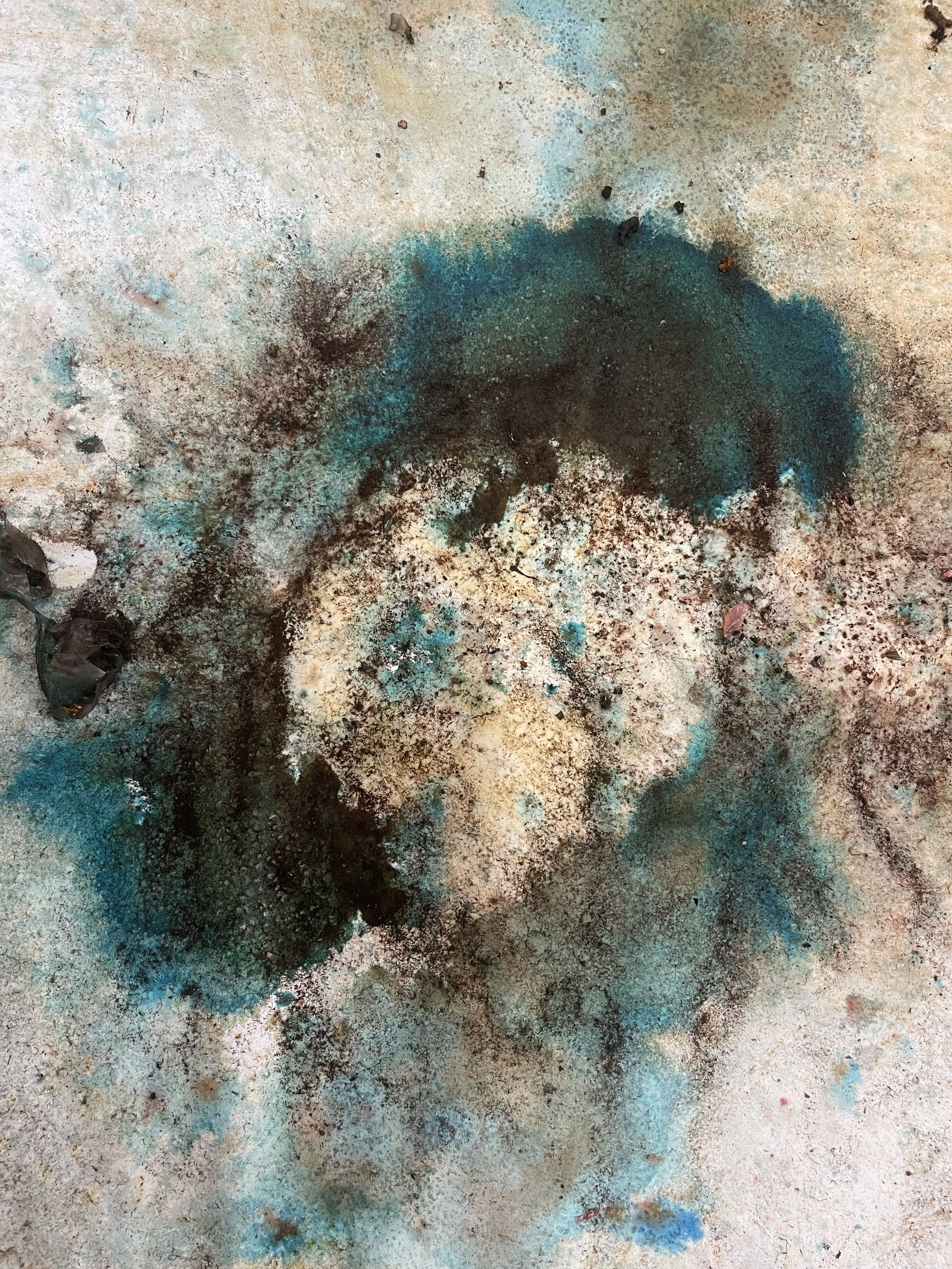
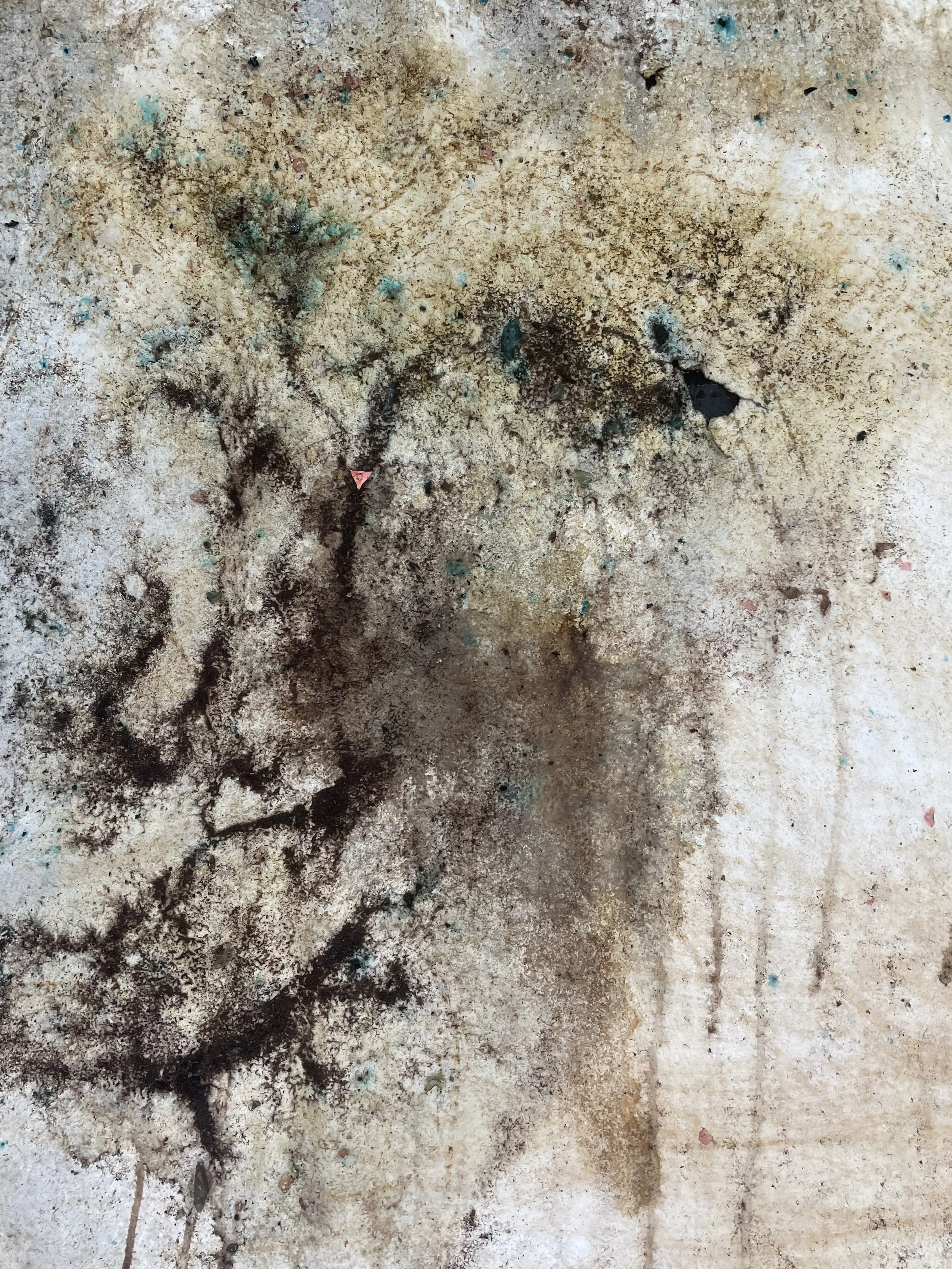
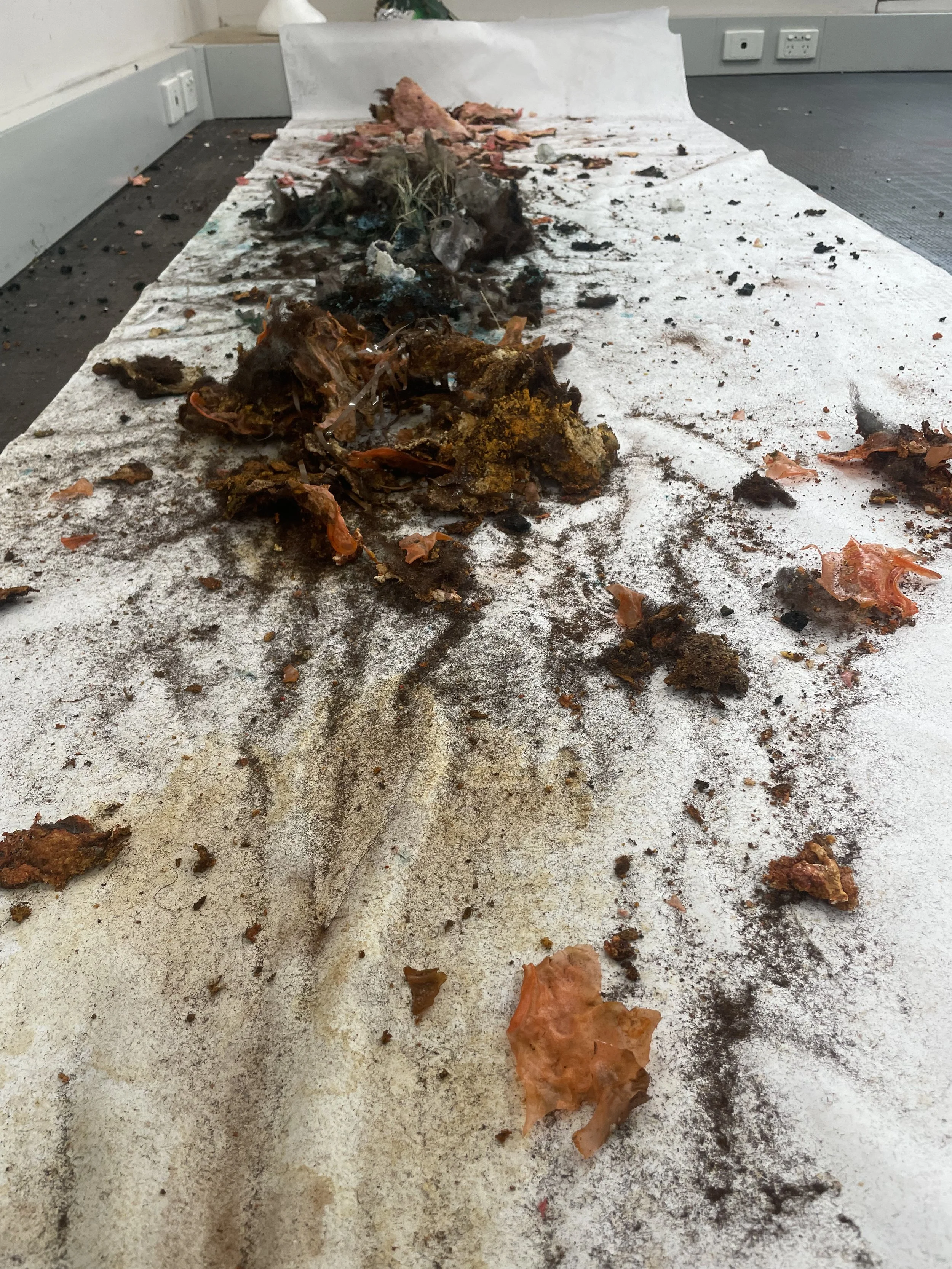
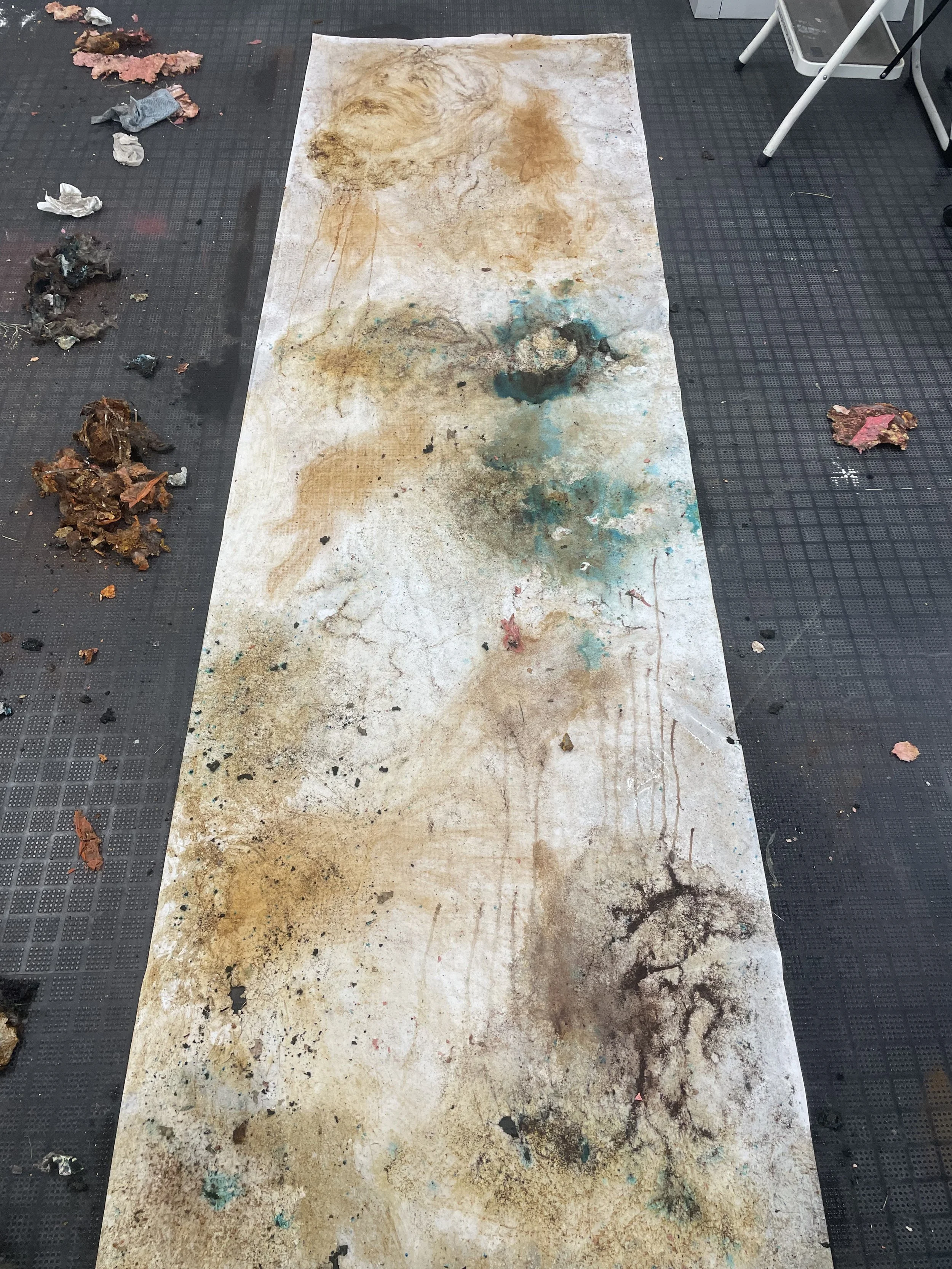
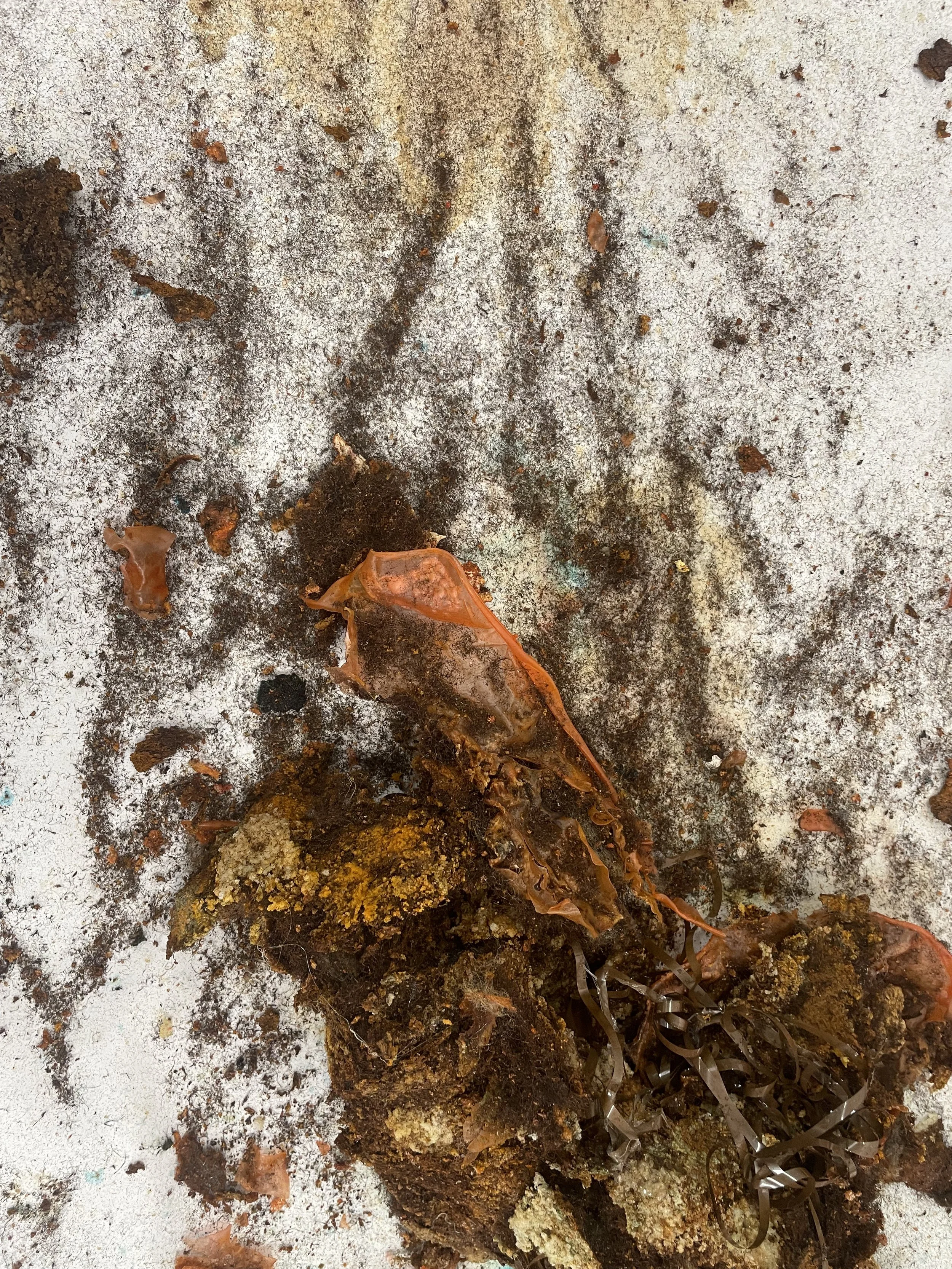
After Rusting: Final Installation
Forms In Nature
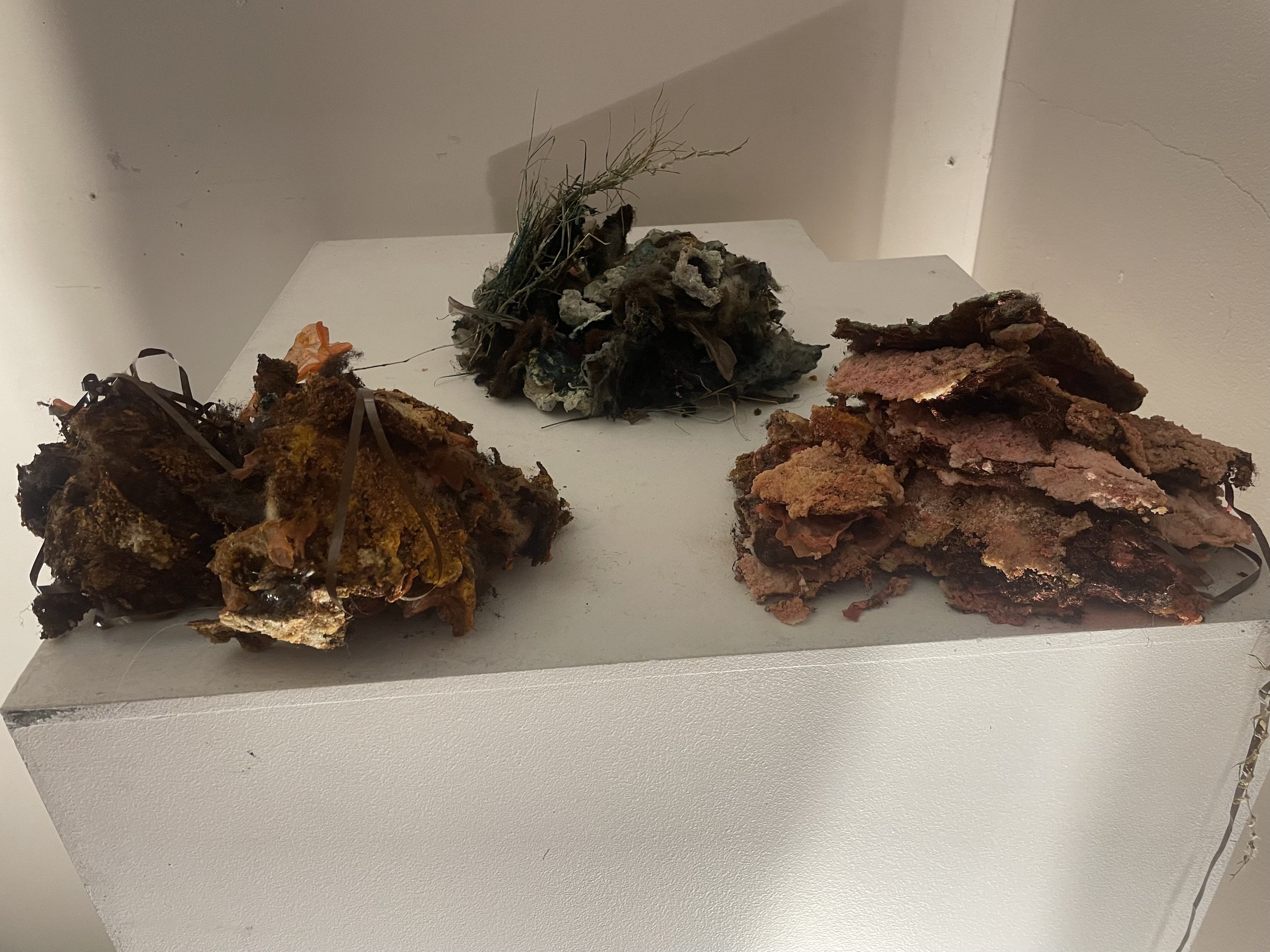
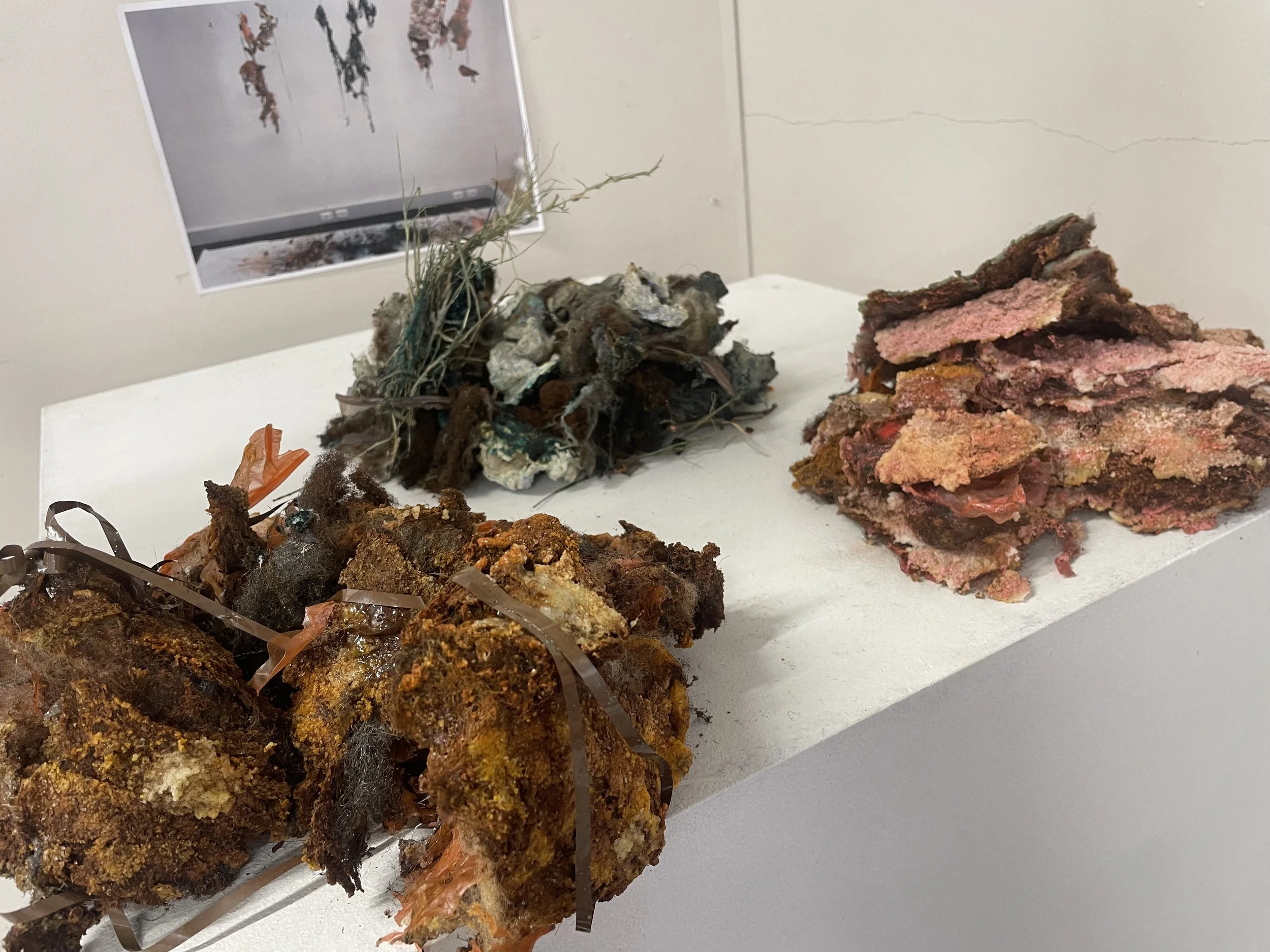
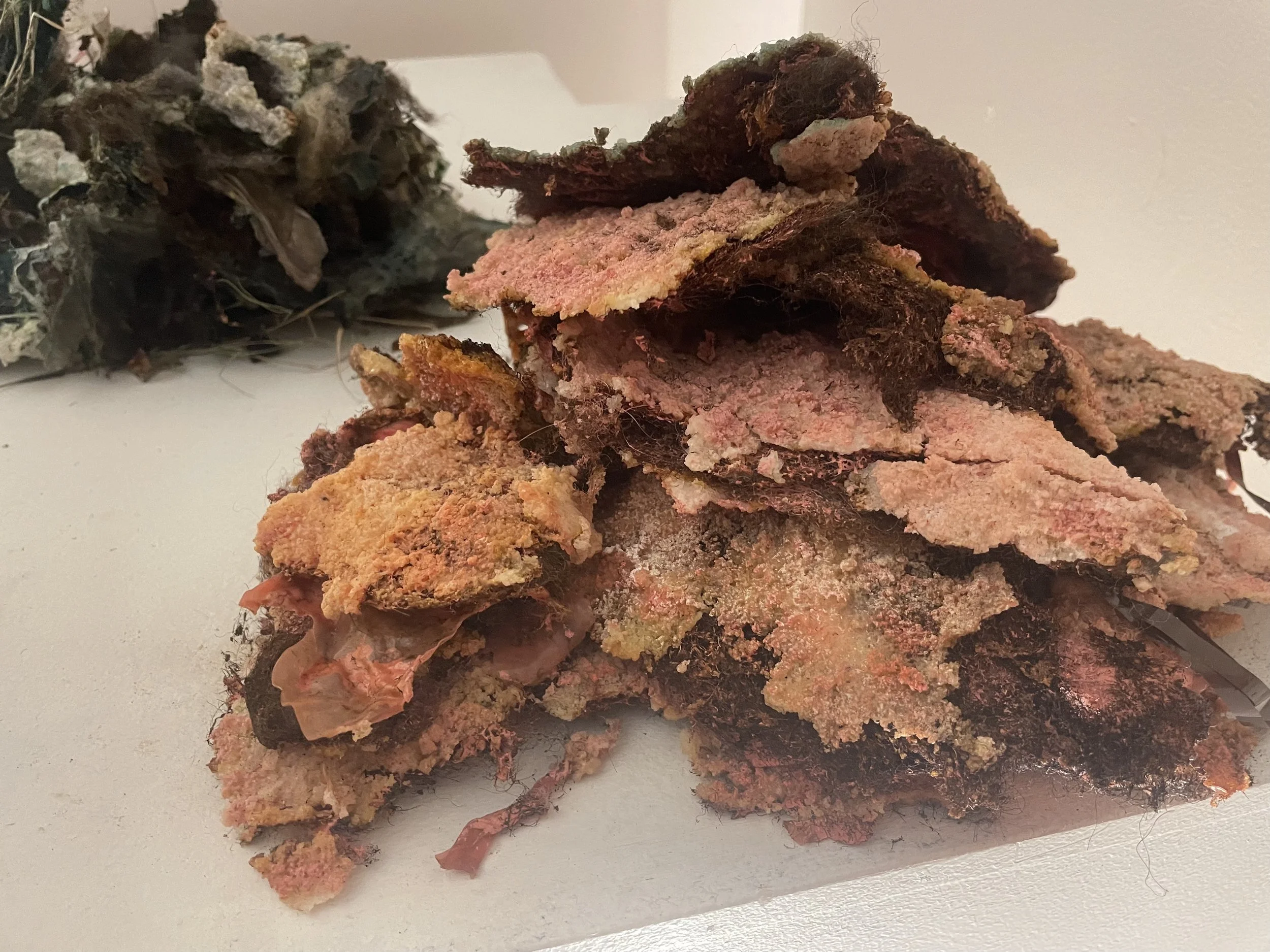
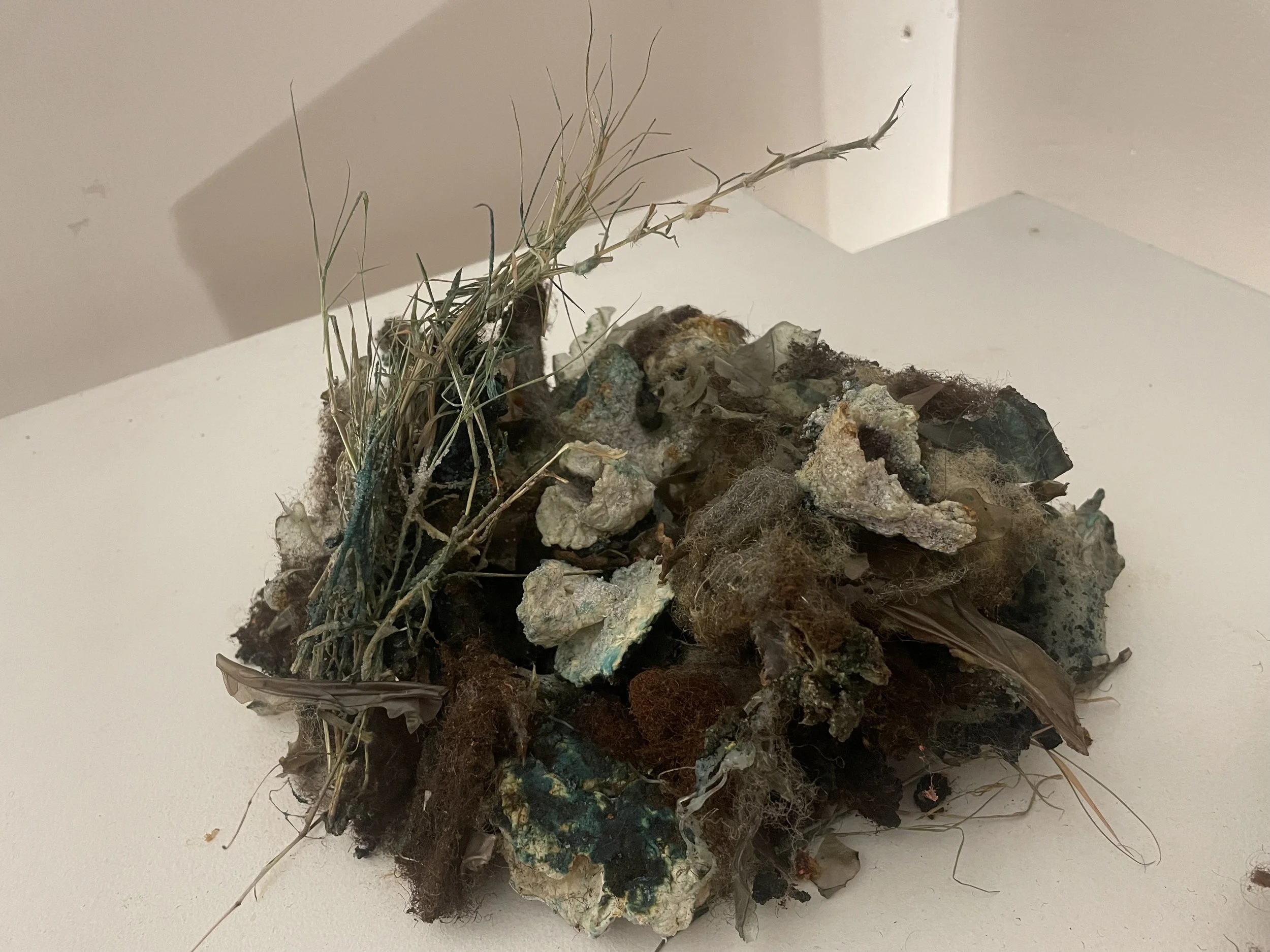
After Rusting: Final Installation
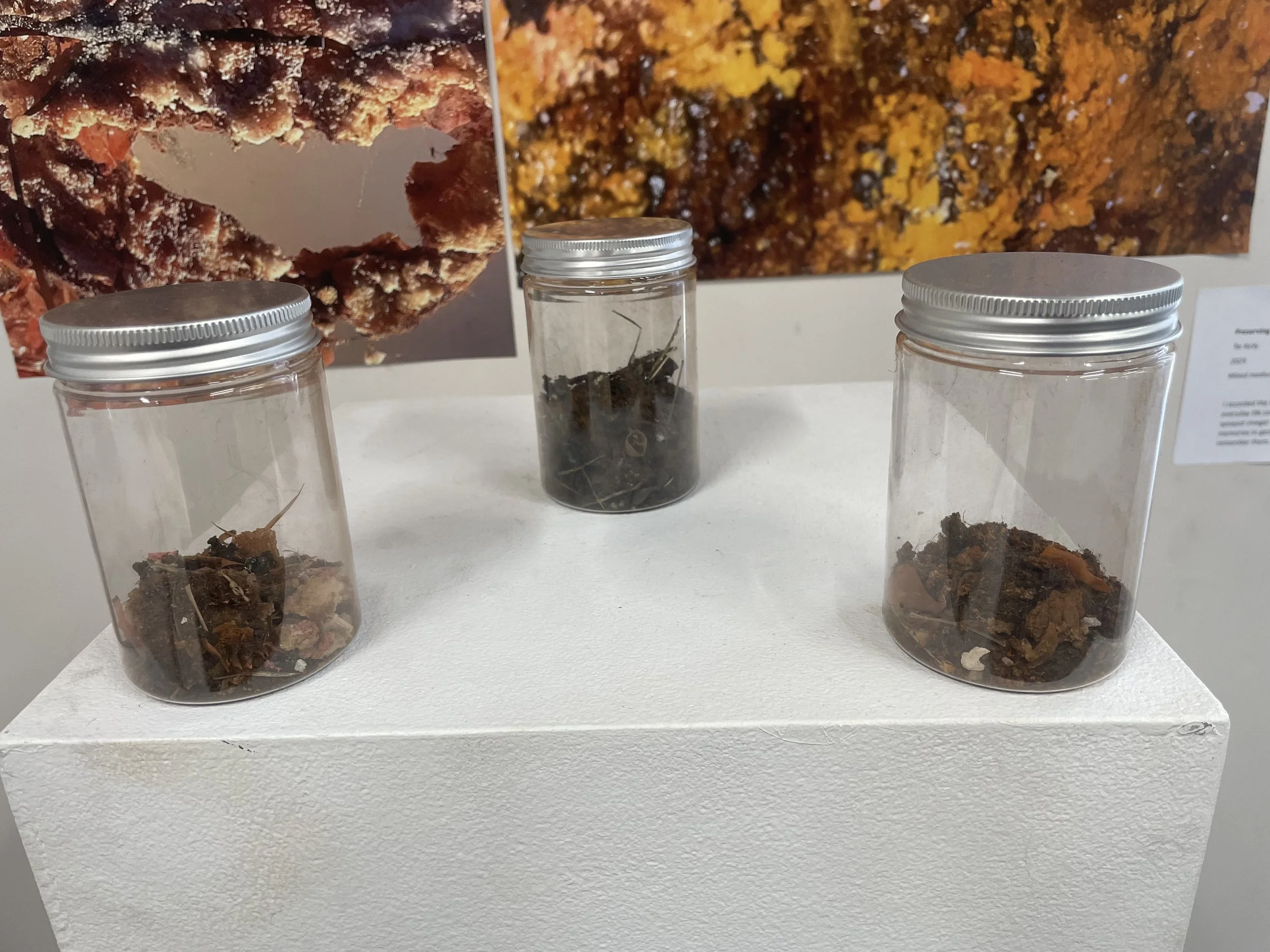
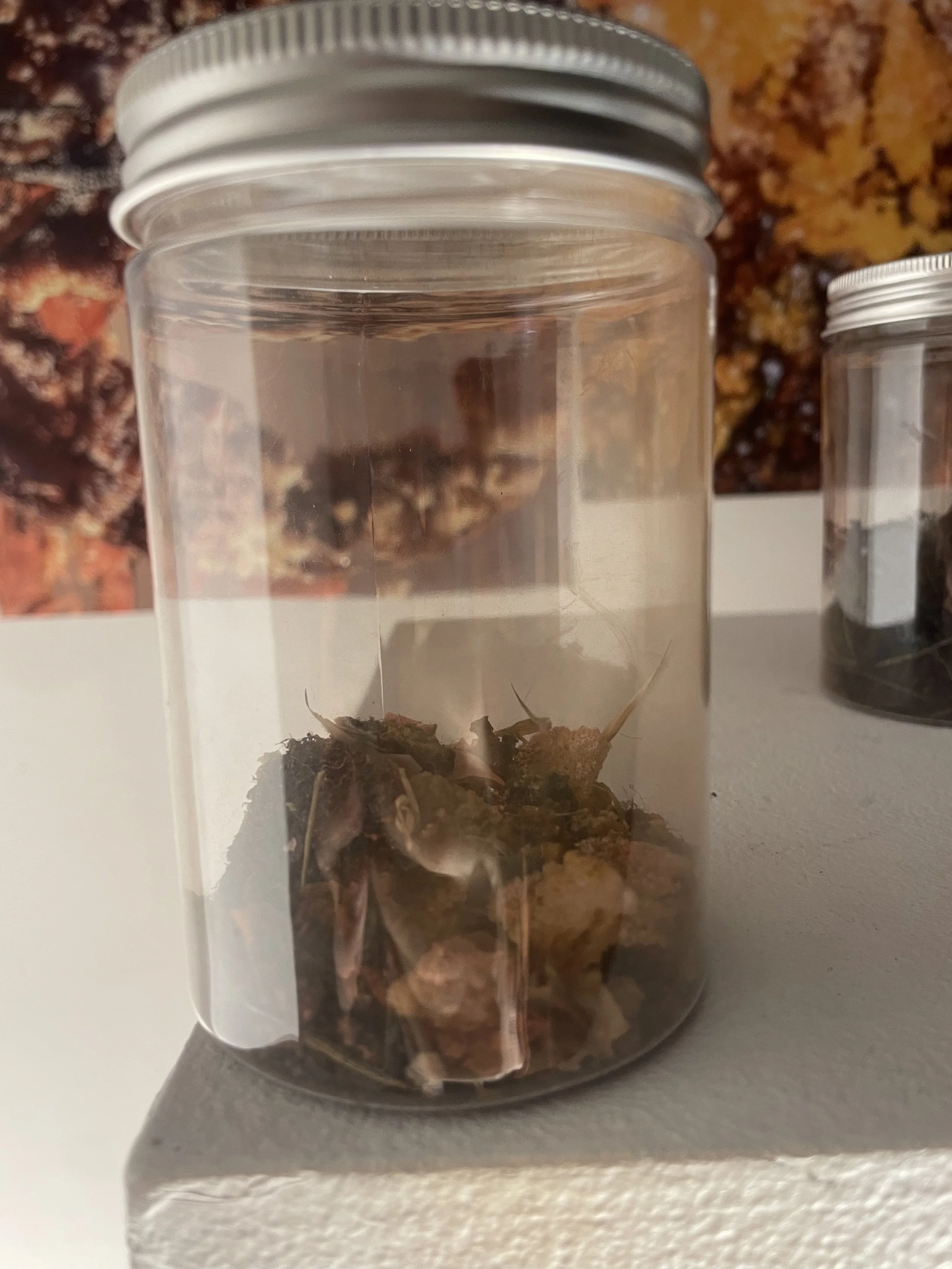
Jars Of Soil
Medium:
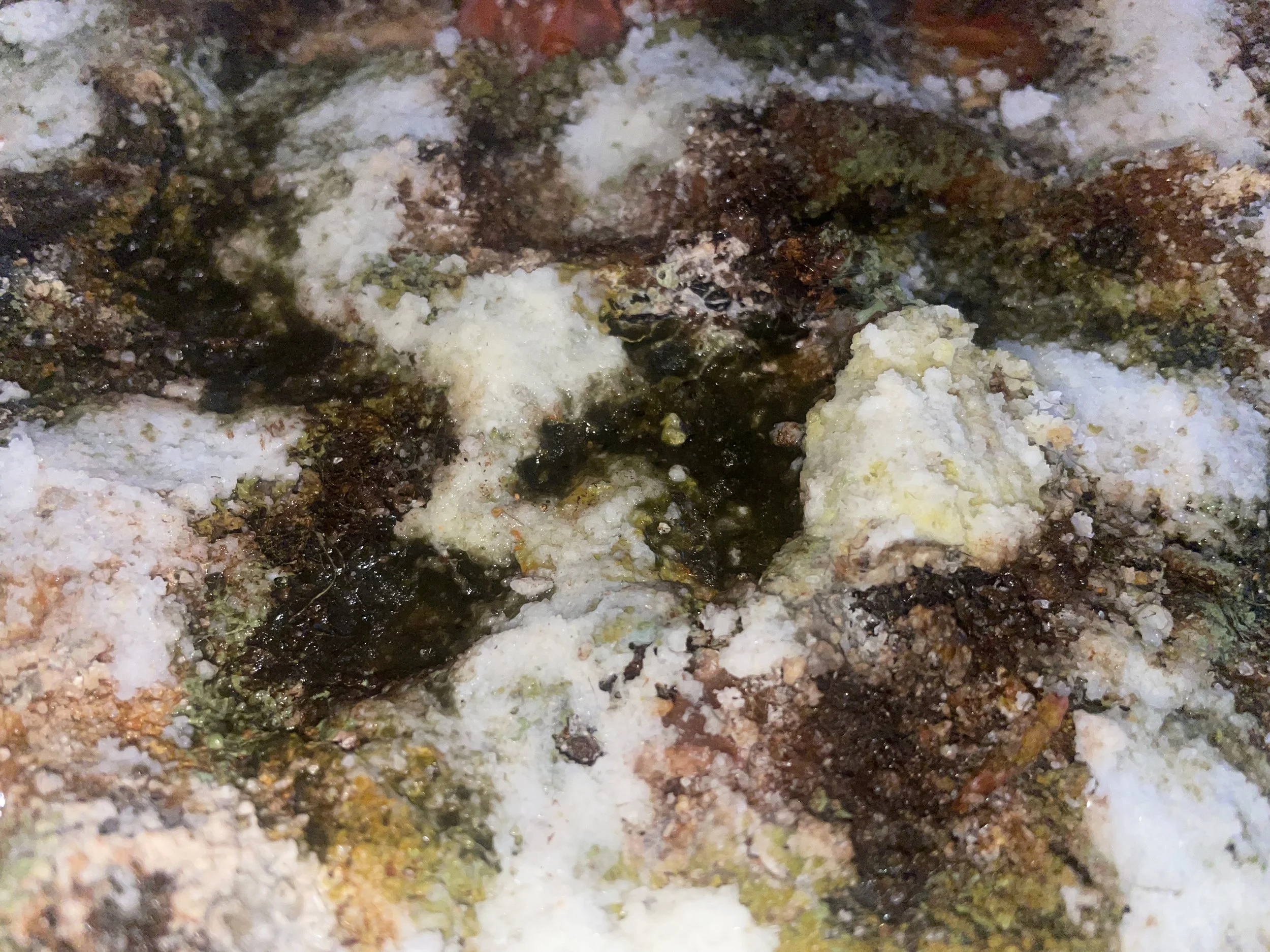
Salt-Lakes: Steel Wool, Food Coloring, Paint, Rust, Salt, Vinegar, Algae, Magnetic Tape, Bush
Rust Drawing: Rust from salt-lake remains on paper
Jars Of Soil: Rust from salt-lake remains.
Forms In Nature: Chunks of salt-lake remains.
Dimensions approximate in meters (W,H,D):
Salt-Lakes: Constantly changing- large scale. 1x1
Rust Drawing: 1x3
Jars Of Soil: 0.03 x 0.03 x 0.15 each
Forms In Nature: 0.20 x 0.2o x 0.15 each
Exhibition: Winter Collective 2025 UWA
Exhibition Date: June 11- July 18 2025 at Level 1 ALVA
Recorded memories on magnetic tape, encrusted within fragments of hyper-realistic salt-lakes. Rusting away over time. Fragments dropped onto paper and smeared to make a drawing. Rust was collected into jars, and larger fragments consolidated into new landscapes.
Salt-Lakes:
“Memories on tape, rusting away in salt-lakes” is a time-based installation exploring memory, decay, and preservation. Hyper-realistic salt-lakes are embedded with tape recordings of personal memories, externalising the memory. Over several days, the lakes were sprayed the with vinegar, initiating a rusting process. With it, the tape will rust, crystallise, and the memories will be preserved in geological time, to live on post-humanly.
The salt lakes are colour-coded: Pink, Orange, and Blue. The pink lake holds a memory of the artist’s first date, reflecting on how her changing beliefs on the situation has reconstructed her identity. The orange lake preserves a childhood memory with her best friend, highlighting their shared collective values from this experience through non-linear memory recall. The blue lake captures a single day, where she recorded every detail to try and slow down time.
Memory is the strength of neural connections created by your emotions about the subject (10). As rust alters the tape’s sound, it mirrors how memory evolves each time it's recalled. They should stay private. Tape became the ideal medium for storing memories as it stores sound invisibly, like how thoughts stay secret. In a world of constant surveillance, memories remain one of the last private depictions of ‘the self’.
Rust, like human ashes, is just an echo. They are only traces of what once was, not the thing itself. The origin of where these minerals come from, hold significance to our human spiritual practices. Holding the ashes of a person in an urn is a cult-like aesthetic, just like the process of preserving my memories in rust. The process of building the lake, then embedding and rusting memories to preserve them is a ritual that materialises the concept of memory.
Jars Of Soil:
The jars, filled with rust and salt-lake remnants, resemble a new type of soil that is infused with my memories. They become a personal medium for plant growth or to spread through Earth’s soil. It reflects the preservative nature of both salt and rust, while also hinting at their irreversible environmental impact, since rust doesn’t disintegrate.
Rust Drawing:
The rust drawing, originally placed beneath the lakes to catch falling debris, now hangs like a geological form. The marks from the debris presents a record of decay. Its colour palette echoes oxidized bronze, green-blue and orange. The forms and patterns mimic rock formations, emphasizing the natural processes that shaped them. The organic patterns, grainy textures and contrasting tones are evenly balanced throughout the composition to mimic those on rocks.
Forms In Nature:
Forms In Nature is created by the salt-debris, arranged to resemble micro-worlds. These include a pink layered rock formation; a blue, forest-like terrain; and an orange cluster evoking waste being overtaken by mold.
Research:
Memories make up who we are, our beliefs, values, morals, reality and our sense of self (1). We can externalise these memories via tertiary memory practices, such as recording onto tape, writing them down on flashcards or using flash drives (2). This means that we can get objects such as environments to remember for us and preserve human history (3). Memory is alien, physically huge in bandwidth, it’s like Timothy Morton’s concept of a Hyperobject as we can’t fully visualise or understand it’s potential (4). The memories are viewed from an external eye, by the audience. Insects, animals and the environment carry non-human subjectivity, and it will view the memory once it’s preserved into the Earth (5). It’s a post-human external memory system, that lasts in longer than I do.
Salt lakes preserve, decay, and transform. They are cardinal environments shaped by microbial mats, holding Earth’s oldest and unknown micro-organisms (6), some which oxygenated Earth’s atmosphere (7). Salt-lakes hold unknown potentials for Earth’s future as well is an archive for Earth’s geological history, an environmental memory system. These lakes preserve through crystallisation (8) and decay through rust of human objects (9), which settles and becomes a part of the soil, and bands in a rock, living on in geological deep time.
Footnotes:
Sami Shaheen, “on moral memory and its influence over individual and collective moral identities”. University of glasglow.
Jimin Wang, “Theory of Memory in the Thought of Bernard Stiegler and Its Educational Implication.” Journal of Computing and Electronic Information Management 14, no. 1 (2024): 51–54.
Misty M Jackson, Vrana J Kenneth, “‘Sad and Dismal Is the Story’: Memory, Preservation, and the Folk Music Tradition of Great Lakes Shipwrecks.” Journal of Maritime Archaeology 15, no. 3 (2020): 261–81.
Laura Copelin, e.t al. “Hyperobjects For Artists” Ballroom Marfa and The Creative Independent (2018).
Laura Copelin, e.t al. “Hyperobjects For Artists” Ballroom Marfa and The Creative Independent (2018).
Nora Noffke, et.al. “Earth’s Earliest Microbial Mats in a Siliciclastic Marine Environment (2.9 Ga Mozaan Group, South Africa).” Geology 31, no. 8 (2003): 673–76.
Gregory J Dick, Et.al, “Controls on O2 Production in Cyanobacterial Mats and Implications for Earth’s Oxygenation.” In Annual Review of Earth and Planetary Sciences, no. 46 (2018): 123–147
Chuanyong Ye, et.al., “Salt Crystallization Sequences of Nonmarine Brine and Their Application for the Formation of Potassium Deposits”. Aquat Geochem. no. 24 (2018): 209–229
Peggie Bennett. “Rust: An Age Old Problem.” Materials Today. (Kidlington, England) 30 (2019): 103–4.
Nina Rouhani, “Multiple routes to enhanced memory for emotionally relevant events”. Trends in Cognitive Sciences, Volume 27, Issue 9. (2023), 867-882