Talking Through Chaos
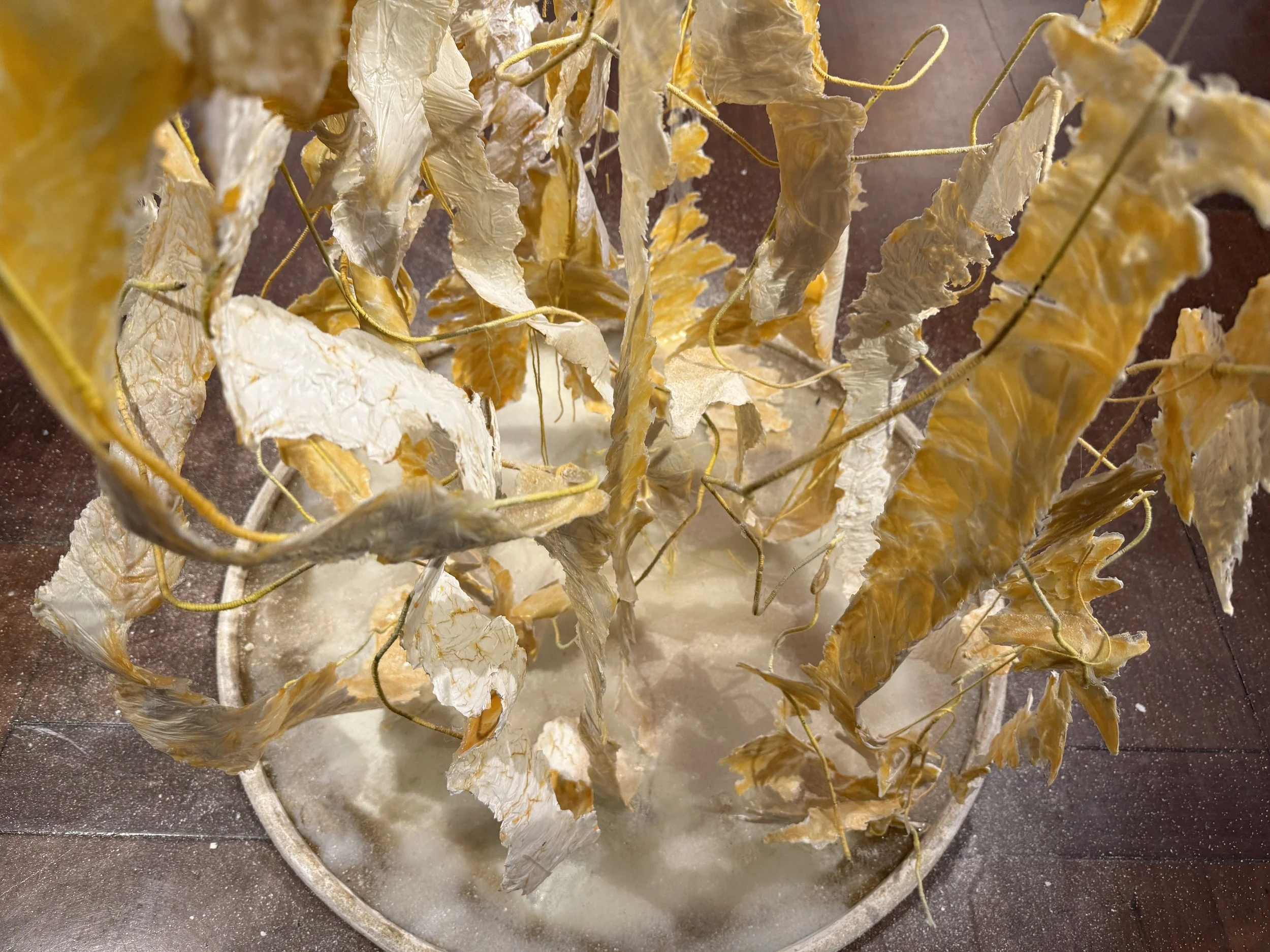
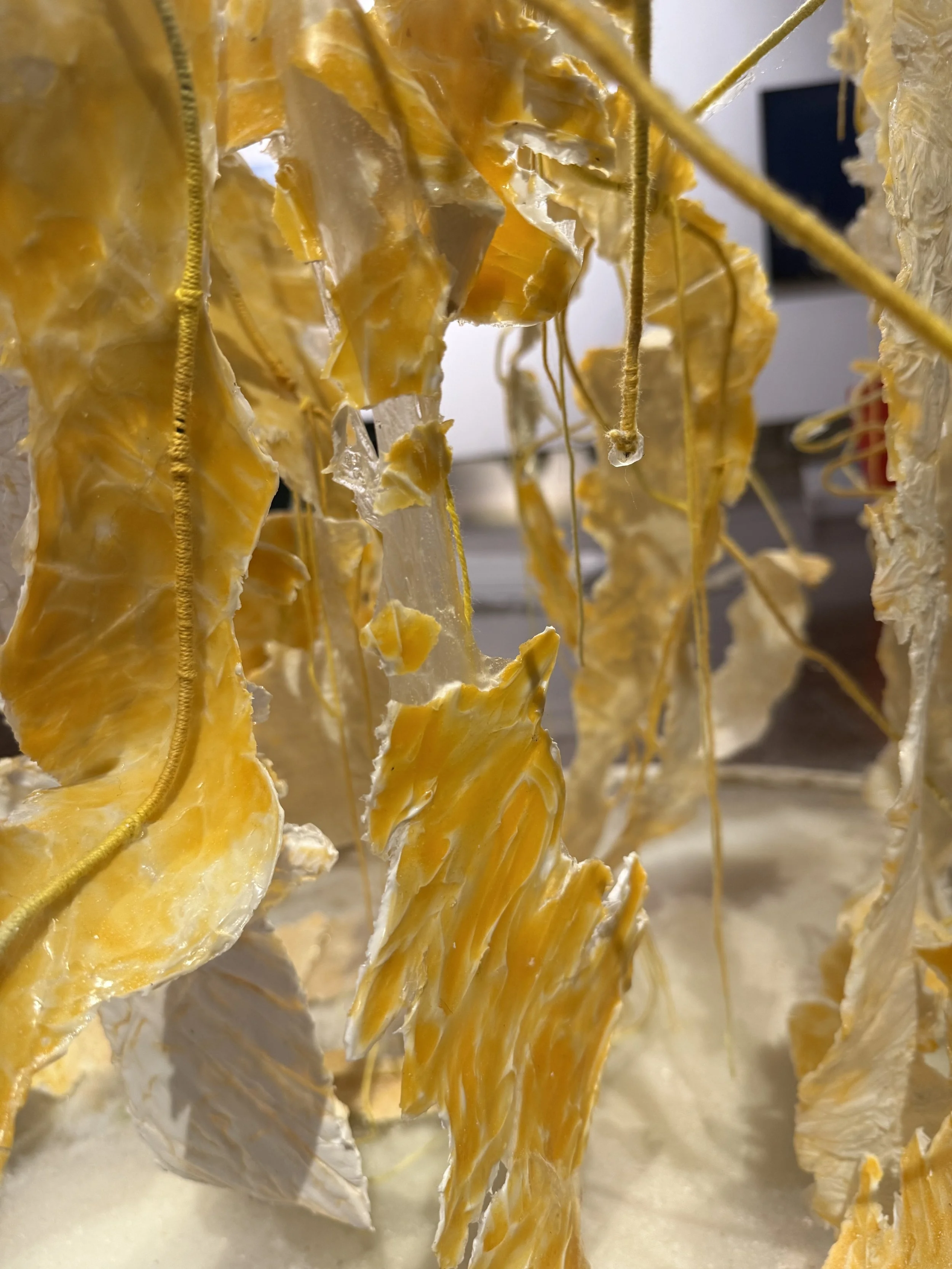
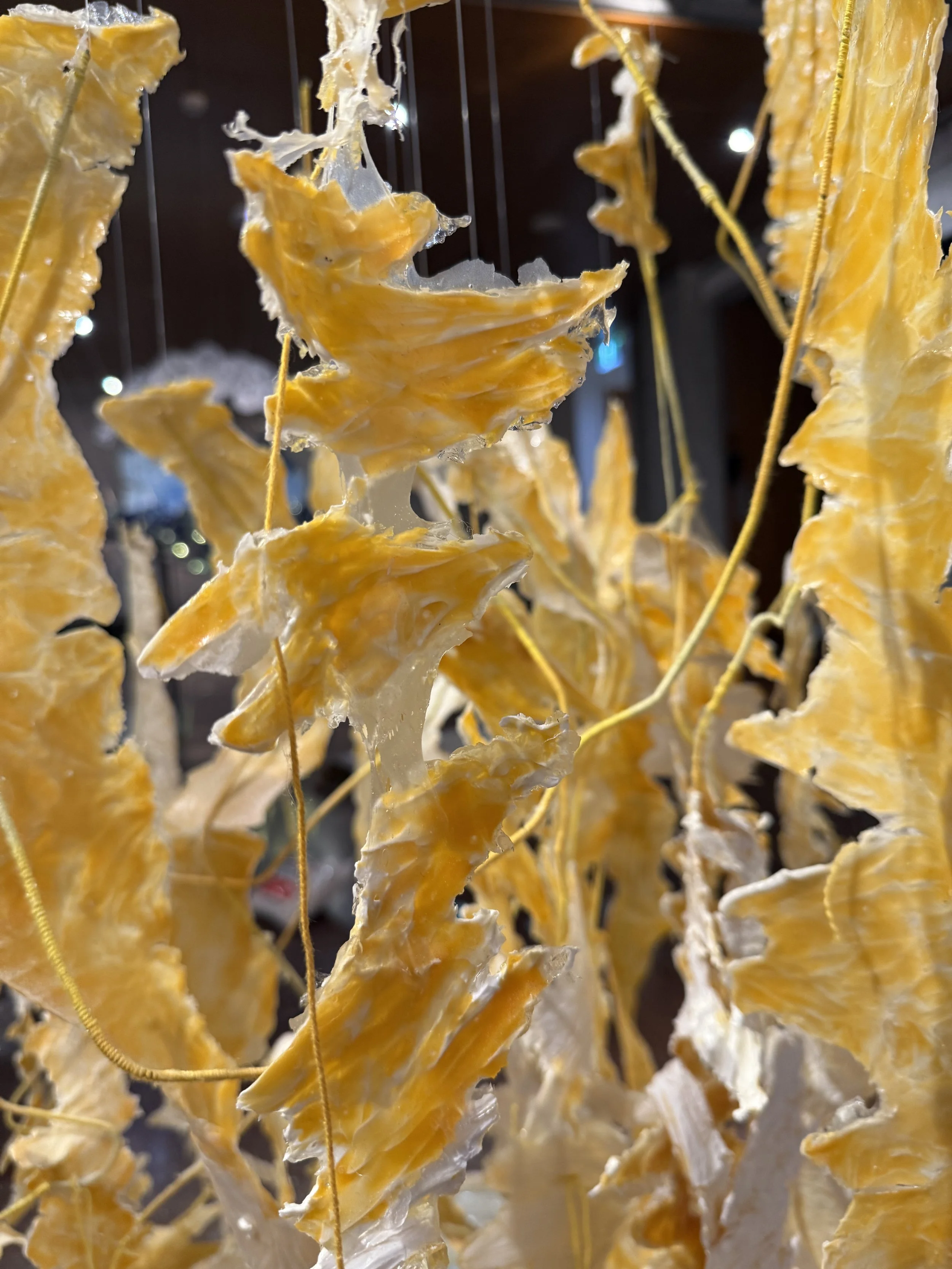
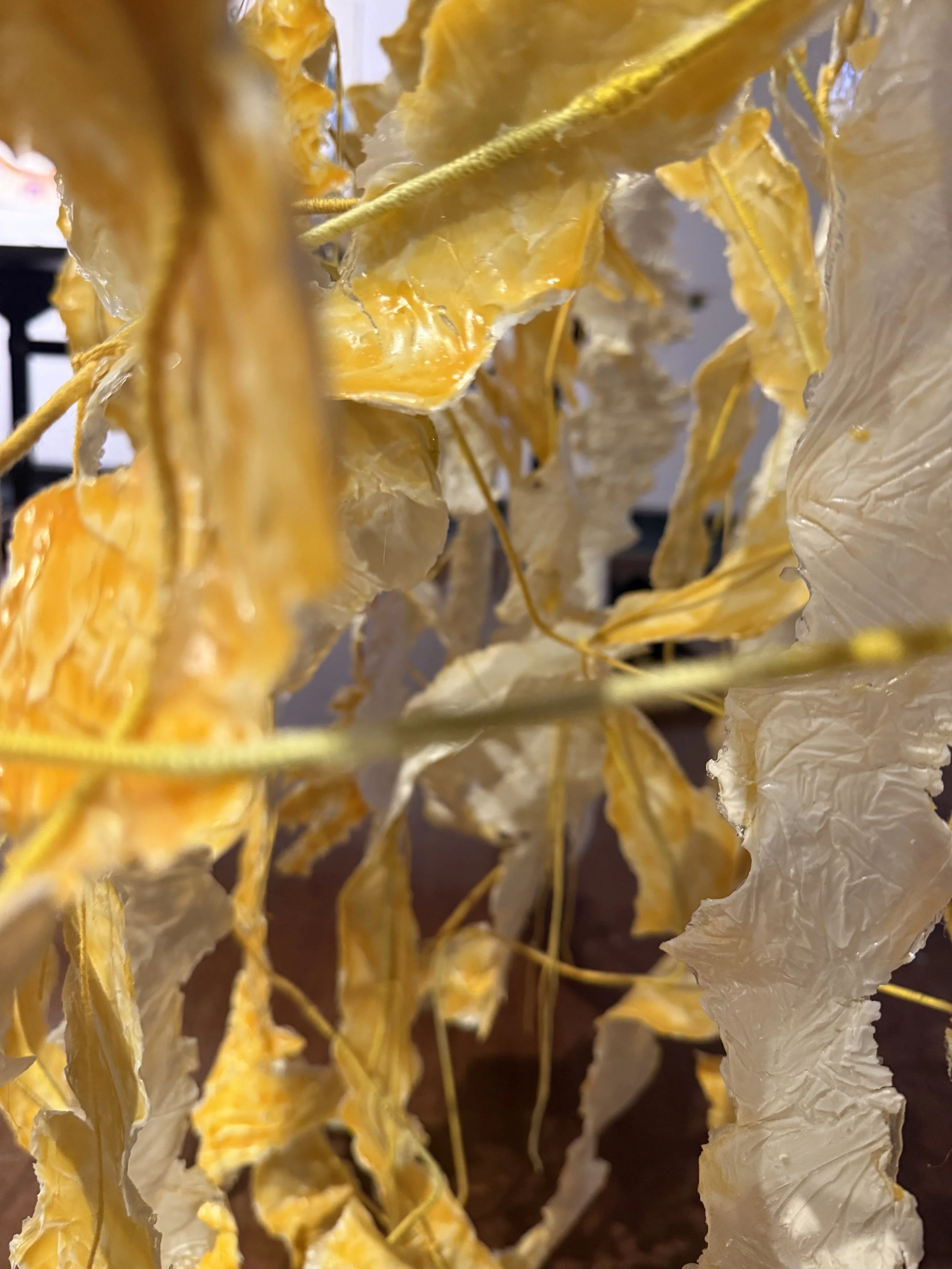
Mediums: Calcium Carbonate, Egg Yolk, Wire, Lake Water, String
Dimensions approximate in meters (W,D,H): 1x1x2
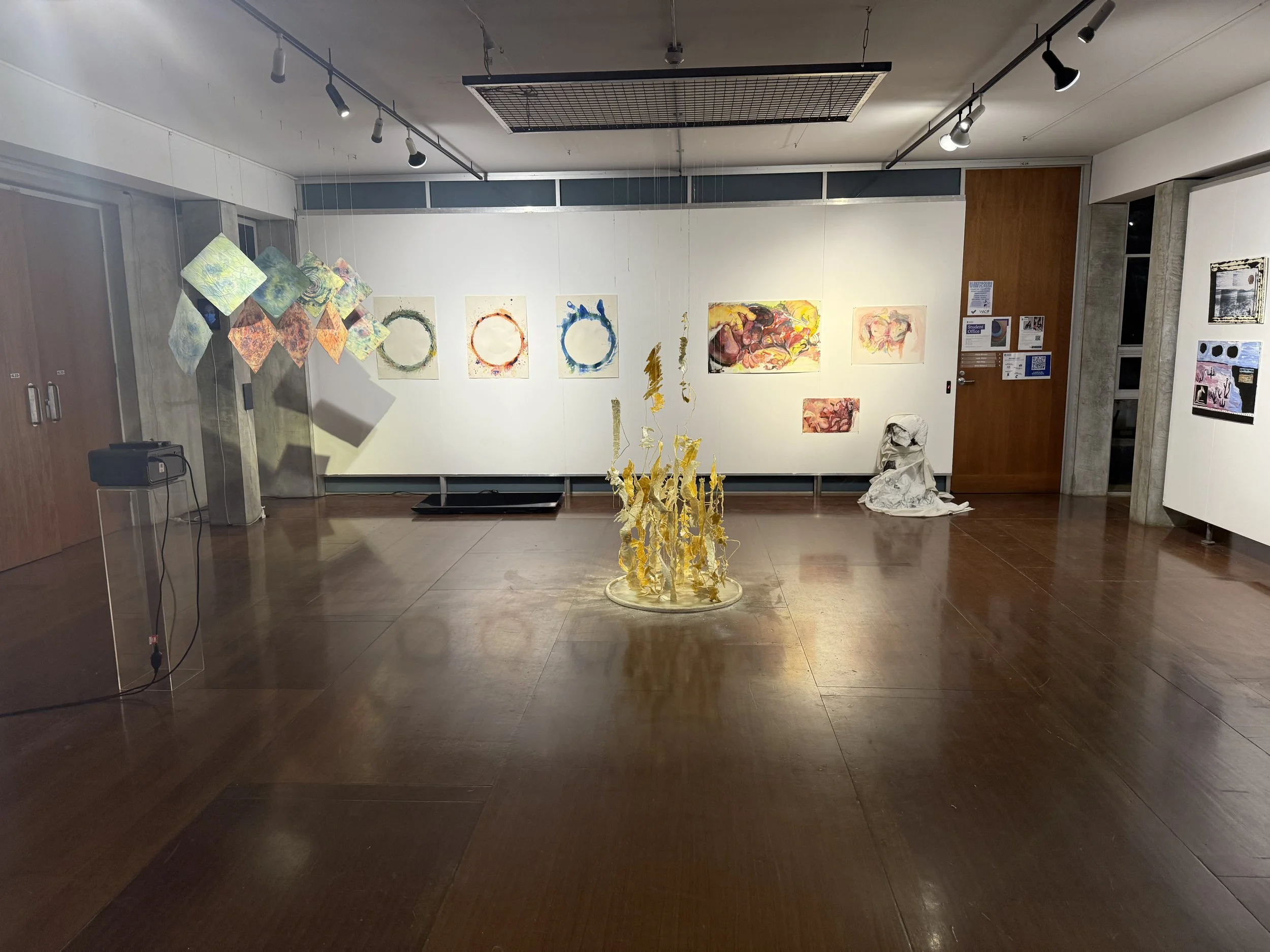
Exhibition: Chatterbox Collective Presents: Are You There?
Exhibition date: 21st of August - 28th of August 2025 at the Cullity Gallery UWA
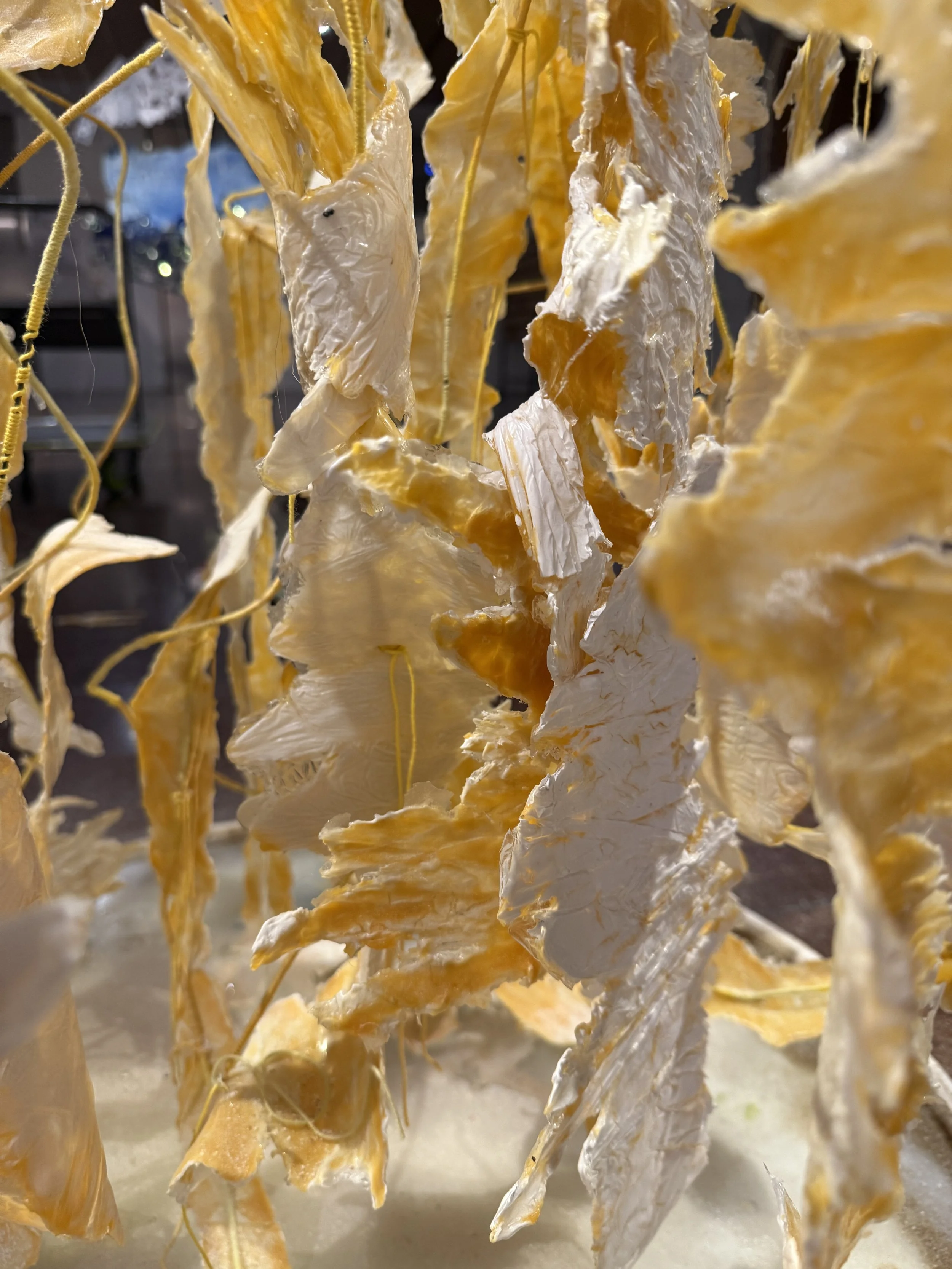
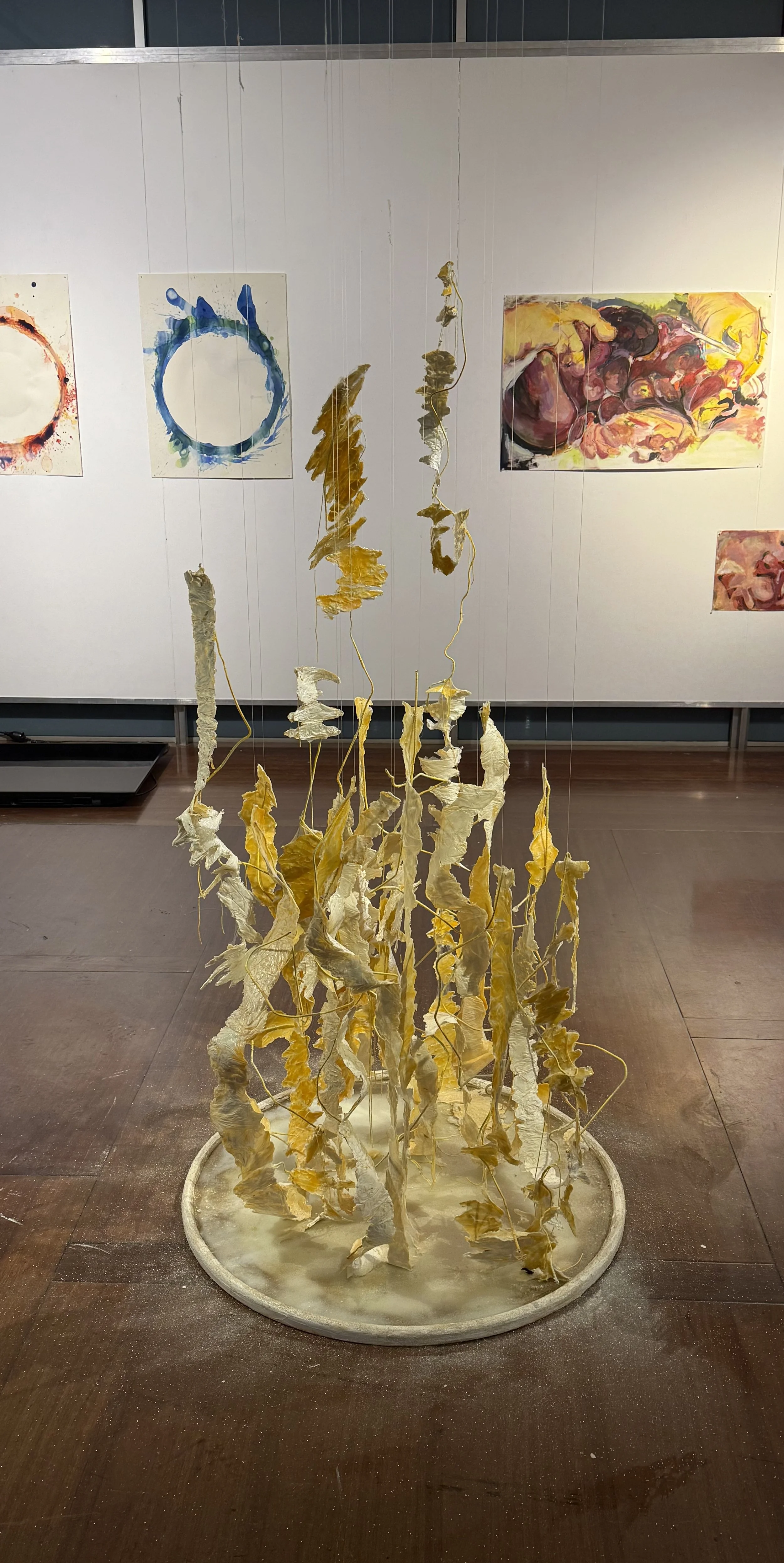
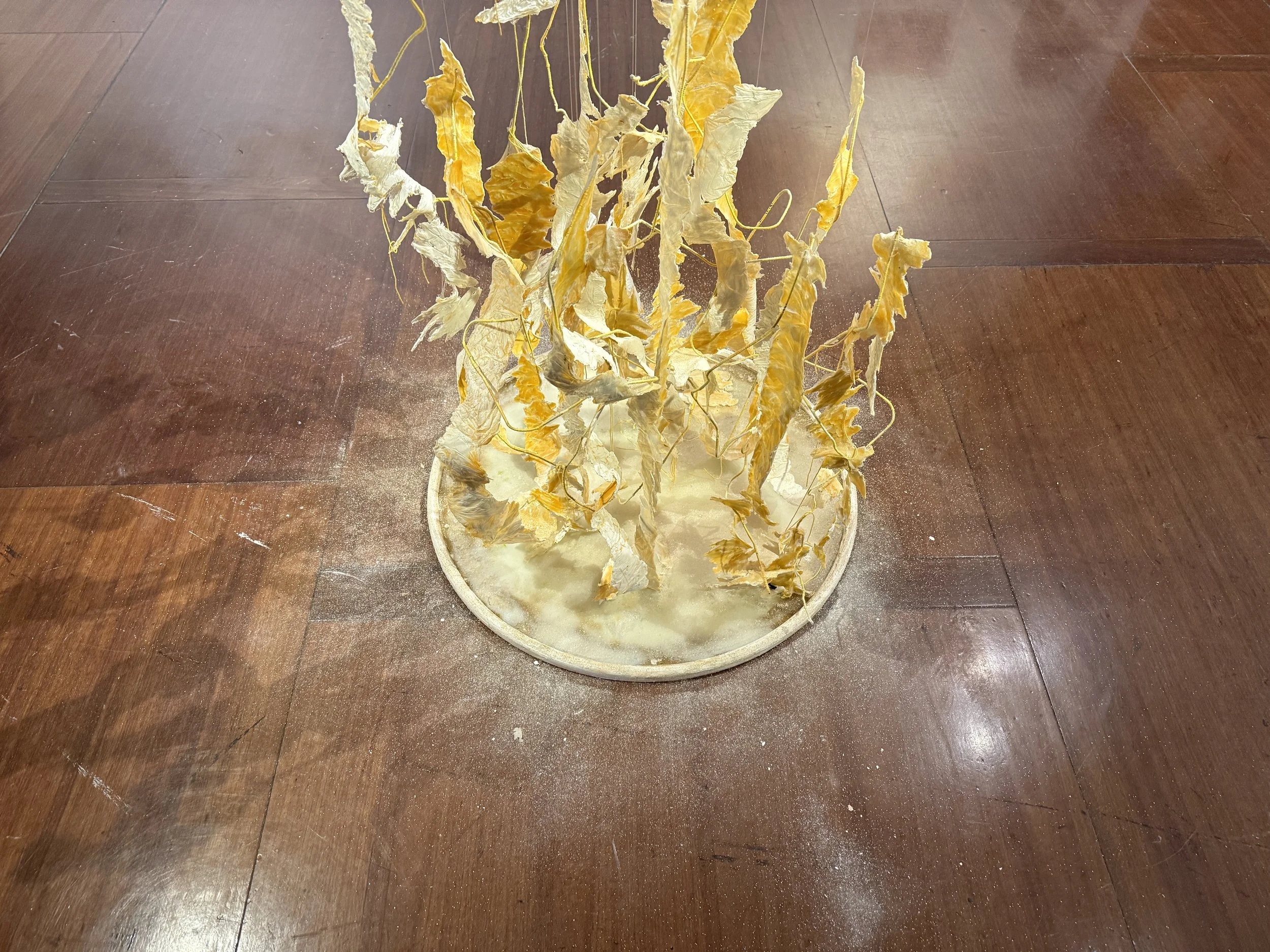
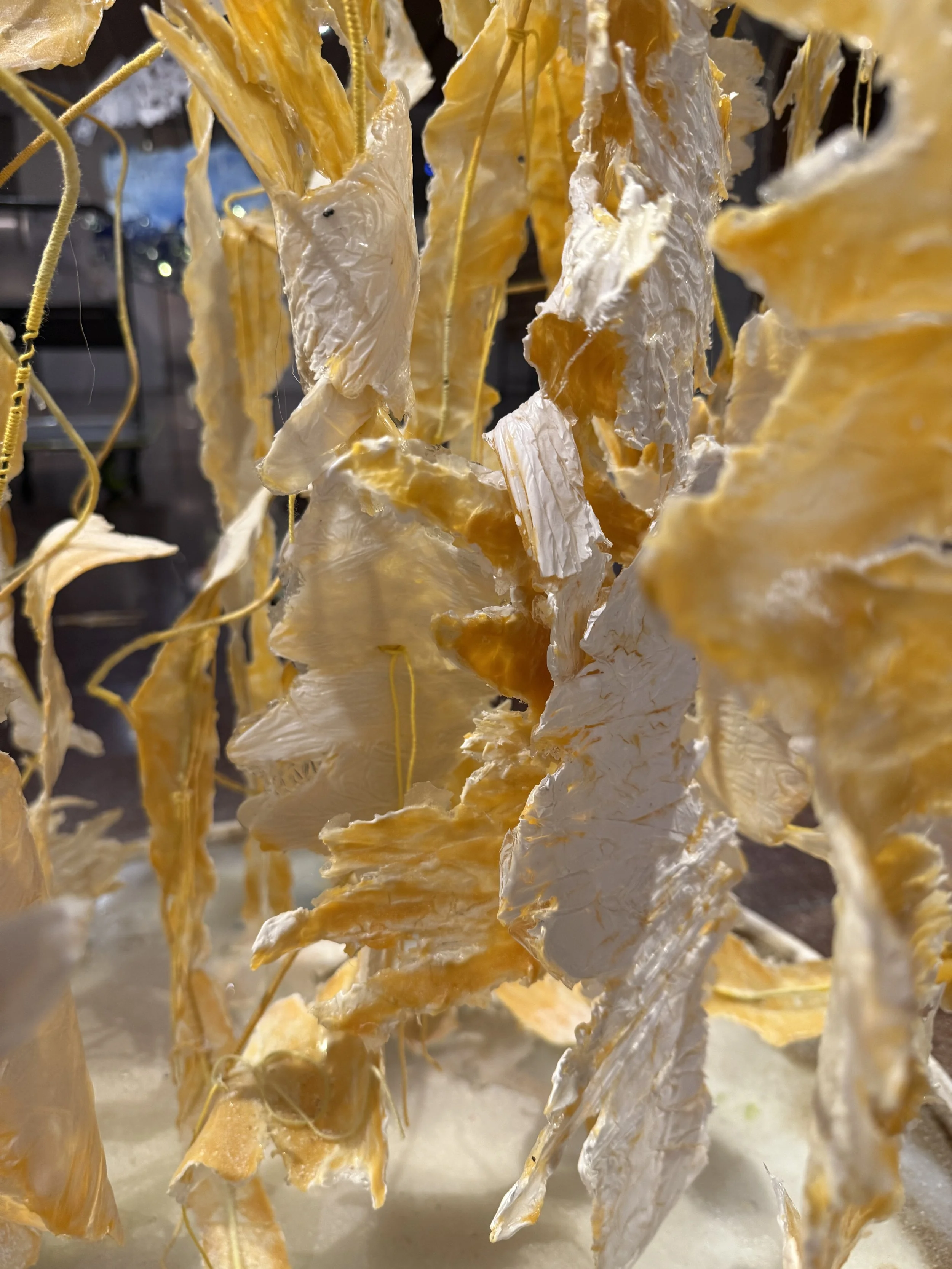
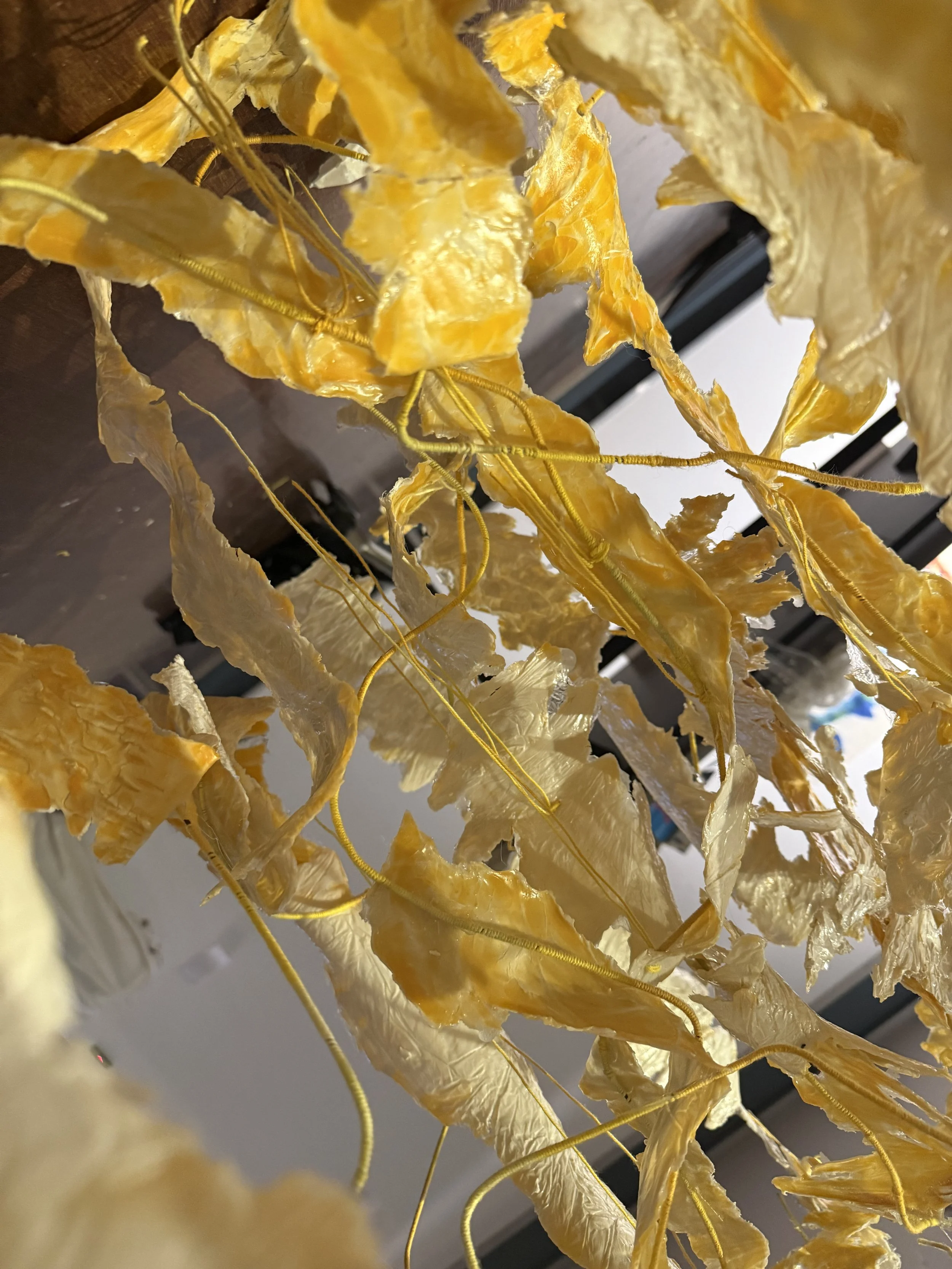
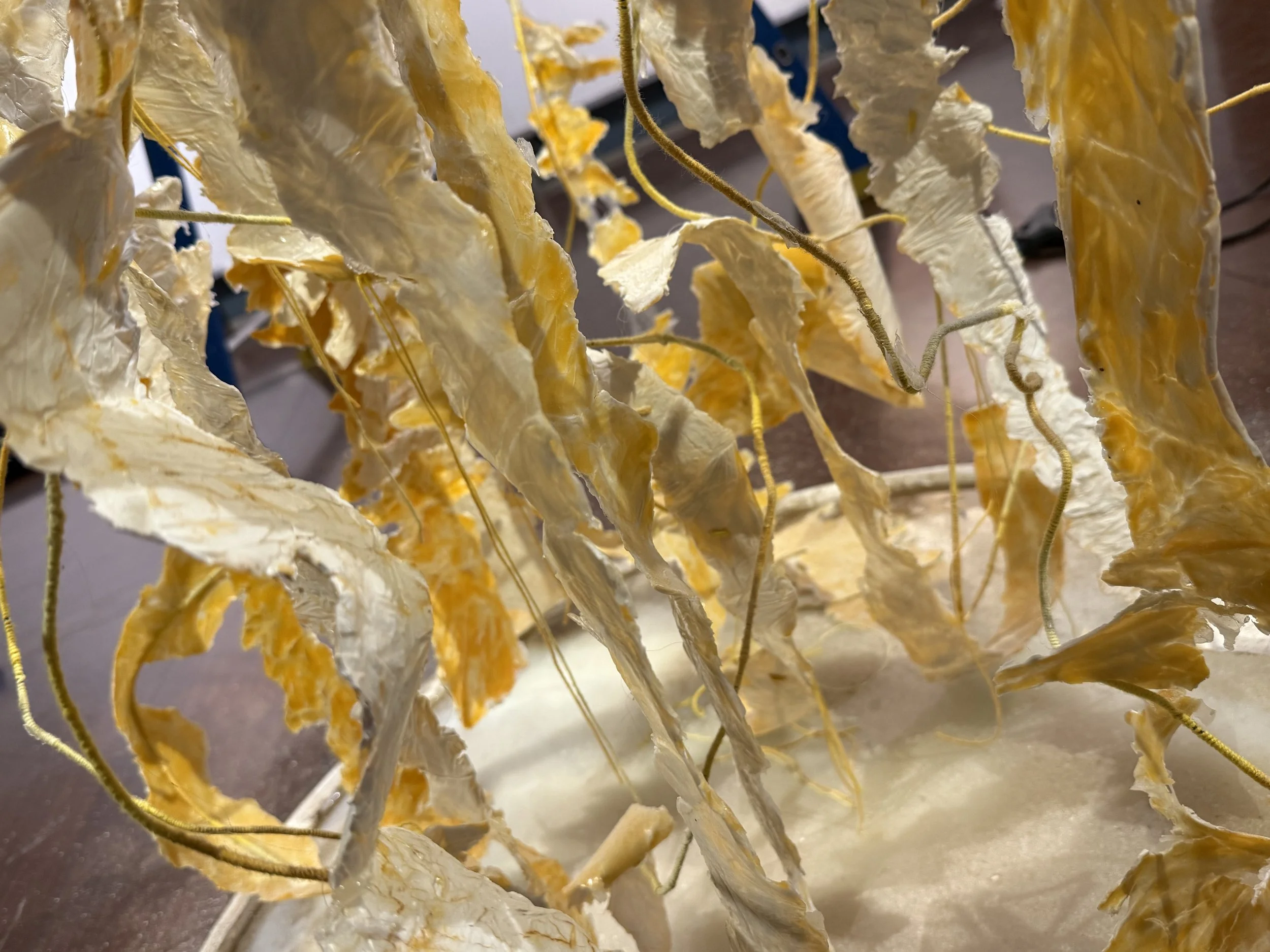
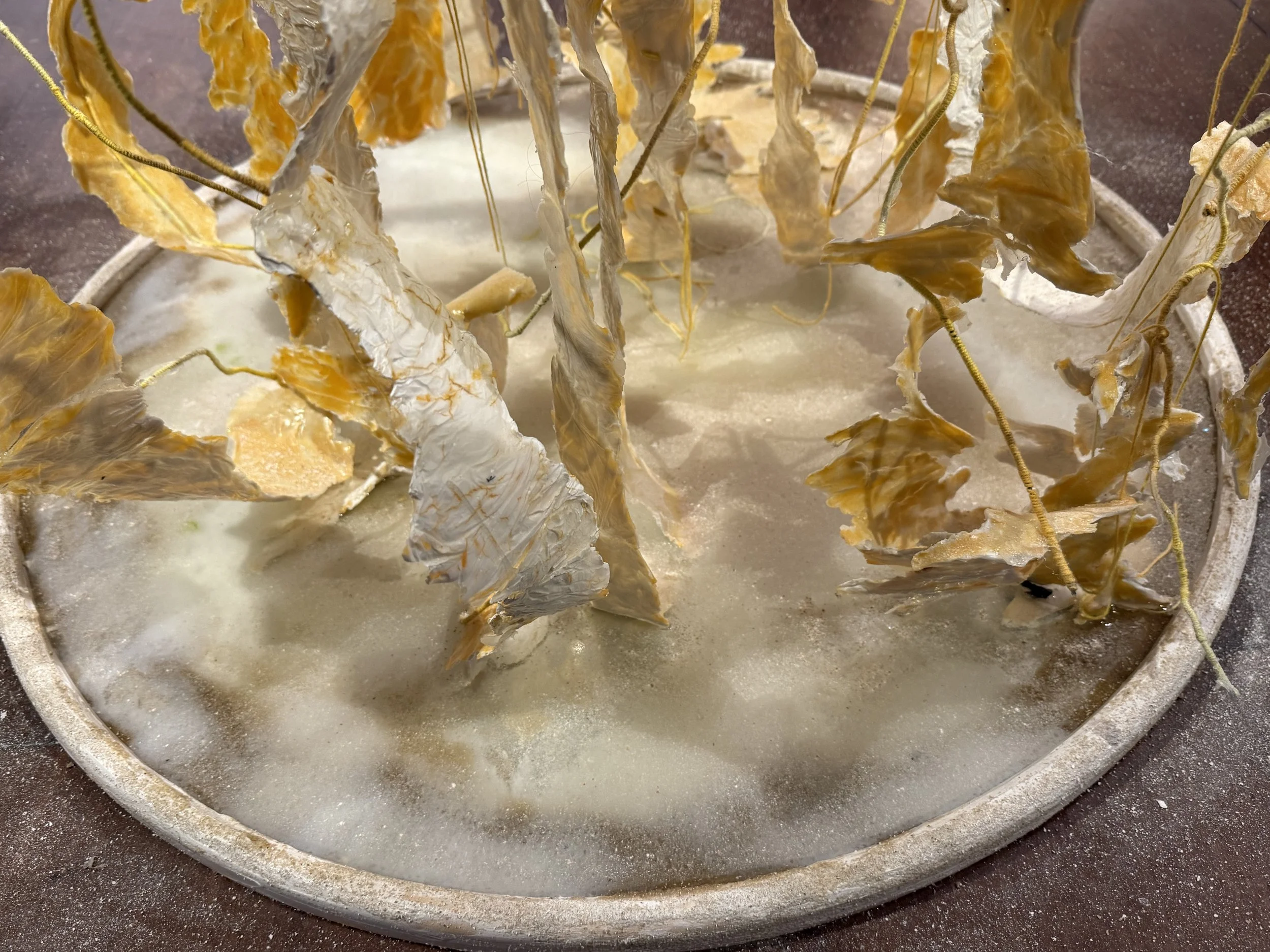
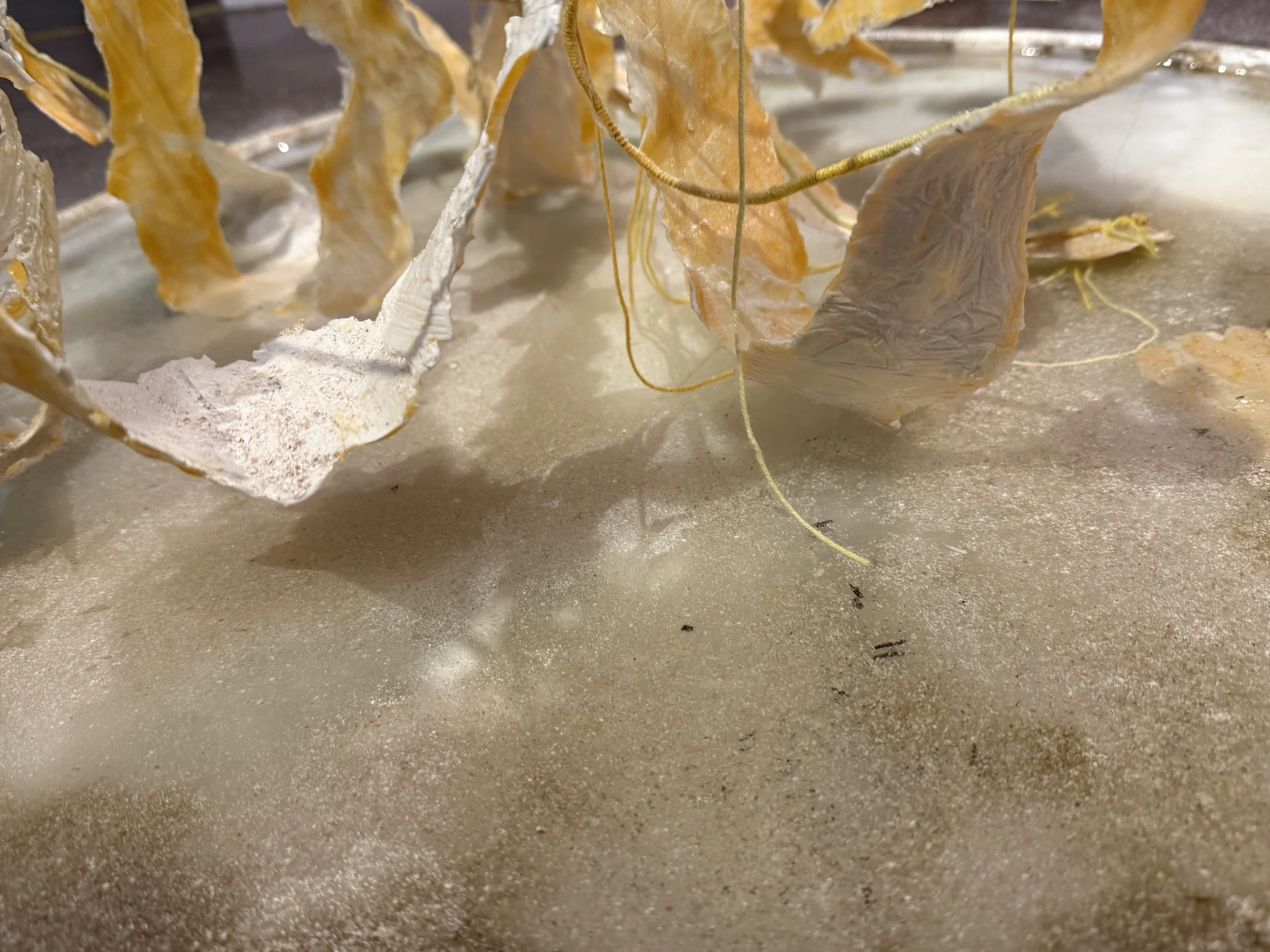
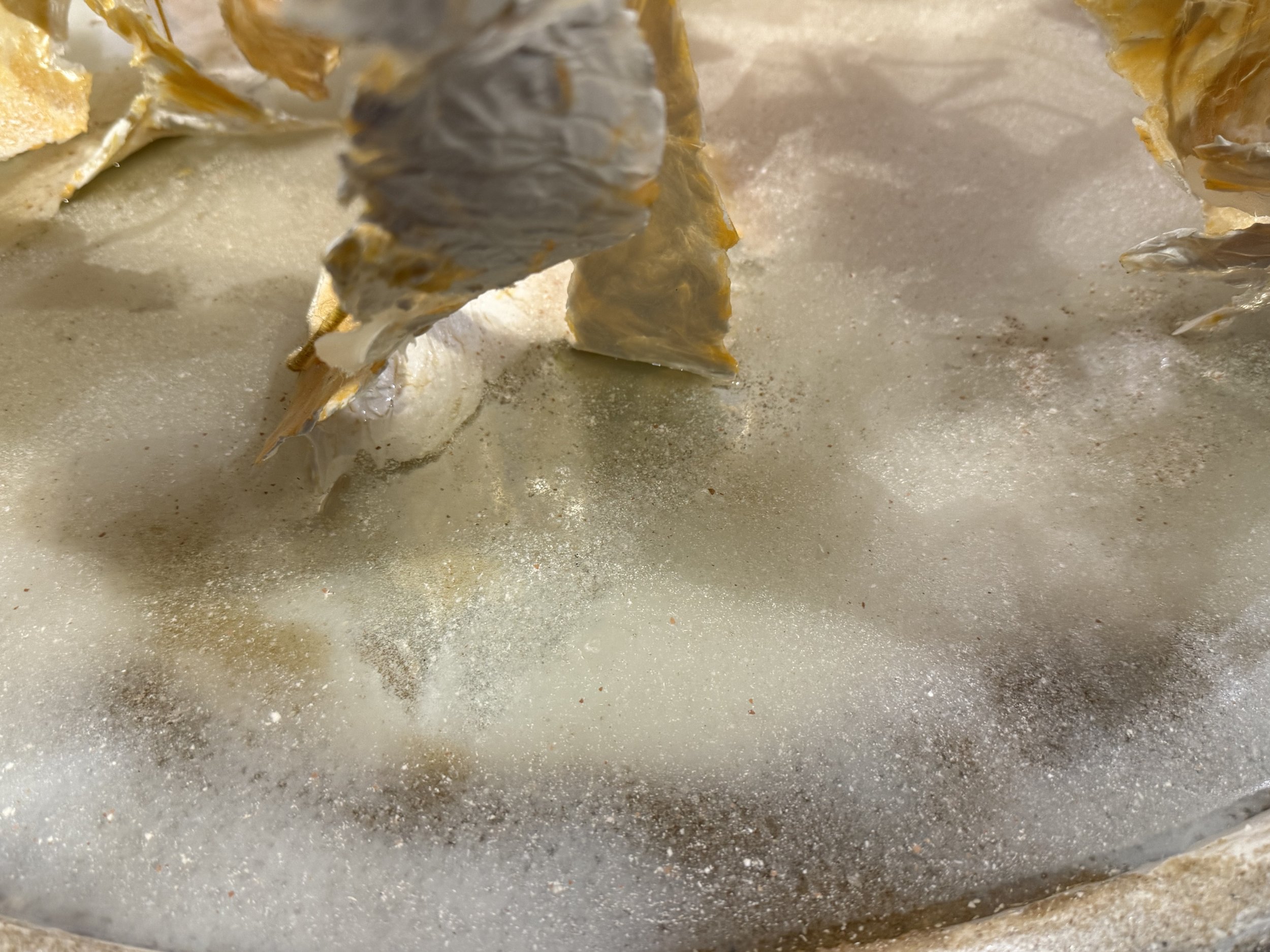
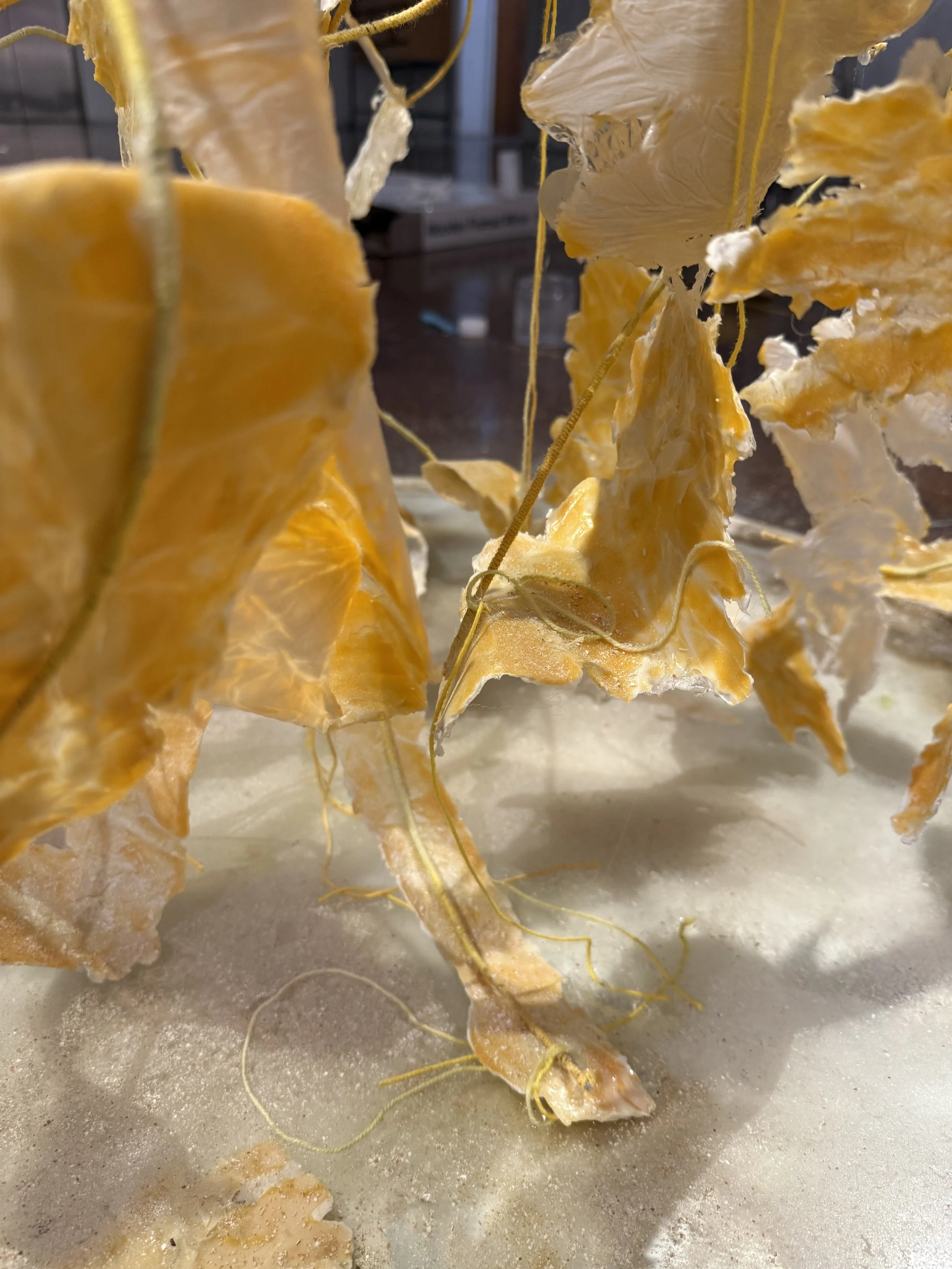
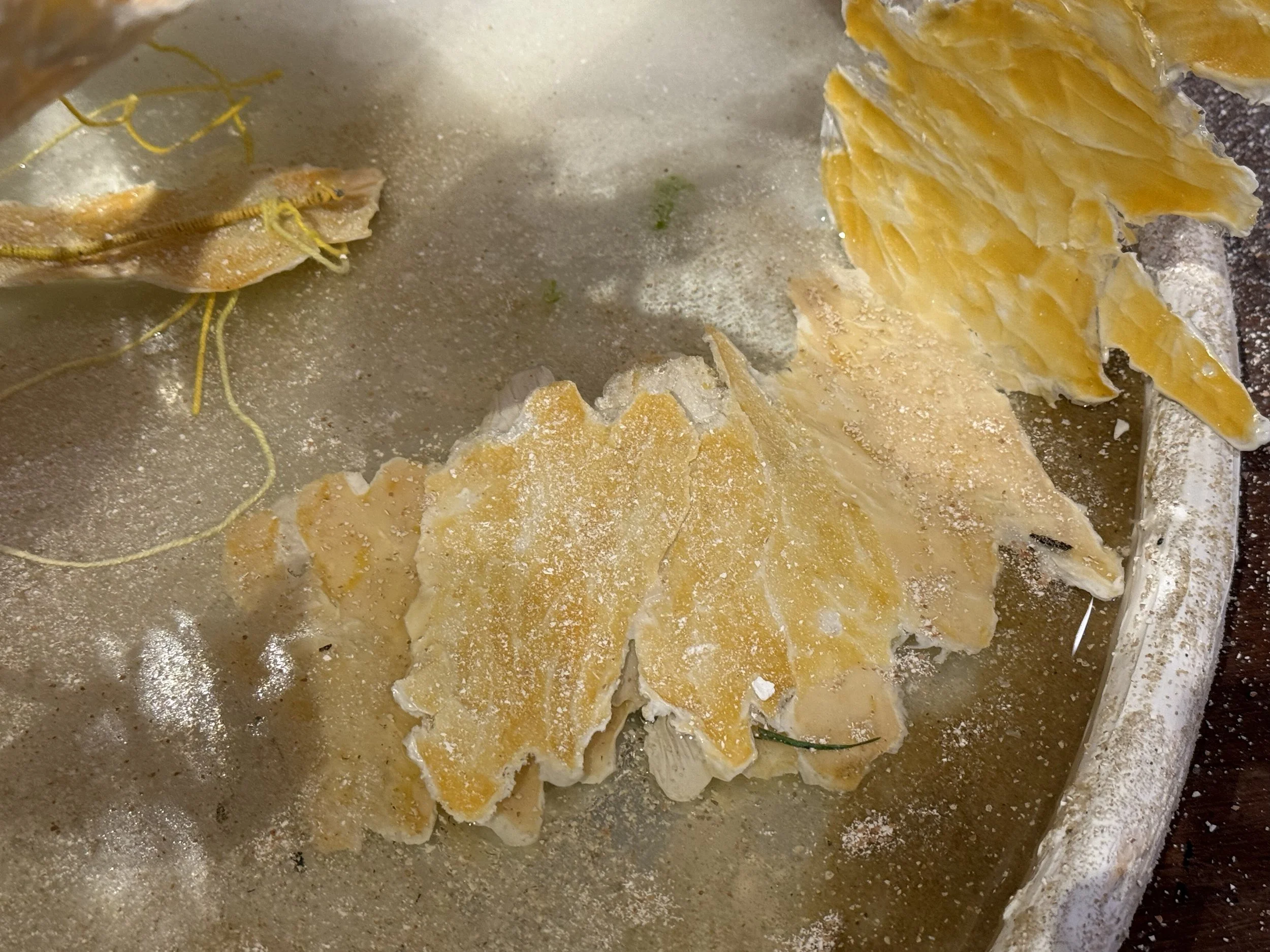
A message scrambled in chaos, it’s waveforms printed and casted in calcium carbonate and egg yolk, arranged to look like coral. Each waveform is hung from the ceiling, just touching the pool of calcium carbonate and lake water beneath it.
Talking Through Chaos scrambles the message, “Death I fear you, tell me about yourself” in chaos (Using the Lorenz Attractor) to translate the message into nature’s language, bridging the gap between the non-physical, borderline cosmological, and humans. In this instance, I talked to death (Metaphorically and poetically) using the landscape.
This artwork aims to entangle humans with death, using chaos signals to translate words into a language that the landscape can understand on a molecular level. Death responds to the message through the destruction of the artwork, dissolving the waveforms as they touch the liquid beneath it. The artwork breaks the boundaries of interspecies communication through promoting death’s agency, anthropomorphising it to develop an empathy towards it, as the landscape is able to understand the message poetically. It’s about talking to death through the landscape.
Chalk mountains and chalk as an art medium is traditionally made from dead plankton skeletons (1), showing the macabre and the sublime of the landscape which we don’t see on a macro level. There are mountains of dead fossils, we use them to write on chalkboards in schools or to draw and make art. The scientific name for chalk is calcium carbonate or calcite (2). Coral skeletons are also primarily calcium carbonate (3). On the other side, egg yolk mixed with Arabic oil to thin out the medium for casting, symbolises a lifeless womb, the unalive but not dead since the subject was never alive to begin with. Both mediums represent Death.
A localized sound element of the scrambled message, granulated layered with a swamp ambience can be heard to situate the artwork in an organic environment, in which it should belong in.
Research:
Electronic music is a discipline which breaks the interspecies becoming-molecular boundary through their use of granular synthesis and subtractive synthesis (4). we are living in a multilayered sound world where Musique Concrète can become bioacoustic miniatures, such as sounds recorded from bugs (5) or even from the human body through the use of a stethoscope. A single vibration can also start a positive feedback loop. These loops have destructive tendencies, such as the effects of climate change (6), disease transmission (7), and uncontrolled cell growth (8). They also create resonance or standing waves. In nature, this resonance can self-organise into patterns using entropy (9), specifically chaos signals. As resonance is destructive in music, they are creators in biological forms within the landscape.
Chaos signals are randomised patterns which never repeat themselves. They are present in biology to form the patterns on shells (10), fractals on the coastlines, lightening patterns (11), tree branch and coral formations (12). They do this by modulating resonance at the molecular level (13). Chaos as a force disrupts positive feedback loops to allow multiple species to co-exist in harmony, through creating biodiversity and enhancing ecosystem resilience (14). It prevents hierarchy and therefore anthropocentrism. In communication studies, chaos signals can be emulated into attractors such as the Lorenz attractor or Rössler attractor which are mathematical patterns. They can be used as digital modulators to scramble messages or mask them in chaos, making them near impossible to decipher (15).
Process:
To scramble the message digitally I recorded it in Ableton and put the audio in a ‘Simpler Device’ on ‘Slice Mode’. This chopped the messages up into smaller sections. I then used a Lorenze Attractor LFO to modulate which slice it would play in chaotic patterns. I then recorded the result (my scrambled message) and turned it into a wavetable. Molecularly, I exported pictures of 20 individual frames or wave-cycles (out of 256) from the wavetable and turned them into a vector to be laser cut into cardboard. These individual strands of the messages were then cast in a medium which represented death, using the cardboard cut-outs as stencils. The mediums I used were calcium carbonate and egg yolk.
I used traditional modelling paste, which is just paste made from calcium carbonate, for casting the soundwaves, wrapping the carboard stencils in gladwrap to stop it from sticking. I then peeled it off and dribbled egg yolk on one side. I arranged the waves to look like coral, wrapping wire with yellow-orange string and shaping the waveforms around it. The waveforms themselves looked like tree branches or lightning. I situated the coral in a pool of liquid calcium carbonate, made from mixing calcium chloride and sodium carbonate and added a sound element of the message scrambled and granulated to create an environment in which it belonged to.
Footnotes:
Balogh Z., et al., Surface Composition of Fossil Coccoliths from Chalk.
Geochimica et Cosmochimica Acta Supplement. Vol 73 (2009): 82
http://ui.adsabs.harvard.edu/abs/2009GeCAS..73Q..82B/abstract
M. Azizur Rahman, Jochen Halfar, Ryuichi Shinjo, X-Ray Diffraction Is a Promising Tool to Characterize Coral Skeletons. Advances in Materials Physics and Chemistry. Vol 3, No. 1 (2013): 120–25
R. Dhivya, R. Premkumar, and A. N. Nithyaa, Real Time Secured Transmission of Biosignal Using Chaotic Communication System. IEEE International Conference on Engineering and Technology. (2015): 1–4
Ashraf Zaher & Abdulnasser Abu-Rezq, On the design of chaos-based secure communication systems. Communications in Nonlinear Science and Numerical Simulation. COMMUN NONLINEAR SCI NUMER SI. Vol 16. (2011):
3721-373710.1016/j.cnsns.2010.12.032
Barry Truax, Music and Science Meet at the Micro Level: Time‐frequency Methods and Granular Synthesis. Journal of the Acoustical Society of America. Vol 117, No. 4 (2005): 2415
Matija Gogala & Boštjan Perovšek, Bioacoustic Music Inspired by Biotremological Research. Biotremology: Studying Vibrational Behavior. (2019): 511-520
10.1007/978-3-030-22293-2_25
Andrew E. Dessler & Mark D. Zelinka, CLIMATE AND CLIMATE CHANGE Climate Feedbacks. Encyclopedia of Atmospheric Sciences. No 2. (2015): 18–25
Klara Wanelik, et al., Positive Feedback Loops Exacerbate the Influence of Superspreaders in Disease Transmission. (2022)
Ziv Radisavljevic, AKT as Locus of Cancer Positive Loops Conversion and Chemotherapy. Critical Reviews in Eukaryotic Gene Expression. Vol 25, No. 3 (2015): 199–202
Richard H.W. Funk. Understanding the Feedback Loops between Energy, Matter and Life. Frontiers in Bioscience-Elite. Vol 14, No 4. (2022)
Jan Awrejcewicz et al., Spatio-Temporal Non-Linear Dynamics and Chaos in Plates and Shells. Nonlinear Studie. Vol 21, No. 2 (2014): 293–307
http://nonlinearstudies.com/index.php/nonlinear/article/view/1002
Mohd Muzafar Ismail et al., On the Possible Origin of Chaotic Pulse Trains in Lightning Flashes.
Atmosphere Vol 8, No. 2 (2017): 29
Prasanth Pulinchery & Udayanandan Kandoth Murkoth, Chaos to Fractals. Momentum: Physics Education Journal. Vol 7, No. 1 (2023): 17–32